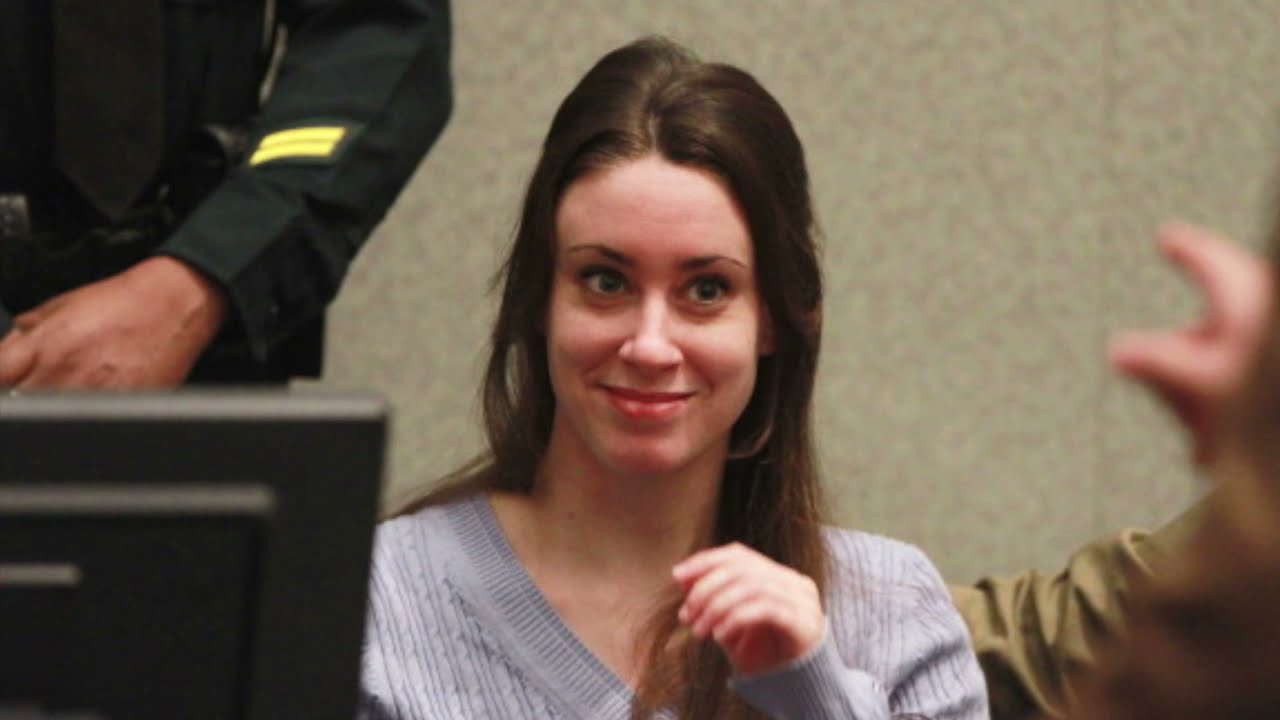
JCS's “There's Something About Casey”: A Character Study Built on Recordings
In the summer of 2008 in Orlando, Florida, two-year-old Caylee Anthony was not reported missing for 31 days. When her grandmother's 911 calls finally brought police into the case, her mother Casey offered accounts that investigators quickly found did not hold up. JCS's video is less a retelling of the investigation than a study of Casey herself — how she spoke, what she claimed, and how those claims changed under questioning.
JCS - Criminal Psychology, now at more than 5.6 million subscribers, built its reputation on exactly this kind of long, narrated analysis of recorded interviews. This August 2020 entry, running just over an hour, applies that approach to one of the most widely followed American cases of its era, drawing on 911 recordings, interview footage, and trial material rather than new reporting.
The video has been watched more than 32 million times, making it one of the channel's defining uploads. Its staying power is understandable: the case itself was never resolved in the way trials are expected to resolve cases, and the recordings at its center remain difficult to listen to without forming questions the verdict did not answer.
At a Glance
| Video | “There's Something About Casey...” |
|---|---|
| Channel | JCS - Criminal Psychology |
| Published | August 1, 2020 |
| Length | ~68 minutes |
| Views | 32.8M+ |
| Subject | The psychology of Casey Anthony; the Caylee Anthony case, recordings, and trial |
What the Video Covers
The video opens with the basic shape of the case in Orlando in 2008: Caylee was last seen in June, and a month passed before her grandmother's calls to 911 on July 15 brought her disappearance to police attention. Casey told investigators her daughter was with a babysitter — a claim that unraveled quickly and became central to how the public first understood the case.
The middle of the video stays close to the recordings. It works through the 911 calls and Casey's police interviews, comparing what she said in each setting and noting where her accounts conflicted with verifiable facts about her work, her movements, and her daughter's whereabouts. The emphasis throughout is on manner as much as content: calm where urgency would be expected, and detail where it could be checked — and found wanting.
The closing section moves to the 2011 trial in brief outline. Prosecutors sought a murder conviction; the defense argued the death was accidental. In July 2011 the jury acquitted Casey of the murder and related serious charges, convicting her only of lying to law enforcement. The video gives weight to how the defense created doubt with the jury, and to why that outcome left so many viewers dissatisfied.
Strengths
The primary material is allowed to speak. The 911 recordings and interview excerpts are the strongest evidence in the video, and JCS is at its best when it pauses to let a listener hear a claim in Casey's own words before testing it against the record.
Both sides of the trial get a hearing. Rather than treating the acquittal as a punchline, the video explains the arguments each side made and why the defense's approach may have worked with this jury. That makes the ending more informative than the outrage the case usually attracts.
It works as a character study. Framing the video around psychology rather than a day-by-day investigation gives it a clear point of view. Viewers come away with an organized account of Casey's documented behavior before, during, and after the 31 days — not just a timeline.
Weaknesses
The psychology is interpretation, not diagnosis. JCS narrates motive and mindset with confidence, but Casey Anthony was never the channel's patient. Treat the analysis as informed commentary on recorded behavior, not as a clinical finding.
It assumes a verdict the court did not return. The video's framing often reads as though the remaining question is why, not whether. Viewers should keep the legal record in view: Casey was acquitted of killing Caylee, and no one else has been charged in her death.
Little that is new for case veterans. The video synthesizes well-known recordings and trial coverage rather than adding reporting. Anyone who followed the case closely in 2008–2011 will find a strong summary here, not new evidence.
Who Should Watch
- JCS regulars — the channel's interview-analysis method applied to one of its most-viewed cases.
- Viewers new to the Caylee Anthony case — a single, organized hour that covers the disappearance, the recordings, and the trial.
- Trial-watchers — a clear account of how a defense can win on doubt even in a case the public had already decided.
- Criminal-psychology viewers — a study in how recorded statements are tested, with the caveat that the conclusions are commentary.
8/10
A compelling, recording-led character study — strongest when it lets the calls and interviews speak and when it explains the trial fairly, weakest when its psychological certainty outruns what an acquittal allows. One of JCS's defining videos, and still the easiest single-hour entry into the case.
Source: JCS - Criminal Psychology on YouTube (“There's Something About Casey...,” published August 1, 2020); case background via contemporary reporting on the 2008 Caylee Anthony disappearance and the 2011 trial.