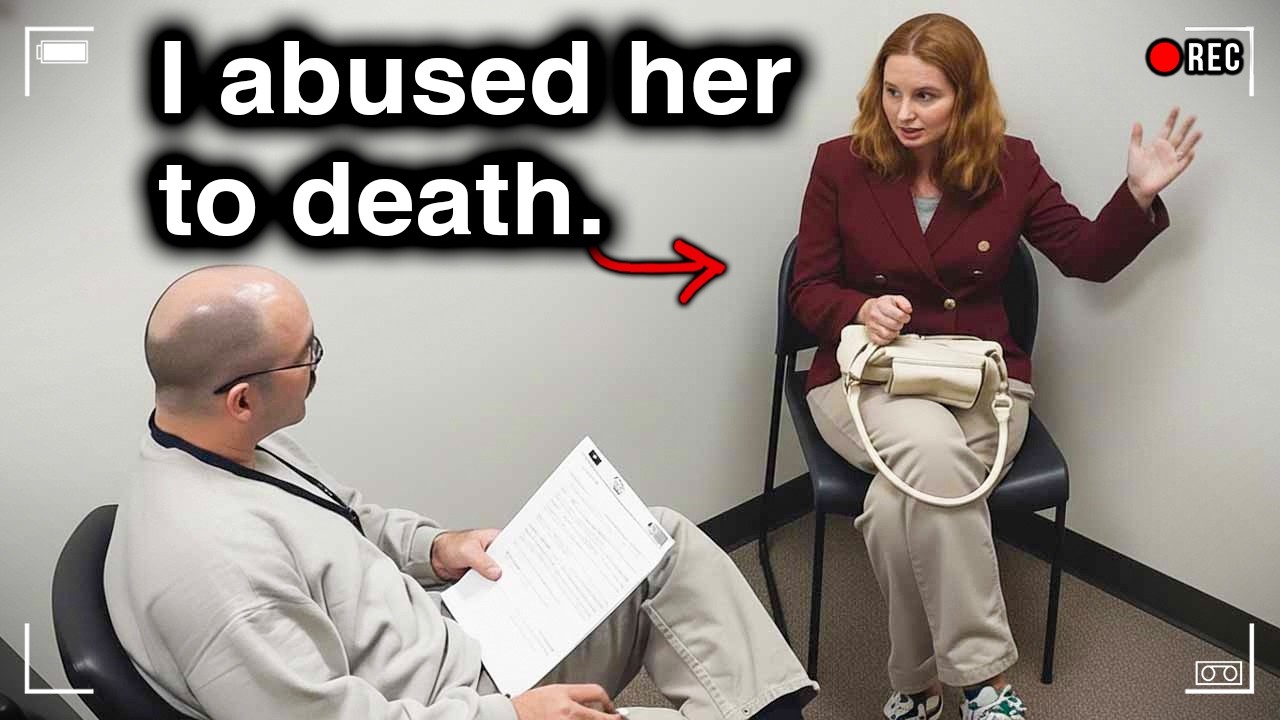
Watch the original video on YouTube
Real Crime Psychology's Riley Ann Sawyers Video: An Interrogation Built Around a Child With No Name
In October 2007, a child was found near Galveston, Texas, and for weeks no one could name her. Investigators called her Baby Grace. Real Crime Psychology's documentary follows how she was identified as Riley Ann Sawyers, and how attention turned to the two people closest to her.
This is a difficult case to watch, and the video does not pretend otherwise. Its structure is straightforward: background, the identification, extended interrogation footage, and then the trial. The interest is less in a twist than in watching two accounts being tested, slowly, against what investigators already knew.
Published in November 2025, the video has drawn more than 436,000 views. It sits in the JCS-inspired interrogation genre, but the subject — a two-year-old victim — gives it a weight that format alone cannot carry.
At a Glance
| Video | “Killer Parents’ Most Shocking Interrogation” |
|---|---|
| Channel | Real Crime Psychology |
| Published | November 27, 2025 |
| Length | ~68 minutes |
| Views | 436,595 |
| Subject | The 2007 death of Riley Ann Sawyers in Texas; the interrogations of her mother and stepfather |
What the Video Covers
The video opens with the discovery in the Galveston area on October 29, 2007, and the public effort to identify an unknown child. Once she was identified as Riley Ann Sawyers, the focus shifted to her home life in Texas with her mother, Kimberly Trenor, and her stepfather, Royce Zeigler.
The middle of the documentary is the interrogation material, including an extended section built around Zeigler's interview. The video presents the parents' accounts alongside the evidence investigators had assembled, and shows how those accounts changed under questioning.
It closes with the legal outcome. In brief, both Trenor and Zeigler were convicted of capital murder in 2009 in Texas and sentenced to life in prison without parole, according to court records and contemporary reporting. The video's final section follows that trial phase rather than ending on the interviews alone.
Strengths
It lets the interviews run. As with the better entries in this genre, the value is in watching questioning unfold in real time rather than in summary. The long interrogation section gives viewers the context around each answer, not just isolated clips.
The identification story is handled clearly. The Baby Grace phase of the case — an unidentified child, a public appeal, and a family recognition — is explained in a way that keeps Riley, not the suspects, at the start of the story.
It finishes the case. The trial section gives the documentary a complete arc. Viewers are not left with interrogation footage and no resolution.
Weaknesses
The title oversells a grim case. Calling any interrogation in a child's death “shocking” is marketing language that sits uneasily with the subject. The footage is serious enough without it.
The psychology is commentary, not expertise. The channel's framing of motive and behavior should be read as interpretation of public footage and records, not as a clinical or forensic assessment.
Pacing is uneven. At 68 minutes, the background and interrogation sections are thorough, but viewers who already know the Baby Grace case may find the early setup slow before the interviews begin.
Who Should Watch
- Interrogation-genre viewers — extended interview footage is the core of the video, presented with case context.
- Viewers who know the Baby Grace name — a single, contained revisit of how Riley Ann Sawyers was identified and how the case was resolved.
- True crime viewers who prefer closed cases — this one ends with convictions, not speculation about an unknown offender.
7/10
A sober, complete interrogation documentary on a very hard case — the interviews are given room, Riley stays at the center, and the trial is covered. A sensational title and uneven pacing keep it below the genre's best.
Source: Real Crime Psychology on YouTube (“Killer Parents’ Most Shocking Interrogation,” published November 27, 2025); case outcome via Texas court records and contemporary reporting on the 2007 Galveston County case.