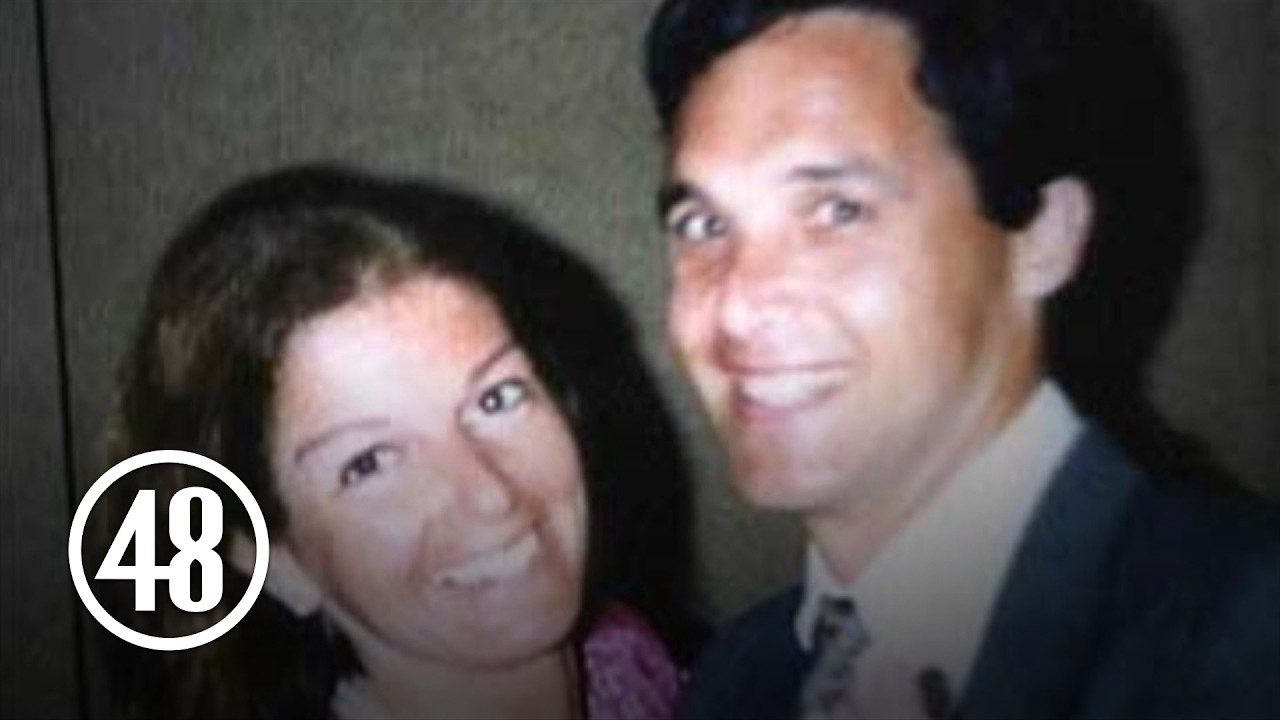
Watch the video on YouTube: Did the Doctor Kill the Doctor? | Full Episode \u2014 48 Hours
48 Hours' Goudey Video: The Case That Was Never Tried as a Murder
On October 4, 1993, Dr. Linda Goudey, a 42-year-old obstetrician, was found strangled in the back seat of her car in the parking lot of the Stoneham, Massachusetts, hospital where she worked. Her boyfriend, Dr. Timothy Stryker, was the suspect from the first day. He was never charged with her murder. This episode follows what happened instead: fifteen years of suspicion, a civil verdict, and a lie that collapsed.
48 Hours, the CBS investigative series, tells the story through correspondent Richard Schlesinger. The episode is a June 2009 "48 Hours Mystery" broadcast, built around an exclusive interview with Stryker himself, and it was posted to the channel's YouTube page on October 20, 2026, where it has drawn 772,463 views. The channel's decision to resurface it is understandable: few cases show the gap between suspicion and proof as starkly as this one.
The title's question is genuine, and the episode knows it. A civil jury answered it one way; the criminal courts never answered it at all. What the hour documents, carefully, is everything that happened in between \u2014 and the desperate scheme that turned a man who had never been charged into a convicted felon anyway.
At a Glance
| Video | \u201cDid the Doctor Kill the Doctor? | Full Episode\u201d |
|---|---|
| Channel | 48 Hours |
| Published | October 20, 2026 |
| Length | ~42 minutes |
| Views | 772,463 |
| Subject | The 1993 death of Dr. Linda Goudey in Stoneham, Massachusetts; Dr. Timothy Stryker, the civil verdict, and the perjury conspiracy |
What the Video Covers
The episode opens with the discovery in October 1993. Goudey's body was found in the back seat of her locked Saab in the parking lot of New England Memorial Hospital in Stoneham, where she worked as an obstetrician; she had been strangled, in an attack the episode describes as leaving injuries at 24 separate places on her body. Attention turned immediately to her boyfriend of four years, Stryker, a Winchester doctor \u2014 and, as the episode recounts, his attempts to help the investigation only deepened the suspicion around him. But nothing police found at the scene pointed directly at him, the evidence stayed circumstantial, and the criminal case went cold.
Unable to get a criminal prosecution, Goudey's family took the civil route. They sued Stryker for wrongful death, and in 2006 a jury found him responsible for her death; the judgment grew to $15 million with interest. By then Stryker was married, with a successful practice, and he maintained his innocence throughout. Then, after the civil verdict, a new witness emerged claiming to have seen Goudey in her car with another man that night \u2014 exactly the break Stryker needed to challenge the judgment, and, as the episode notes, one that struck some observers as a little too convenient.
The final section follows the unraveling of that witness. Middlesex County District Attorney Gerry Leone's office investigated and concluded that Stryker and one of his patients, Richard Chambers, had arranged for the witness to fabricate the story in exchange for a promised payoff. In April 2009, Stryker pleaded guilty to perjury, subornation of perjury, and conspiracy charges arising from the scheme, and was sentenced to four years and a day in state prison followed by probation. Woven through it is Schlesinger's interview with Stryker \u2014 his first exclusive network interview \u2014 addressing accusations that had followed him for fifteen years.
Strengths
The accused speaks for himself. Most episodes in this genre reconstruct a suspect from other people's accounts. Here, Stryker sits for an extended interview, and viewers can weigh his denials and his explanations against the record the episode lays out alongside them. Whatever conclusion you reach, hearing the case argued by the man at its center gives the hour a weight that narration alone would not.
It explains the two-track justice system clearly. The case is a practical lesson in the difference between the criminal burden of proof and the civil one: the same death, examined by two courts under two standards, producing a $15 million finding of responsibility in one and no charge at all in the other. The episode keeps that distinction intelligible without turning it into a lecture.
The family stays at the center. The civil case existed because Goudey's family \u2014 her mother, Marguerite Rafuse, prominent among them \u2014 refused to let the matter rest when the criminal investigation stalled. The episode treats that persistence, rather than Stryker's notoriety, as the engine of the story, and it keeps returning to Goudey herself: a doctor whose work, as her family later put it, was devoted to mothers and babies.
Weaknesses
The episode cannot finish the story. It aired in June 2009, weeks after the perjury plea, and later reporting adds the final chapter it could not include: Stryker died of pancreatic cancer in January 2011, at a Boston hospital, while serving his perjury sentence. He was never prosecuted for the murder itself, so the question in the title remains formally unanswered by any criminal court \u2014 a limitation of the case, but one a reposted episode leaves the viewer to discover elsewhere.
The evidence problem is never resolved on screen. Because the case against Stryker was always circumstantial, the episode argues by accumulation \u2014 behavior, motive, and the perjury scheme \u2014 rather than by forensic proof. Viewers who want physical evidence tying someone to the car will not find it here; on the record the episode presents, none was found at the scene that pointed directly at him.
It carries its 2009 broadcast conventions. As a "48 Hours Mystery" hour of its era, it is built with act-break teases and recaps shaped for commercial television. Watched in one sitting on YouTube, the repetition is noticeable, and the pacing is slower than the channel's current episodes.
Who Should Watch
- 48 Hours regulars \u2014 a classic Richard Schlesinger episode, with the series' signature interview-driven structure intact.
- Viewers interested in how justice actually works \u2014 few cases separate the civil and criminal standards of proof this cleanly, or show what a family can do when one track stalls.
- Cold-case followers \u2014 a case that was, in effect, decided everywhere except the one courtroom that mattered most.
- New England case followers \u2014 a Stoneham and Winchester case that ran in Massachusetts courts, in one form or another, for more than fifteen years.
8/10
A measured, interview-driven account of a case the criminal courts never tried \u2014 the civil verdict, the fabricated witness, and the plea are laid out clearly, and Goudey's family stays at the center. It cannot supply the ending later reporting provides, and its 2009 pacing shows, but as a study of suspicion, proof, and persistence it holds up.
Source: 48 Hours on YouTube (\u201cDid the Doctor Kill the Doctor? | Full Episode,\u201d posted October 20, 2026; episode originally aired June 2009); case background via CBS News episode summaries and Massachusetts reporting on the 2006 civil verdict, the April 2009 perjury plea, and Stryker's death in prison in January 2011.