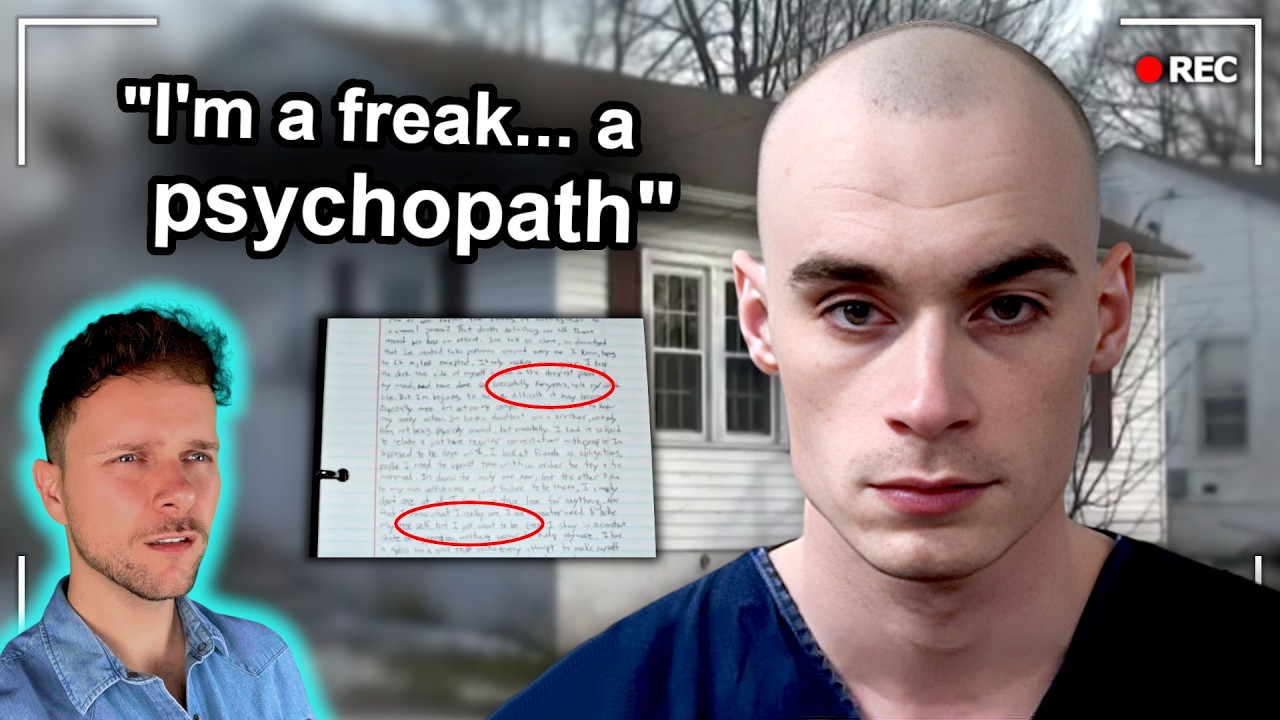
Coffeehouse Crime's Savannah Spurlock Video: The Journal That Gave the Case Away
On January 4, 2019, 22-year-old Savannah Spurlock vanished after a night out in Lexington, Kentucky. A surveillance camera outside a bar captured her walking alongside three men she had only just met — the last confirmed footage of her alive. Coffeehouse Crime's 29-minute documentary traces what investigators found next.
Coffeehouse Crime, hosted by Adrian, tells single cases in a calm, chronological style, and this case suits that approach. There is no shortage of dramatic material — a missing mother, three companions identified from surveillance footage, and a search that stretched for months — but the video's central turn is quieter: a suspect's own written journal, found during a search of his property, helped point police to where Savannah was buried.
The video, published in February 2026, has drawn more than 517,000 views. It is a contained, single-case account that follows the investigation in order rather than jumping between theories.
At a Glance
| Video | “The Local Deadbeat Who Accidentally Exposed His Own Murder” |
|---|---|
| Channel | Coffeehouse Crime |
| Published | February 26, 2026 |
| Length | ~29 minutes |
| Views | 517K+ |
| Subject | The 2019 disappearance and murder of Savannah Spurlock in Kentucky; the investigation and David Sparks |
What the Video Covers
The video opens on the night of January 3–4, 2019, in Lexington, Kentucky. Savannah Spurlock, 22 and a mother who had recently given birth to twins, goes out for the evening and does not come home. Surveillance footage from outside a bar shows her leaving alongside three men she had only recently met.
The middle section follows the search and the statements. Investigators identify the men and piece together their accounts: Savannah travelled with them to a rural home in Garrard County, roughly 40 miles from the bar. The accounts differ in detail, and attention settles on David Sparks, the man whose home it was. For months, despite searches and appeals from Savannah's family, she is not found.
The final section covers the search of Sparks's property and what it produced. Investigators find a journal in his room with an incriminating written account, and a search of the grounds uncovers a shallow grave. The remains are identified as Savannah Spurlock. The video closes by profiling Sparks and the evidence and arrest that followed, rather than ending on speculation about what happened that night.
Strengths
The chronology is clear. Disappearance, surveillance footage, statements, search, discovery — the video keeps that order intact, so viewers can follow how each step led to the next without needing to hold competing timelines in mind.
The decisive evidence is concrete. The journal is not presented as a rumour or a theory; it is a physical item found in a documented search, and the video explains how it connected to the discovery on the property. That grounding keeps the account testable.
Savannah and her family stay visible. The video gives time to who Savannah was and to the months her family spent searching, rather than treating her only as the starting point for a suspect profile.
Weaknesses
The title oversells one man. Calling Sparks a “local deadbeat” who “accidentally exposed his own murder” is punchy packaging, but it flattens a case that involved three companions, months of police work, and a family search — the journal mattered, but it was not the whole investigation.
Thin on the legal aftermath. The video is strongest on the disappearance and the discovery. Viewers who want the full court record — charges, proceedings, and sentencing in detail — will need to consult reporting and court coverage beyond this account.
Some reconstruction is narration, not footage. As with most videos in this format, stretches of the night itself are retold rather than shown. The surveillance footage is real and central, but viewers should distinguish it from the narrated reconstruction around it.
Who Should Watch
- Single-case documentary viewers — a complete disappearance investigation in under half an hour.
- Coffeehouse Crime regulars — Adrian's calm, chronological delivery in a case with a clear evidential turning point.
- Viewers interested in how cases break — the journal and the property search show how physical evidence, not confession, moved this case.
- True crime newcomers — a contained case with a defined beginning, investigation, and discovery.
7/10
A clear, well-ordered account of a painful case — strongest on the investigation and the evidence that broke it, thinner on the legal aftermath, and let down slightly by a title that oversimplifies the work that found Savannah.
Source: Coffeehouse Crime on YouTube (“The Local Deadbeat Who Accidentally Exposed His Own Murder,” published February 26, 2026); case background via the video's account of the January 2019 Lexington disappearance and the Garrard County discovery.