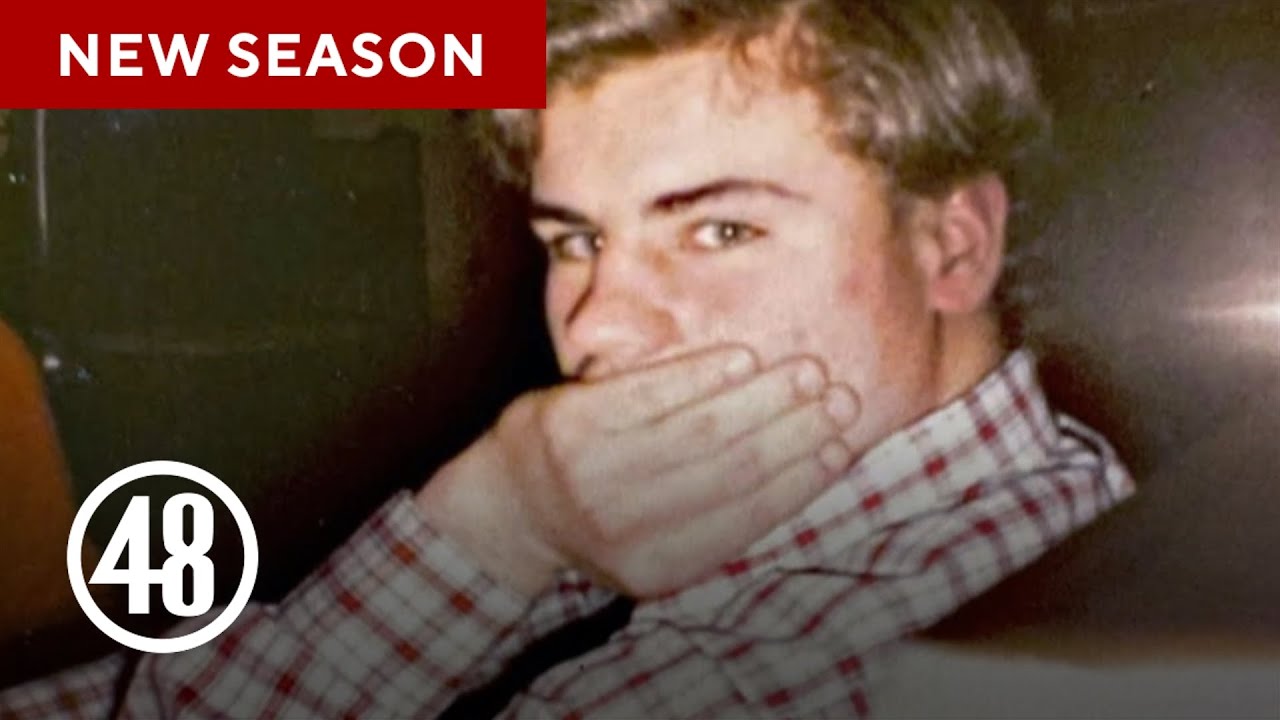
Watch the video on YouTube: The Boy Across the Street | Full Episode — 48 Hours
48 Hours' Boy Across the Street Video: A First Day of College, and 45 Years of Parole Hearings
In September 1979, Catina Rose Salarno arrived at the University of the Pacific in Stockton, California, to start her freshman year and pursue her goal of becoming a dentist. She had ended her relationship with her high school boyfriend, Steven Burns. On her first day of classes, he was on campus too — and that evening she agreed to meet him one last time.
48 Hours, the CBS investigative series, tells the story through correspondent Erin Moriarty. The episode first aired on May 3, 2025, and was posted to the channel's YouTube page on May 8, 2025, where it has drawn more than 3.1 million views. The channel, with 2.56 million subscribers, frames it in its own description in two lines: a college student is killed by her boyfriend who lived right across the street, and her family wages a long battle to keep him in prison.
That second line is the episode's real subject. The killing itself is covered in the first half; the rest is about what a sentence of 17 years to life actually meant in practice — a first parole hearing after about 10 years, and then another, and another, with the Salarno family present at every one.
At a Glance
| Video | “The Boy Across the Street | Full Episode” |
|---|---|
| Channel | 48 Hours |
| Published | May 8, 2025 |
| Length | ~42 minutes |
| Views | 3,173,139 |
| Subject | The 1979 murder of Catina Salarno in Stockton, California; Steven Burns's conviction and the family's campaign at 13 parole hearings |
What the Video Covers
The episode opens with the families across the street. The Burns family moved in opposite the Salarnos in San Francisco when Catina was 14; she and Steven Burns began dating in the 10th grade, and her father Mike gave him a job at his TV store and treated him as part of the family. In her senior year, as the episode presents it, Catina tried to end the relationship, Burns threatened her, and her sisters — who heard the threat — did not tell their parents, a decision they discuss openly in the episode.
The middle section follows September 1979 at the University of the Pacific. Burns, who the family understood was going elsewhere, was enrolled at Pacific too. Catina's roommate Joanne Marks recalls that Burns asked to meet that evening for the last time, and that Catina was not looking forward to it but believed it would end his attention. She was found later that night on campus, shot in the back of the head, and died shortly after midnight. Burns told police he had spent the evening watching football in his dorm and was released, then was arrested two days later at his family home, across the street from the Salarnos. The episode also covers what investigators later established: the gun had been stolen from Mike Salarno's store weeks earlier, and it was never found.
The final section follows the trial and the parole decades. About six months after the killing, a jury convicted Burns of second-degree murder — not the premeditated first-degree murder prosecutors argued for — and he was sentenced to 17 years to life. His first parole hearing came in 1990, and 48 Hours first met the family that year. The episode follows them through to the 13th hearing in January 2025, at which, according to the San Joaquin County District Attorney's Office, the California parole board again found Burns an unreasonable safety concern and denied parole. It also records the family's wider work: Harriet Salarno founded Crime Victims United, and Catina's youngest sister Nina, who testified at the trial at 14, became a prosecutor specialising in domestic-violence cases and now serves as district attorney in Modoc County.
Strengths
It is a victims'-rights story, not just a murder story. The episode shows, concretely, what changed because this family kept showing up: victims in California can now give impact statements at sentencing, parents who are witnesses can attend a trial, and child witnesses must be accompanied by a support person — gaps the Salarnos experienced directly in 1980, when Catina's parents were kept out of the courtroom while their 14-year-old testified alone.
Both sides of the parole question are heard. The episode gives time to people who argue Burns, who was 18 at the time of the killing and is now in his 60s, has done the work for release — including a former fellow prisoner who helped him prepare, and a parole-law advocate who explains youth and elderly-parole considerations. It then shows the January 2025 hearing itself, where commissioners found very little change on the issues that led to the murder, and lets viewers weigh the two accounts.
The timeline is unusually complete. Because 48 Hours first filmed with the family in 1990, the episode can show the same people at the first parole hearing and at the 13th, 35 years apart. That archive gives the family's consistency — weekly cemetery visits for almost 46 years, attendance at every hearing — a weight that narration alone would not.
Weaknesses
The central crime is reconstructed, not documented. There is no footage of the 1979 investigation, and the gun was never recovered. The episode's account of that night rests on witness recollection, the roommate's memory, and the competing versions Burns himself gave over the years — which the episode notes changed repeatedly. Viewers should treat the detail of that evening as the best available reconstruction, not a settled record.
Compression around the trial. The difference between first- and second-degree murder decided how this case unfolded for 45 years, yet the trial occupies a small part of the 42 minutes. Viewers who want the prosecution and defence arguments in full will need the contemporary court reporting the episode draws on.
It carries broadcast conventions. Like other 48 Hours hours resurfaced on YouTube, it is built with act-break teases and recaps shaped for commercial television, including a preview of the following week's episode at the close. Watched in one sitting, the repetition is noticeable.
Who Should Watch
- 48 Hours regulars — an Erin Moriarty episode with the series' interview-driven structure, updated with the January 2025 parole outcome.
- Viewers interested in parole — a clear, long-view example of how a life sentence with parole eligibility works in practice, hearing by hearing.
- Victims'-rights followers — the Salarno family's advocacy, and the California changes that followed their experience, are documented in their own words.
- California case followers — a San Francisco and Stockton case that ran from 1979 through a 2025 parole hearing.
8/10
A measured account of a 1979 killing and the 45 years that followed it — the family's presence at all 13 parole hearings, and the victims'-rights changes they helped bring about, give the episode a purpose beyond retelling the crime. Its trial coverage is compressed, but the parole story is complete and fairly heard.
Source: 48 Hours on YouTube (“The Boy Across the Street | Full Episode,” published May 8, 2025); case background via the San Joaquin County District Attorney's Office release on the January 2025 parole denial and contemporary reporting on the May 3, 2025 broadcast.