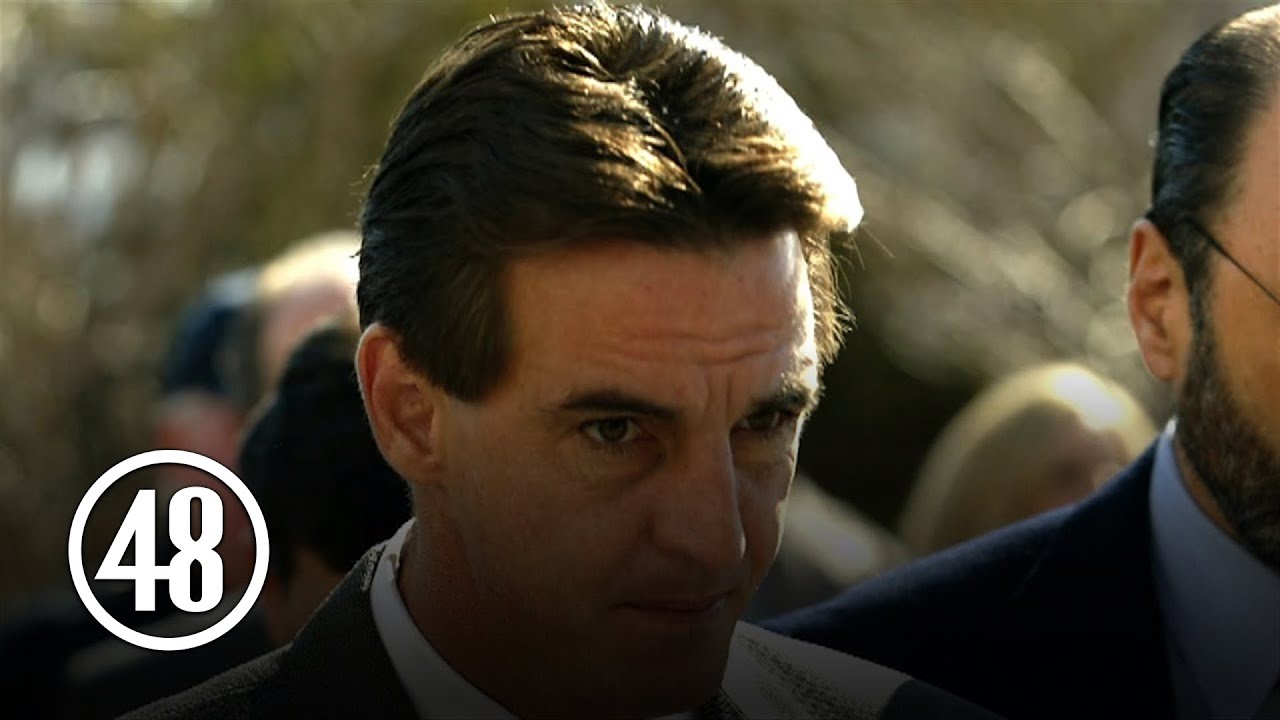
Watch the video on YouTube: Murder in the Hamptons | Full Episode — 48 Hours
48 Hours' Murder in the Hamptons Video: The Tycoon, the Contractor and the Missing Hard Drive
In October 2001, Ted Ammon was found bludgeoned to death in his East Hampton mansion, days before his divorce was due to be finalized. 48 Hours' classic episode asks who killed him — and follows the evidence toward the contractor who had married his widow within months.
This is a classic 48 Hours Investigates episode, reported by correspondent Richard Schlesinger and first broadcast in February 2005, now posted in full on the 48 Hours YouTube channel. Schlesinger speaks at length with Danny Pelosi himself, as well as Pelosi's sister Barbara Lukert, prosecutor Janet Albertson and Generosa Ammon's cousin Al Legaye — a mix that gives the episode both a suspect's-eye view and the prosecution's account.
The video, published on YouTube in May 2024, has drawn more than 556,000 views. Its staying power is not hard to explain: wealth, a contentious divorce, an affair, a surveillance system installed to spy on the victim, and a hard drive that vanished before police arrived.
At a Glance
| Video | “Murder in the Hamptons | Full Episode” |
|---|---|
| Channel | 48 Hours |
| Published | May 13, 2024 |
| Length | ~42 minutes |
| Views | 556,298 |
| Subject | The 2001 murder of Ted Ammon in East Hampton, New York; the investigation and the case against Daniel Pelosi |
What the Video Covers
The video opens in East Hampton, Long Island, in October 2001. Ted Ammon, a Wall Street tycoon, was found beaten to death in his mansion — struck more than 30 times, according to CBS reporting — with no sign of a ransacking. He and his wife Generosa were in the final stages of a bitter divorce, days from it being finalized.
Attention quickly turned to Generosa and Danny Pelosi. Pelosi, a contractor and electrician who had worked renovating Generosa's Manhattan townhouse, was having an affair with her. As the episode recounts, Pelosi had also arranged for a surveillance system to be installed at the East Hampton estate so he and Generosa could watch Ammon — and the hard drive from that system disappeared in the days after the murder, before police recovered it. Generosa and Pelosi married in January 2002, about three months after the killing.
The second half follows what happened next. Generosa died of breast cancer in August 2003, before any trial, leaving Pelosi as the central suspect. Schlesinger's interview with Pelosi runs through the episode, set against the prosecution's case as Albertson presents it. It closes with the outcome reported by CBS and the courts: in December 2004, Pelosi was convicted of second-degree murder and later sentenced to 25 years to life in prison. CBS's own summary of the episode also flags the stranger detail it explores — a claimed witch's spell — as one of the clues and claims swirling around the case.
Strengths
Direct access to the central figures. Schlesinger interviews Pelosi extensively, rather than only talking about him. Hearing the suspect explain the relationship — his own “princess and the pauper” framing in contemporary listings of the broadcast — alongside the prosecutor and family voices makes the competing accounts easier to weigh.
A tangled timeline made followable. Marriage in 1986, twins adopted in 1992, separation by 2000, the killing in 2001, a remarriage in 2002, Generosa's death in 2003 and a conviction in 2004 — the episode keeps that sequence in order, which matters in a case where timing is much of the argument.
The surveillance detail is handled as evidence, not decoration. The installed cameras and the missing hard drive are presented as investigative facts with consequences, not just as color — a restraint that suits a case with plenty of inherently dramatic material.
Weaknesses
It is a period broadcast. This episode was made in the mid-2000s, before Pelosi's later appeals, interviews and continued claims of innocence received years of further coverage. Viewers who want the case's full afterlife will need newer reporting to complete the picture.
Generosa's side can only be second-hand. She died in 2003 and never stood trial, so the episode necessarily reconstructs her role through relatives, records and other people's recollections. That limit is unavoidable, but it is felt — she is central to every theory and absent from every interview.
The spell claim gets more air than weight. CBS billed the episode in part on “a witch's spell,” and while it is part of the case's lore, it is a curiosity beside the divorce timing, the surveillance system and the missing hard drive. Treat it as atmosphere, not evidence.
Who Should Watch
- Classic 48 Hours viewers — a Schlesinger-reported episode from the show's Investigates era, with the suspect interviewed on camera.
- Divorce-and-estate case followers — the timing of an unfinalized divorce and an unchanged will shapes everything that followed.
- Evidence-focused viewers — the surveillance system and its missing hard drive are a clear example of how one piece of evidence can dominate a case.
- Hamptons and Wall Street history readers — a contained account of a killing that became one of East Hampton's most covered cases.
8/10
A durable classic episode — direct interviews with Pelosi and the prosecutor, a clear timeline, and evidence handled with restraint. Dated in places and unable to hear Generosa's own account, but still one of the clearest single-episode tellings of the Ammon case.
Source: 48 Hours on YouTube (“Murder in the Hamptons | Full Episode,” published May 13, 2024); case background via CBS News and contemporary reporting on the 2001 East Hampton case and Daniel Pelosi's 2004 conviction.