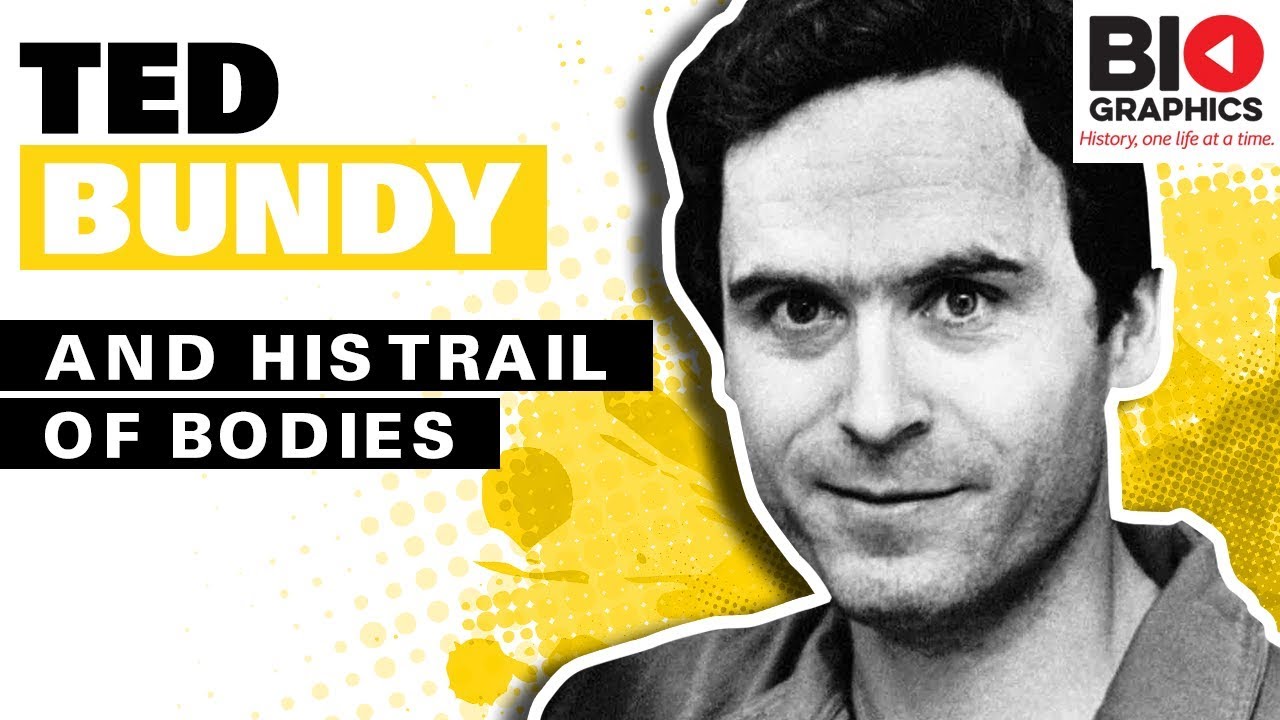
Biographics' Ted Bundy Video: The Charming Facade and the Trail of Bodies
In 1974, young women began vanishing from college campuses across the Pacific Northwest. The man responsible looked like the last person anyone would suspect — a handsome law student with a bright future. Biographics' 18-minute biography traces how Ted Bundy's charm became his most effective weapon.
If you follow true crime, you know Ted Bundy — arguably the most mythologized serial killer in American history. That makes a biography like this one a harder sell: what can 18 minutes add to a story told a thousand times? Biographics' answer is structure. Hosted by Simon Whistler, the video builds Bundy as a case study in duality — the captivating young man on the surface, the predator underneath — and never lets go of that frame.
The video, published in January 2018, remains one of the channel's signature early episodes — a reminder that even the most retold cases keep finding an audience when they're told well. It plays less like a true-crime exposé than a historical biography: measured, chronological, and more interested in the shape of a life than in the shock of its crimes.
At a Glance
| Video | “Ted Bundy and His Trail of Bodies” |
|---|---|
| Channel | Biographics |
| Published | January 8, 2018 |
| Length | ~18 minutes |
| Views | 1.1M+ |
| Subject | Ted Bundy's life and crimes; the gap between his charming persona and his killings |
What the Video Covers
The video opens with its thesis: Bundy as the all-American boy — handsome, intelligent, charming, the young man every parent wanted their son to become — set against the reality of a predator who murdered dozens of young women. It then rewinds to his formative years: born in 1946, raised amid family deceptions about his parentage, a shy teenager who found confidence at the University of Washington, and the breakup with Stephanie Brooks that some see as a turning point.
The narrative turns in 1974, when young women began disappearing from Pacific Northwest campuses. Bundy had moved to Salt Lake City for law school as the disappearances continued; a 1975 traffic stop led to his arrest on kidnapping charges. What follows is the stranger-than-fiction middle act: two escapes from Colorado custody in 1977, and the Florida rampage — including the Chi Omega sorority house attacks of January 1978 — that ended with his recapture.
The final act covers the trial, where Bundy insisted on defending himself in one of the first nationally televised trials, the death sentence, the decade of appeals, and his execution in Florida's electric chair on January 24, 1989 — by which point he had confessed to 30 homicides. The video closes on an unsettling coda: the admirers who wrote him love letters, choosing the charming Ted over the killer.
Strengths
The duality framing gives a familiar story shape. Bundy biographies can blur into a recitation of atrocities; organizing the video around the contrast between the charming facade and the killer underneath keeps the 18 minutes focused and gives viewers a lens rather than just a timeline.
It's disciplined about scope. Eighteen minutes forces choices, and the video makes good ones: the formative years get enough room to matter, the escapes get their due as the story's hinge, and the trial-and-execution coda lands without lingering.
Whistler's narration is steady and unsentimental. The script doesn't mythologize Bundy or revel in the gore; it treats him as a subject to be understood, which suits a biography format better than the breathless true-crime norm.
Weaknesses
Bundy is the most over-covered killer in the genre. Anyone beyond a casual true-crime viewer will find little here they haven't seen — no new interviews, no archival deep cuts, no fresh angle on the psychology. As an introduction it's excellent; as a contribution it's thin.
The visuals are functional, not evocative. Like much of the Biographics catalog, the video leans on stock imagery and simple graphics rather than archival footage or documents, which keeps the most dramatic passages — the escapes, the trial — feeling oddly flat.
The "why" stays surface-level. The video gestures at explanations — the deceptive upbringing, the breakup — but stops short of engaging with what criminologists actually debate about Bundy, leaving the psychology as narration rather than analysis.
Who Should Watch
- True crime newcomers — a tight, well-organized primer on the most referenced serial killer in the genre.
- Biography-format fans — if you like the Biographics style, this is the catalog at its most polished.
- Students of criminal psychology — a useful case study in how charm functions as a predatory tool.
- Viewers who want the facts without the gore — the video keeps the focus on the life and the case, not the atrocities.
7/10
A crisp, well-structured introduction to America's most mythologized serial killer — disciplined, unsentimental, and easy to recommend to newcomers. It breaks no new ground, but as an 18-minute primer on the charming facade and what lay behind it, it does exactly what it sets out to do.
Source: Biographics on YouTube (“Ted Bundy and His Trail of Bodies,” published January 8, 2018); episode details via TheTVDB; case background via widely reported histories of the Bundy case.