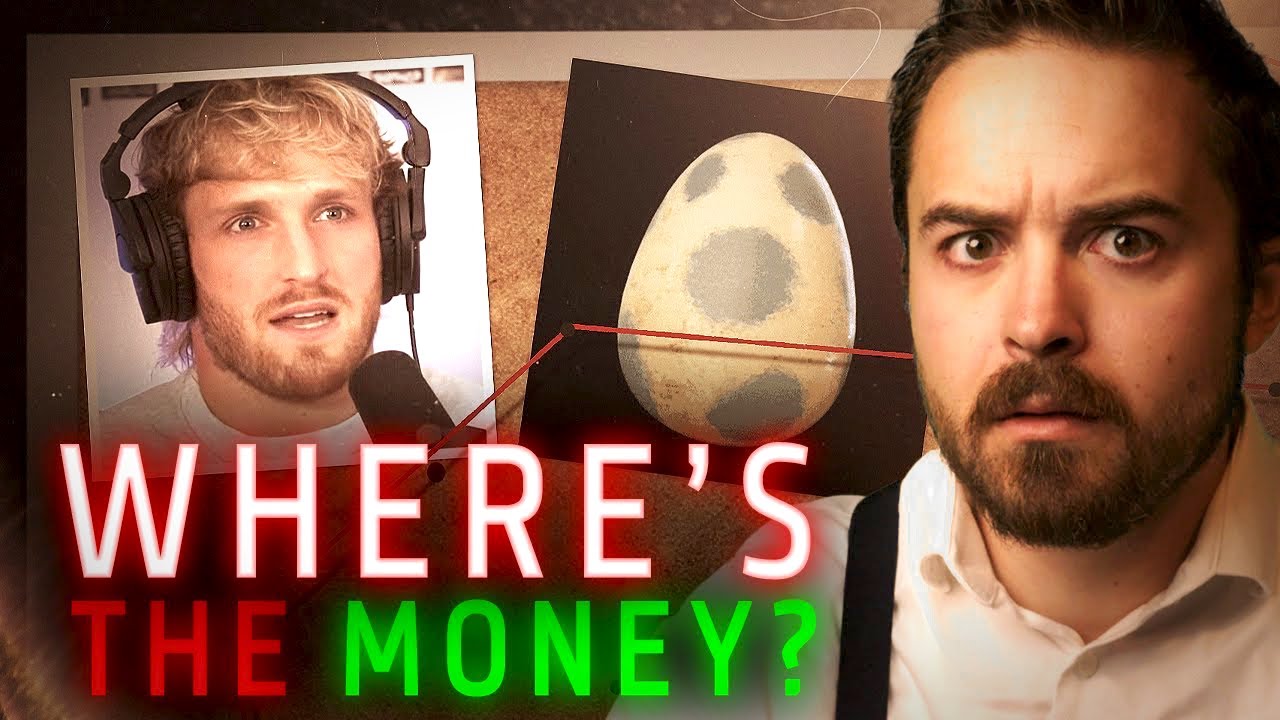
The $2.5 Million NFT Game That Never Launched
A play-to-earn NFT game promoted by one of the biggest names on the internet. Some $2.5 million in egg sales. A coin that briefly touched a roughly $2 billion market cap. And a game that was never playable. Stephen Findeisen — better known as Coffeezilla — spent a year digging into Logan Paul’s CryptoZoo, and part one of his three-part investigation remains the definitive takedown of the saga.
If you follow internet fraud, you already know Coffeezilla. Stephen Findeisen’s channel — around 3.5 million subscribers — has a simple beat: scams, fraudsters, and fake gurus “preying on desperate people with deceptive advertising.” He does not do drive-by commentary. He reads the contracts, traces the wallets, and calls the people involved.
CryptoZoo was the biggest target he ever took on. Announced by Logan Paul on his Impaulsive podcast in August 2021, it was pitched as a “really fun game that makes you money”: buy the in-game currency ($ZOO), spend it on egg NFTs, hatch the eggs into animals, breed them into rarer hybrids, and earn yield. Fans poured in — some $2.5 million on eggs alone, according to Findeisen’s reporting. The game itself never arrived.
Part one of the investigation, posted in December 2022, is where the case gets built. Findeisen interviews players who say they could never hatch their eggs or withdraw their money, follows the money into the project’s team, and lays out why he calls it a scam. Parts two and three widen the lens to the developers and promoters. It is long-form YouTube journalism at its most consequential — and Paul’s camp has been fighting it ever since.
At a Glance
| Video | “Investigating Logan Paul’s Biggest Scam” (Part 1) |
|---|---|
| Channel | Coffeezilla (Stephen Findeisen) |
| Published | December 16, 2022 (per Polygon) |
| Length | Part 1 of 3 (full series: just over an hour, per Kotaku) |
| Views | 7.6M+ (Jan 2023, per Boardroom) |
| Subject | Scam investigation; Logan Paul’s CryptoZoo NFT game |
What the Video Covers
The video opens with the pitch: CryptoZoo as Paul sold it — handmade art, a playable game, passive income for “ZooKeepers.” Then Findeisen starts pulling threads. Players tell him they spent tens, sometimes hundreds of thousands of dollars, and were never able to hatch their eggs. The in-game currency’s market cap soared to roughly $2 billion while, per his reporting, the game stayed broken.
The middle of the video turns to the team. A lead developer, anonymized as “Z” (later identified as Zach Kelling), tells Findeisen he had 30 engineers burning $50,000 a week who were never paid — and was holding the game’s code hostage. Another figure, Eddie Ibanez, is presented as a serial con artist; Paul himself would later concede that assessment. Findeisen also traces how the project’s code was allegedly copied rather than built from scratch.
It closes by setting up the rest of the series: parts two (“The Biggest Fraud in Logan Paul’s Scam”) and three (“Ending Logan Paul’s Biggest Scam”), posted December 20 and 23, which dig into the other developers and promoters. The fallout continued long after — Paul posted a response video he later deleted, blamed “bad actors” on his team, and eventually filed a defamation lawsuit against Findeisen over the series.
Strengths
The receipts are the star. Recorded phone calls (including with Paul’s manager Jeff Levin), blockchain records, screenshots, and on-chain data — Findeisen builds the case document by document instead of asking you to take his word for it. This is what separates it from outrage-bait.
The victims carry the story. Rather than centering Paul, the video centers the players who lost real money — some of whom believed Paul was a “changed man” offering a safe on-ramp into crypto. Their interviews give the numbers a human weight.
It explains the mechanics. Eggs, hatching, breeding, yield — the video makes CryptoZoo’s economy legible to viewers who have never touched an NFT, which is exactly the audience that needed to understand it.
Measured, not gleeful. For a video accusing one of the internet’s biggest stars of scamming his fans, the tone is strikingly calm. The video’s own description even carries a lawyerly disclaimer that it is “opinion” and not statements of fact. The case is built; the viewer is left to judge.
Weaknesses
One-sided by circumstance. Paul did not participate in the investigation, and he has disputed key claims since — including Kelling’s account of the engineering team (Paul says three engineers, not thirty) and the premise itself, insisting he was deceived by con men and lost money too. For the full picture, Paul’s rebuttals are a necessary companion.
Crypto jargon and density. Even with the clear explanations, this is a dense walkthrough of tokenomics, developer disputes, and wallet tracing. Viewers with no interest in crypto may find the middle act heavy going.
It is one third of a story. Part one ends with threads deliberately left hanging for parts two and three. On its own it is compelling; as a complete case, you need the hour-plus of the full series.
Who Should Watch
- Crypto skeptics — this is the anatomy of an NFT-era collapse, documented in real time.
- Scam-story fans — financial fraud investigated with true-crime rigor.
- Logan Paul followers — the unfiltered version of a saga they watched unfold from the other side.
- Journalism nerds — a masterclass in YouTube-native investigative reporting: sources, documents, and recorded calls.
9/10
The gold standard of YouTube scam investigations — methodical, evidence-heavy, and genuinely consequential. Part one lays out the case against CryptoZoo; the full three-part series is worth the hour-plus. Start here.
Source: Coffeezilla on YouTube; series coverage via Polygon, Kotaku, and Boardroom.