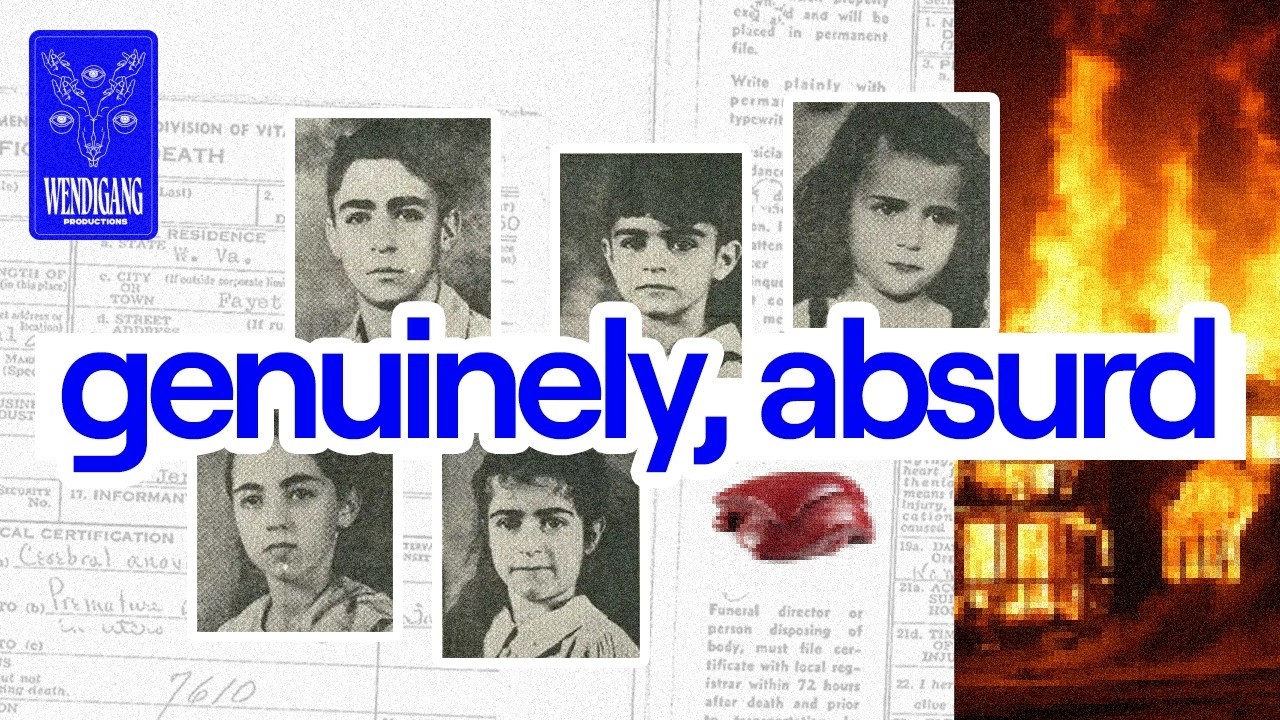
Wendigoan’s Sodder Children Video: The Christmas Eve Fire That Never Added Up
On Christmas Eve 1945, a house in Fayetteville, West Virginia, burned to the ground with five children believed to be inside — yet investigators found no remains in the ashes. Eighty years later, Wendigoan’s 38-minute documentary walks the case from the cut phone line to the sightings that kept a family searching.
The Sodder case is one of the most retold mysteries in American true crime: George and Jennie Sodder, Italian immigrant parents of ten, watched their home burn around 1 a.m. on December 25, 1945. They and four of their children got out. Maurice (14), Martha (12), Louis (9), Jennie (8), and Betty (5) were never seen again — and the fire never produced a single bone.
Wendigoan’s video, published in June 2025, has drawn more than 1.3 million views. It is a chapter-by-chapter reconstruction rather than a theory-first argument: the parents’ background, the night of the fire, the fire department’s botched response, the basement that was bulldozed before a proper excavation, and the decades of sightings and leads that followed.
At a Glance
| Video | “The Bizarre “Disappearance” of the Sodder Children” |
|---|---|
| Channel | Wendigoan |
| Published | June 16, 2025 |
| Length | ~38 minutes |
| Views | 1.3M+ |
| Subject | The 1945 Sodder children disappearance; the fire, the sightings, the theories |
What the Video Covers
The video opens on the Sodders themselves — George and Jennie, their ten children, and the ordinary Christmas Eve that ended just after midnight with smoke and flames. It reconstructs who escaped and how, then moves to the investigation’s early failures: the delayed fire department response, the basement that was bulldozed over before investigators finished, and the official conclusion that the five missing children simply burned — despite the absence of remains.
The middle chapters are where the case gets strange, and the video catalogs each oddity with its backing evidence. The phone line cut before the fire. The ladder missing from its usual spot. The trucks that wouldn’t start. Reported sightings of the children in the years after — a Charleston motel, a “mystery girl,” a man said to resemble Louis spotted at jury duty. And the grim detail of a beef heart and liver that investigators once presented as a child’s heart, which the family had buried before learning otherwise.
The closing chapters weigh the theories — kidnapping, an accidental fire with faulty wiring, even members of the family — and follow the Sodders’ own decades-long search, from hired investigators to the roadside billboard that kept the case in the public eye. It ends where the case still sits: with five missing children and no resolution, eighty years on.
Strengths
The research is dense. This is a case told in documentaries dozens of times over, and the video earns its runtime by organizing the chaos: chapters, a clear timeline, and the discipline to separate what’s documented from what’s merely rumored. The lesser-known details — the bulldozed basement, the “heart” that wasn’t — are given their full weight.
The children stay at the center. Disappearance videos can drift into conspiracy entertainment. This one keeps returning to the human cost: five named children, and parents who spent the rest of their lives insisting the official story was wrong. The tone stays measured and victim-centered throughout.
It lets the ambiguity stand. The video doesn’t manufacture a conclusion where none exists. Each theory is laid out with its evidence and its holes, and the unsolved ending is presented honestly rather than as a cliffhanger.
Weaknesses
Well-trodden ground. The Sodder children are among the most covered mysteries on the internet — dedicated viewers may find little here they haven’t seen in other retellings. The video’s thoroughness is its strength, but novelty isn’t one of them.
Some leads get catalogued more than weighed. The sightings and odd details are presented one after another, but the weaker ones — a glimpse at a motel, a decades-old photo — receive less scrutiny than a skeptical viewer might want. It’s more a guided tour of the evidence than a rigorous debunking.
Depth is spread thin. Thirty-eight minutes covers a remarkable amount, but each thread — the fire investigation, the sightings, the family’s own search — could support a full episode on its own. The pace never lingers.
Who Should Watch
- Unsolved-mystery fans — this is one of the genre’s defining cases, told cleanly in a single sitting.
- True crime newcomers — a contained, famous case with no jargon and an easy-to-follow structure.
- History-of-crime buffs — the 1945 details, from the rural West Virginia setting to the family’s billboard era, are half the fascination.
- Wendigoan viewers — the research-heavy, measured style his audience knows, applied to a classic case.
8/10
A thorough, respectful reconstruction of one of America’s most famous unsolved disappearances. The case is so well-covered elsewhere that little feels new, but the research is dense, the five children stay at the center, and the unsolved ending is handled honestly.
Source: Wendigoan on YouTube (“The Bizarre “Disappearance” of the Sodder Children,” published June 16, 2025); case background via widely reported accounts of the 1945 Sodder children disappearance.