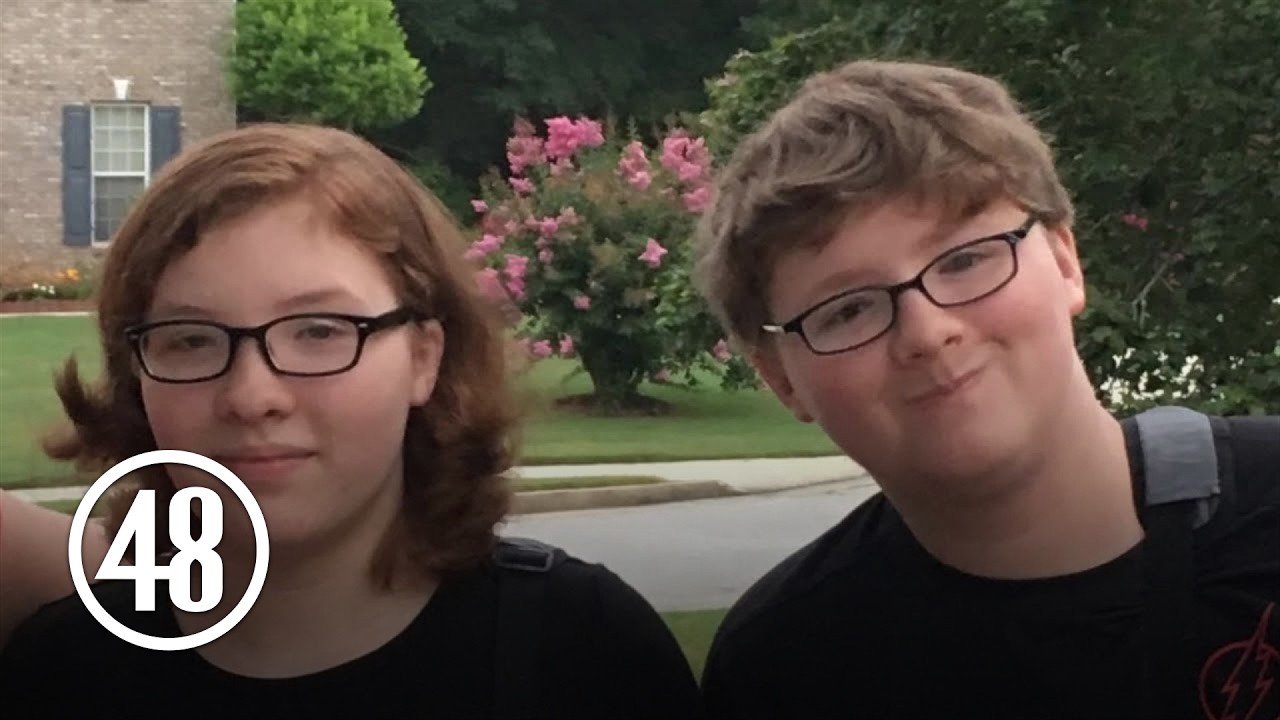
Watch the video: https://www.youtube.com/watch?v=WAC9-BkMA54
48 Hours' Boy Who Killed His Twin Video: A Sleepwalking Defense, Tested in Court
In the early hours of September 29, 2021, a 17-year-old in Katy, Texas called 911 and told the operator he had just killed his sister — his twin. Then he asked whether she was really dead, and said it had felt like a dream. Almost everything about the case that followed turns on whether that was true.
Most murder cases give investigators a motive to work with. This one never did. Benjamin and Meghan Elliott were, by every account the episode gathers, close twins with no history of conflict, and police found no evidence of an argument, a grievance, or a plan. What they had instead was a defendant who admitted the act from his first phone call and disputed only the state of mind behind it.
The episode opened the programme's 39th season on CBS on September 27, 2025, and was uploaded to YouTube on October 3, 2025, where it has drawn more than 5.4 million views — the largest audience for a case whose central question is not who, but whether the person holding the knife was awake.
At a Glance
| Video | “The Boy Who Killed His Twin | Full Episode” |
|---|---|
| Channel | 48 Hours |
| Published | October 3, 2025 |
| Length | ~42 minutes |
| Views | 5,469,317 |
| Subject | The 2021 killing of Meghan Elliott in Katy, Texas; Benjamin Elliott's sleepwalking defense and his 2025 murder conviction |
What the Video Covers
The video opens on September 29, 2021, in Katy, Texas, a suburb northwest of Houston. At around 3 a.m., Benjamin Elliott called 911 and said he had stabbed his twin sister. Officers found him trying to perform CPR on Meghan; she had suffered two stab wounds to the neck and could not be saved. In his recorded interview that morning, Benjamin told detectives he had woken in his sister's room holding a knife, believed he was dreaming, and remembered only fragments of what happened.
The middle of the episode belongs to the sleep science. Benjamin was charged with murder and released on bail while the case moved slowly toward trial. His lawyers turned to Dr. Jerald Simmons, a neurologist and sleep-disorder specialist who says he began the evaluation skeptical. After two sleep studies, Simmons testified that Benjamin dropped unusually quickly into the deep stage of sleep associated with sleepwalking, and that the act was, in his assessment, medically plausible as a parasomnia episode. Family members supported the account: an older sister and a great-aunt described earlier sleepwalking and a family history of it.
The final act is the February 2025 trial in Harris County. Prosecutors, who never identified a motive, argued the details did not fit sleepwalking — among them that Meghan was stabbed twice, one wound deep enough to sever major arteries, and that Benjamin remembered more of the night than his account suggested. The jury was initially divided, then convicted him of murder on February 24, 2025. The next day, Judge Danilo Lacayo sentenced him to 15 years in prison — well below the 40 years prosecutors requested, and above the five years the defense sought. Benjamin, interviewed by Moriarty after the verdict, maintains he would never knowingly have harmed his sister.
Strengths
Both sides of the science get a real hearing. The episode does not treat the sleepwalking claim as a gimmick. It walks through the sleep studies, the family history, and the expert who changed his mind — and then gives prosecutors equal room to explain why the wounds and Benjamin's own memory undercut it. Viewers are left to weigh the same conflict the jury weighed.
The absence of motive is handled honestly. A lesser programme would invent tension by hinting at a hidden conflict between the twins. This one states plainly that investigators looked for one and found none, and lets that absence — the strongest point the defense had — sit at the center of the story.
Post-verdict access completes the arc. Because the episode was produced after the trial, it includes Benjamin's own account from custody, the sentence, and the reasoning around it, rather than ending on the unresolved question the case posed for nearly four years.
Weaknesses
The timeline is compressed. More than three years passed between the killing and the trial, including a long period in which Benjamin lived at home on bail. The episode moves over those years quickly, and viewers get little sense of how the family — parents who lost one twin and faced losing the other to prison — lived through them.
Parasomnia science is suggestive, not settled. The episode presents the sleep-study findings carefully, but 42 minutes cannot convey how contested sleepwalking defenses remain among experts, or how rarely they succeed. The science should be read as one side's evidence, tested at trial — which is how the jury ultimately treated it.
Meghan gets less of the episode than the defense does. The legal question is inherently about Benjamin's state of mind, and the programme follows it — but that means Meghan is present mainly through the night she died, rather than through the life her family describes outside the courtroom.
Who Should Watch
- Viewers interested in unusual defenses — a rare, fully litigated sleepwalking defense, with the expert evidence shown rather than summarized.
- 48 Hours regulars — the season 39 premiere, reported by Erin Moriarty, in the programme's established single-case format.
- Sleep-science and psychology viewers — a clear lay introduction to parasomnia, deep-sleep stages, and how courts test claims built on them.
- True crime viewers who prefer a closed case — the killing, the trial, the verdict, and the sentence are all resolved on screen.
8/10
A balanced, complete account of a case with no motive and an extraordinary defense — the sleep science and the prosecution's rebuttal are both given their due, and the story runs through verdict and sentence. The compressed timeline and Meghan's limited presence are the costs of a single-episode telling.
Source: 48 Hours on YouTube (“The Boy Who Killed His Twin | Full Episode,” published October 3, 2025; episode aired September 27, 2025); case background via CBS News and A&E reporting on the February 2025 Harris County trial, conviction, and 15-year sentence of Benjamin Elliott.