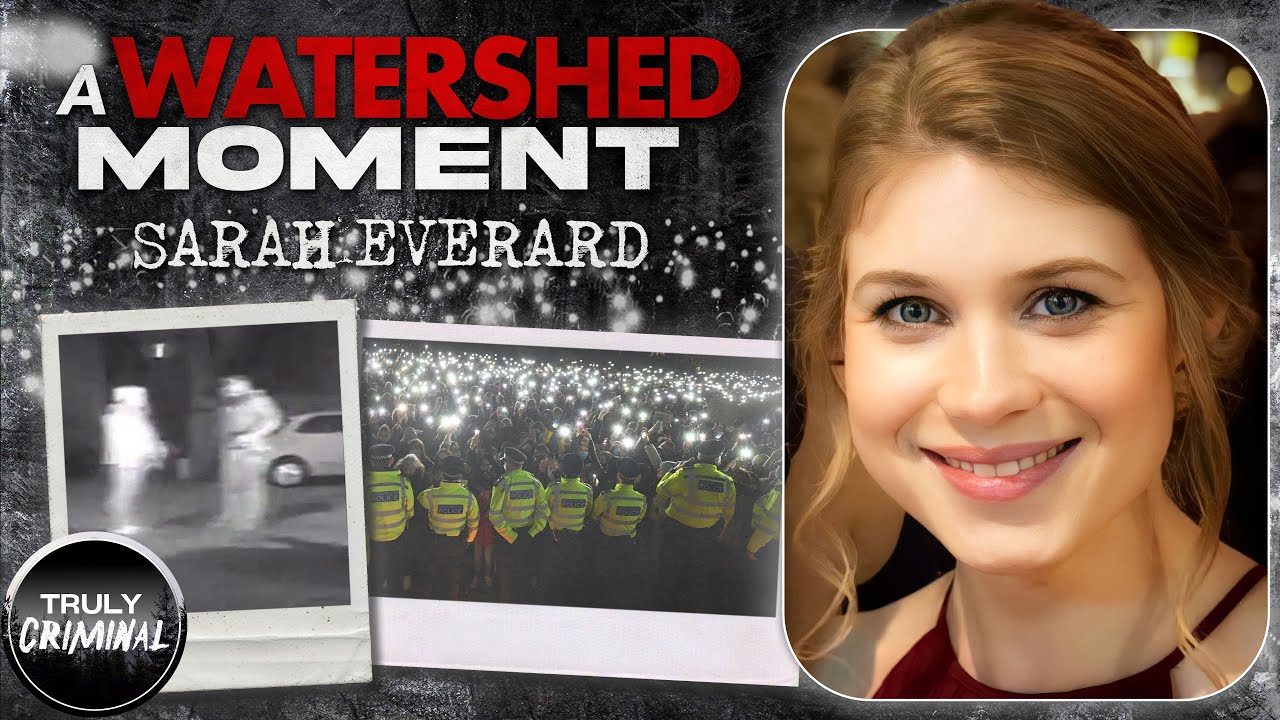
Truly Criminal's Sarah Everard Video: A Trusted Uniform, Turned Into a Weapon
On the evening of March 3, 2021, Sarah Everard, a 33-year-old marketing manager, set off to walk home from a friend's house in Clapham, south London. She never arrived. The man who stopped her was not a stranger lurking in the dark in the usual sense — he was a serving Metropolitan Police officer, and he used the authority of that role to take her. Truly Criminal's 64-minute documentary traces how it happened, and why the case changed Britain's conversation about policing and women's safety.
Truly Criminal, a UK channel with about 950,000 subscribers, makes calm, narration-led case documentaries, and this case suits that register: the facts are devastating enough without embellishment. The video's title borrows the phrase officials and commentators used at the time — a watershed moment — and sets out to show why it earned that description.
The video was published in September 2022, after the killer's sentencing and after his appeal had been dismissed, and it has drawn more than 2.4 million views. Because it was made after the court proceedings concluded, it can tell the story as a complete arc — the disappearance, the investigation, the guilty pleas, and the public response — rather than as a case still in progress.
At a Glance
| Video | “A Watershed Moment: The Case Of Sarah Everard” |
|---|---|
| Channel | Truly Criminal |
| Published | September 10, 2022 |
| Length | ~64 minutes |
| Views | 2,422,075 |
| Subject | The 2021 abduction and murder of Sarah Everard in London; Wayne Couzens' whole-life sentence and the fallout for the Metropolitan Police |
What the Video Covers
The video opens on March 3, 2021, in Clapham, south London. Everard, originally from York and living in Brixton since 2008, had visited a friend and set off on foot for home in the early evening, in contact with her boyfriend as she walked. The documentary reconstructs her route from the CCTV, doorbell, and phone records the investigation later assembled — an ordinary walk home, documented almost minute by minute, that ended when a car stopped beside her.
The man in the car was Wayne Couzens, a 48-year-old serving Metropolitan Police firearms officer with the Parliamentary and Diplomatic Protection Command. He showed Everard his warrant card, handcuffed her, and told her she was being arrested for breaching COVID rules — a false arrest staged with the equipment and authority of his job. He drove her out of London to Kent, where he raped and murdered her. Her remains were found in woodland near Ashford about a week later, and the investigation moved quickly once the hired car Couzens had used was traced back to him.
The final section covers the legal outcome and the public reaction. Couzens pleaded guilty to kidnap, rape, and murder, and on September 30, 2021 he was sentenced to life imprisonment with a whole life order — meaning he will never be eligible for parole — a sentence the Court of Appeal upheld in July 2022. The video closes on what the case set in motion: the vigil on Clapham Common, the protests, and the sustained criticism of the Metropolitan Police over how one of its own officers could use his position to commit this crime.
Strengths
The institutional question stays at the center. Many tellings of this case stop at the killer. This one keeps returning to the harder issue the title points to: the murder was possible because a serving officer's warrant card, handcuffs, and a claim of a COVID arrest were enough to make a member of the public comply. That framing is what makes the documentary more than a case summary.
The timeline is laid out plainly. The investigation's sequence — the last sightings, the hired car, the identification of Couzens, the search in Kent — is presented in order and without speculation filling the gaps. For a case that generated enormous commentary, the discipline of sticking to the established record is a real strength.
Everard is presented as a person, not a premise. The video gives her a life before the case: York, the move to London in 2008, her work in marketing, the friend she had visited that evening. It is a brief treatment, but it keeps the focus where it belongs — on the woman who was taken, and on what her death revealed.
Weaknesses
It predates the official reckoning. Published in September 2022, the video cannot cover the major findings that came later — the Casey review of the Metropolitan Police in 2023 and the Angiolini Inquiry report in 2024, both of which examined vetting and the warning signs around Couzens in detail. Viewers who want the full accountability picture will need that later reporting alongside it.
It is a narrated reconstruction, not primary footage. Truly Criminal's format is built on narration over maps, photographs, and press material. There is little courtroom or interview footage, so viewers looking for the primary record — the sentencing remarks, the family's statements in their own words — will have to go to the original broadcasts and court reporting.
Some institutional context is compressed. For an international audience especially, the mechanics matter here: what a whole life order means, how rare it is, and how police vetting is structured in England. The video touches on these rather than explaining them in depth, which leaves part of the case's significance to be filled in elsewhere.
Who Should Watch
- Viewers interested in police accountability — a case-length account of how institutional trust was abused, and the questions that followed.
- UK true crime followers — one of the defining British cases of the decade, told in full and in order.
- Viewers who prefer completed cases — the investigation, guilty pleas, whole-life sentence, and appeal are all covered.
- Anyone studying how a single case shifts national debate — the protests, the vigil, and the policy argument are part of the story here, not an afterthought.
8/10
A careful, sobering documentary that keeps both Sarah Everard and the institutional question in view: how a serving officer turned his authority into a weapon, and what that forced a country to confront. It cannot include the official findings published after it was made, but as an account of the case itself, it is thorough, restrained, and well judged.
Source: Truly Criminal on YouTube (“A Watershed Moment: The Case Of Sarah Everard,” published September 10, 2022); case background via contemporary British reporting on the 2021 investigation, Couzens' sentencing at the Old Bailey on September 30, 2021, and the Court of Appeal ruling in July 2022.