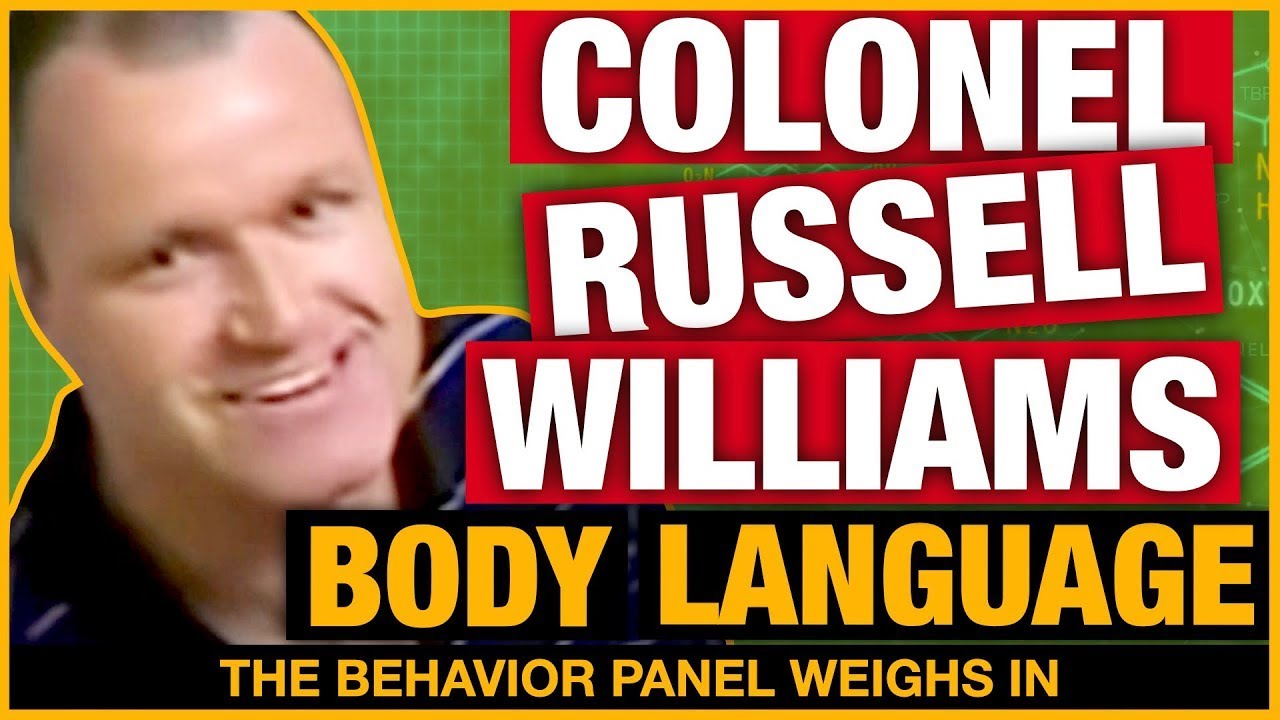
Four Body-Language Experts, One Killer Colonel, and the Ten-Hour Confession
The most famous interrogation in Canadian history, examined frame by frame: The Behavior Panel spends two and a half hours inside the room where an Ontario detective talked Colonel Russell Williams — a decorated air force commander — into confessing to murder.
If you watch true crime YouTube, you know the Russell Williams interrogation. On February 7, 2010, the commander of CFB Trenton — Canada’s largest air force base, a pilot who had flown prime ministers and the Queen — walked into an Ontario Provincial Police interview room as a person of interest in the disappearance of Jessica Lloyd. He walked out a confessed killer, having admitted over hours of questioning to Lloyd’s murder, the murder of Corporal Marie-France Comeau, and a string of sexual assaults and break-ins.
The Behavior Panel — body-language and behavior experts Scott Rouse, Mark Bowden, Chase Hughes, and Greg Hartley, regulars on Dr. Phil with their own show on Merit Street Media — built one of their signature episodes around that footage. Published in April 2021, “Inside An Interrogation: Colonel Williams Revealed” is less a documentary than a masterclass: four professionals narrating the exact moments a master interrogator dismantles a controlled, intelligent suspect without ever raising his voice.
At a Glance
| Video | “Inside An Interrogation: Colonel Williams Revealed” |
|---|---|
| Channel | The Behavior Panel |
| Published | April 2021 |
| Length | ~2.5 hours |
| Views | Millions of views |
| Subject | Body-language analysis of the 2010 interrogation and confession of Colonel Russell Williams |
What the Video Covers
The panel works through the released interrogation footage in sequence, pausing to dissect what investigator Jim Smyth is doing and how Williams reacts. Early chapters cover Smyth’s tone and the famous decision to never call Williams “Colonel” — a deliberate leveling of the power dynamic. Then comes the evidence architecture: tire tracks and boot prints tying Williams to Lloyd’s home, presented piece by piece from Smyth’s folder until every exit is closed.
Along the way, the four experts flag the behavioral tells they watch for — changes in breathing, the thinning of hand gestures (“illustrators”), linguistic shifts, and the long silences Smyth lets hang in the room. The final stretch covers the confession itself and the categories of language Williams falls back on once the exits close. The video’s description notes the session ran some ten hours; the panel distills it to the turning points.
Strengths
Four experts, four lenses. Rouse, Bowden, Hughes, and Hartley bring different professional backgrounds — including Hartley’s experience as a military interrogator — so the analysis rarely repeats itself. One catches a breathing shift, another the interrogator’s word choice, a third the strategic purpose of a silence.
It teaches interrogation, not just a case. The video is genuinely educational about technique: rapport-building, minimization, evidence sequencing, and why yelling is the weakest tool in the room. You come away understanding how confessions are obtained, which is rarer and more valuable than another retelling of the crimes.
The restraint. The crimes behind this case are horrific — two murders, sexual assaults, dozens of break-ins — but the panel keeps the focus on the room, the behavior, and the technique. The victims, Jessica Lloyd and Marie-France Comeau, are named and centered rather than exploited.
Weaknesses
It is a real commitment. Two and a half hours of panel discussion is a different ask than a tight video essay. The format occasionally circles the same observation, and viewers who want the case in twenty minutes will not make it to the confession analysis.
The panel format meanders. Four voices means four perspectives, but also repetition and tangents. A single-narrator edit of the same material could have been ninety minutes without losing much.
The underlying crimes are heavy. Handled responsibly, but the case involves sexual violence and murder. The video never shows graphic material, yet viewers should know what the interrogation is about before pressing play.
Who Should Watch
- Interrogation-technique nerds — this is the famous Williams interview broken down by people who do this for a living.
- Body-language students — breathing, illustrators, statement analysis, all demonstrated on real footage.
- JCS fans wanting the panel version — if you like forensic-psychology breakdowns, this is the four-expert equivalent.
- True crime skeptics — analysis over reenactment, technique over tabloid.
8/10
The definitive expert breakdown of the most studied interrogation in Canadian history — educational, restrained, and genuinely fascinating. It is long and occasionally repetitive, but as a masterclass in how confessions are really obtained, nothing in the genre teaches more.
Source: The Behavior Panel on YouTube; case background via the video’s description and court reporting on Williams’s October 2010 guilty plea to 88 counts, including two first-degree murders.