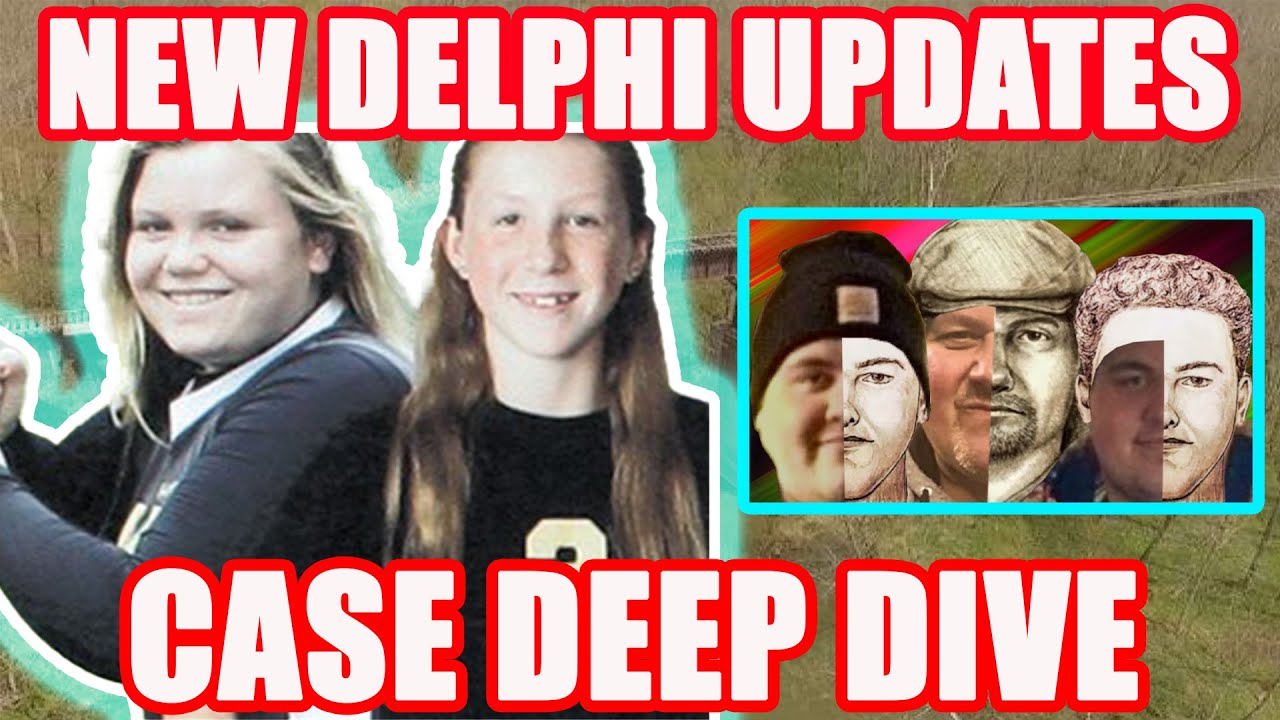
Inside Annie Elise’s Delphi Deep Dive: The Catfish Lead That Almost Broke the Case
On February 13, 2017, best friends Abby Williams, 13, and Libby German, 14, were dropped off at the Monon High Bridge Trail in Delphi, Indiana. They never came home. Five years later, Annie Elise’s 51-minute update argued the answer was hiding in plain sight — inside a fake social media account that had been messaging Libby in the run-up to her murder.
On February 13, 2017, best friends Abigail “Abby” Williams, 13, and Liberty “Libby” German, 14, were dropped off for a hike on the Monon High Bridge Trail in Delphi, Indiana. When they failed to show up at their pickup spot, family and police searched through the night. Their bodies were found the next afternoon near Deer Creek, and a grainy clip from Libby’s phone — a man on the bridge, a garbled “guys, down the hill” — became the most famous piece of evidence in modern American true crime.
Five years on, with no arrest in sight, the case took a sharp turn: in December 2021, police asked the public for information about an online profile called “anthony_shots” that had been in contact with Libby. The account traced back to Keegan Klein, a man whose home had been raided days after the murders and who had since been charged in an unrelated case. Elise’s April 2022 update stitches the whole story together — the timeline, the investigation, and the catfish lead — into one 51-minute argument that the case was closer to solved than anyone thought.
At a Glance
| Video | “UPDATE! The Delphi Murders | Who Really Murdered Abby and Libby?” |
|---|---|
| Channel | Annie Elise (10 to LIFE) |
| Published | April 18, 2022 |
| Length | ~51 minutes |
| Views | 291K+ |
| Subject | The 2017 Delphi murders of Abby Williams and Libby German; the “anthony_shots” catfish lead and the Keegan Klein theory |
What the Video Covers
The video opens with the part everyone knows and then slows it down. Elise walks the full timeline: the February 12 sleepover, the 1:40 p.m. drop-off at the trailhead, Libby’s Snapchat photos at 2:05 and 2:07 p.m., and the last images anyone has of the girls — the “bridge guy” clip with its chilling audio. Then comes the search: unanswered calls from Libby’s father, the family combing the trails, police called at 5:20 p.m., an official search called off at midnight with no foul play yet suspected — and the discovery of the bodies the next afternoon near Deer Creek.
The middle third is a compact history of the investigation: the February 2017 press conference releasing the bridge photo and audio, the DNA fast-tracked to the lab, the first suspect sketch in July 2017, the families’ 2017 appearance on Dr. Phil, and the jarring April 2019 press conference where police scrapped the original sketch for a completely different one. It is a genuinely useful recap — five years of false starts compressed into about nine minutes.
The final act is the update the title promises. In December 2021, investigators asked the public about “anthony_shots,” a profile that had been messaging Libby. Elise traces the account to Keegan Klein: the fake personas used to contact young girls, the raid on his home days after the murders, a failed polygraph, deleted phone searches (including, the video reports, queries about how long DNA lasts), and contradictory interview statements — plus the possibility that his father, Tony, also had access to the accounts. Side-by-side sketch comparisons close the argument: Elise leans toward Tony as the “bridge guy,” with Keegan covering for him.
Strengths
The timeline work is excellent. The first twenty minutes are the clearest minute-by-minute reconstruction of February 13–14, 2017 you are likely to find on YouTube — sourced from press conferences, the families’ own accounts, and the case file as it stood in 2022. For anyone who knows the Delphi case only as headlines, this is the fastest way to actually understand it.
The victims stay at the center. Elise keeps returning to who Abby and Libby were — not just as case names but as kids with families still fighting for them, from the orange porch light campaign to Libby’s mother Carrie’s advocacy. In a genre that often treats victims as plot devices, that discipline matters.
It explains the investigative logic, not just the drama. The video is at its best when it shows why each development mattered — what a sketch change signals, why the December 2021 plea about the catfish account was such a big deal — instead of just stacking twists.
Weaknesses
The central theory did not survive 2022. Richard Allen — a Delphi local who had admitted being on the trail that day — was arrested in October 2022, convicted by a jury in November 2024, and sentenced to 130 years. The Keegan Klein thread the video builds its case on led nowhere in the end. That is not the video’s fault — it was made in good faith with what was known — but it means the “update” now plays as a time capsule rather than an answer.
It names and builds a case against private individuals. The video’s argument points hard at Klein and his father, neither of whom was ever charged in the Delphi case. True crime commentary gets to speculate, but when the speculation attaches to real, living people who turned out not to be the killers, the segment lands differently than it did in April 2022. Watch it as a record of a theory, not a verdict.
Fifty-one minutes is longer than the material needs. The timeline recap is superb; the theory-building second half repeats its key points — the deleted searches, the polygraph, the “Anthony is short for Tony” line — more than once. A tighter cut would have hit harder.
Who Should Watch
- Delphi case followers — the cleanest pre-arrest timeline recap on the platform.
- Digital-forensics fans — the catfish-account thread is a case study in how online evidence moves an investigation.
- True crime newcomers — if you know the case only from headlines, start here for the full picture.
- Post-conviction viewers — watch it as a time capsule of what the case looked like before Richard Allen’s arrest.
7/10
A meticulous, victim-centered reconstruction of the Delphi case at its most uncertain — the timeline work is superb and the catfish lead is genuinely gripping. But the video’s central theory was overtaken by Richard Allen’s 2022 arrest and 2024 conviction, so it now plays as a fascinating time capsule rather than the answer it promised.
Source: Annie Elise on YouTube (“UPDATE! The Delphi Murders | Who Really Murdered Abby and Libby?,” premiered April 18, 2022); case background via Associated Press reporting on the Delphi murders and Richard Allen’s November 2024 conviction.