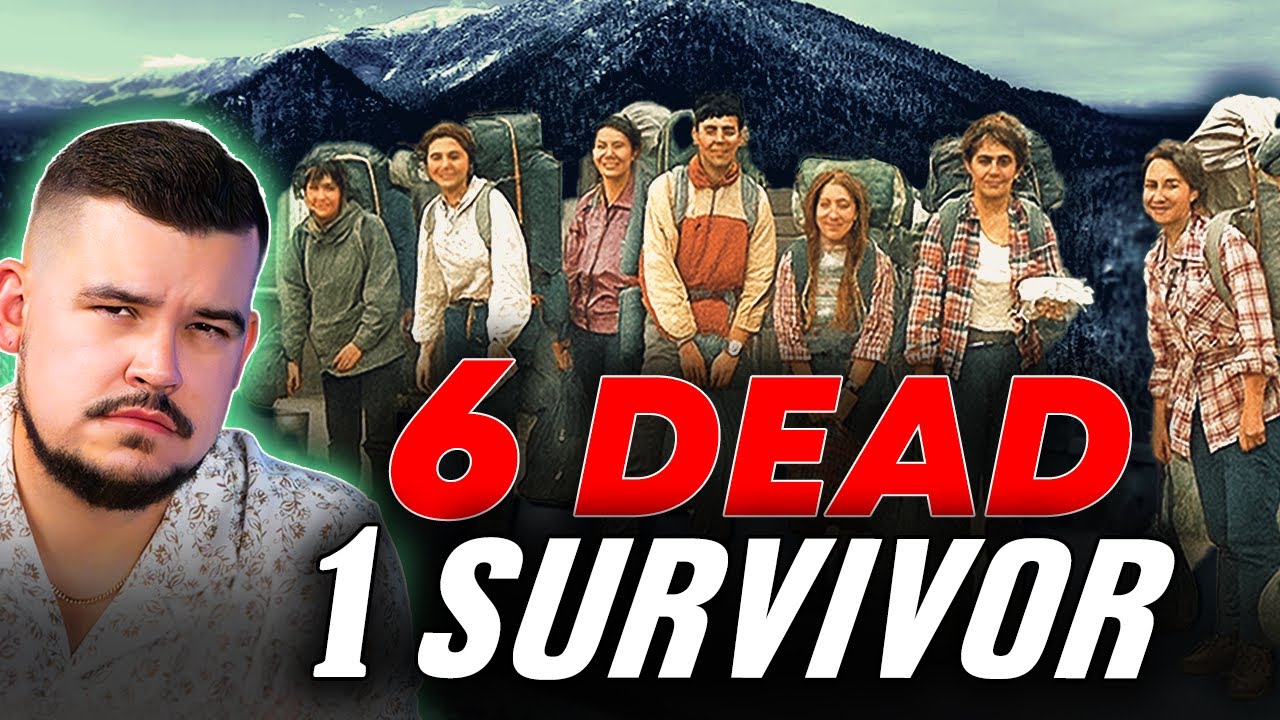
Mile Higher: The Siberian Hiking Mystery Stranger Than Dyatlov
Everyone knows about Dyatlov Pass. Almost no one has heard of the Khamar-Daban incident — and the details, as Mile Higher shows across 97 gripping minutes, are somehow even harder to explain.
Mile Higher is the true crime and mystery podcast from Kendall Rae and Josh Thomas, and this episode takes on a case that has been called “Buryatia’s Dyatlov Pass.” In August 1993, seven hikers set out into Siberia’s Khamar-Daban mountains near Lake Baikal. Within hours of their descent going wrong, six of them were dead under circumstances no one has convincingly explained — and the seventh walked out alive.
The hook is the one the video states up front: six experienced students began convulsing, tearing at their clothes, bleeding from their eyes and mouths, while one survivor watched it happen. The episode’s framing question is the right one — with a living witness, why is there still no answer?
This is our review: what the video covers, what works, what doesn’t, and whether the 97 minutes earn your time.
At a Glance
| Video | “The Most Terrifying Hiking Mystery You’ve Never Heard Of” |
|---|---|
| Channel | Mile Higher (728K subscribers) |
| Published | October 9, 2025 |
| Length | 1:37:34 |
| Views | 185K |
| Subject | The 1993 Khamar-Daban incident; eight theories for six unexplained deaths |
What the Video Covers
The episode opens with the case itself. On 5 August 1993, a seven-person hiking group from the Petropavl “Azimut” tourist club, led by experienced instructor Lyudmila Korovina, was descending from Retranslyator peak in freezing rain when the first hiker, Aleksander Krysin, collapsed — screaming, convulsing, bleeding from the eyes and mouth. Korovina died trying to help him. One by one the others fell, some tearing at their clothing; Valentina Utochenko, the sole survivor, fled down the mountain and was found wandering days later. The official autopsy conclusion — hypothermia for five of the six, a heart attack for Korovina — is treated by the episode as deeply unsatisfying, and that dissatisfaction drives everything that follows.
Structurally, the video is built like a gauntlet. After background chapters on Lake Baikal and the region, and the story itself (“Fighting the Storm,” “The Horror Begins,” “Finding the Bodies”), the hosts walk through eight theories, each with its own timestamped chapter: Exposure, Altitude Sickness, Mushrooms, Air Pocket, Infrasound, Novichok, Natural Gasses, and Lightning Strikes. A “Valentina Tracked Down” segment follows what became of the survivor and why her account has never settled the matter, and then comes the episode’s best idea — “Possible Theory Issues,” a dedicated chapter where each explanation is stress-tested before final thoughts.
Running underneath it all is an honesty about sources that deserves credit: the hosts are upfront that English-language accounts of the incident contradict Russian ones, and that much of their research ran through Google Translate. Rather than laundering that gap into false certainty, they flag it.
Strengths
The theory-by-theory structure. Giving every explanation its own chapter — and then a separate chapter to critique them all — is the episode’s best decision. Each theory gets a fair hearing before the cross-examination begins, which is exactly how unsolved-mystery coverage should work.
The source honesty. Admitting the translation gap and the contradictions between accounts, instead of presenting one clean narrative, builds trust. You always know where the floor of the evidence is.
The tone. This is conversational podcast energy, but the victims are never props. The horror is in the facts as reported, not in the delivery — a harder balance than it looks at 97 minutes.
The right spine. The episode keeps returning to the central riddle: with a living witness, why did Valentina live, and why has no account of hers ever closed the case? Everything else orbits that question.
Weaknesses
It’s a commitment. Ninety-seven minutes, and the early Lake Baikal background chapters are a long runway before the incident itself begins. Patient viewers will be rewarded; impatient ones may drift.
Audio-first format. This is a podcast episode on YouTube, and it feels like one — there’s no visual storytelling to match a case this visual. You’ll be listening more than watching.
No resolution. The honest answer is that the case stays unsolved, and viewers hoping the episode will name the cause will leave with theories, not conclusions. That’s the material’s fault, not the video’s — but know it going in.
Who Should Watch
- Dyatlov Pass obsessives — this is the deeper cut you’ve been missing, and the comparison is earned.
- Theory nerds — if you like watching explanations get stress-tested one by one, this is built for you.
- Podcast-format true crime fans — conversational, long-form, and comfortable taking its time.
- Skeptics of official conclusions — the hypothermia ruling gets its due, and its doubts.
8/10
A thorough, fair-minded deep dive into one of the strangest unsolved tragedies you’ve never heard of. The theory gauntlet is worth the 97 minutes — just know the mountain keeps its secret.
Source: Mile Higher on YouTube; background on the Khamar-Daban incident via Wikipedia.