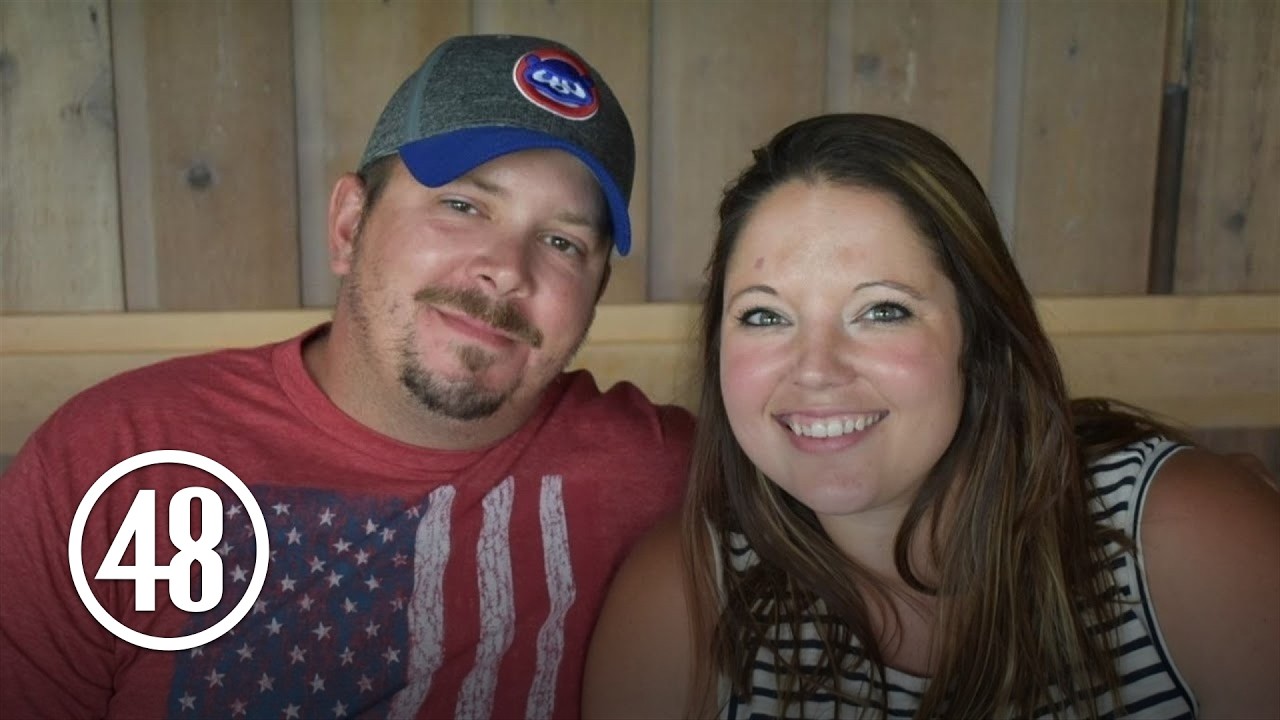
48 Hours’ A Death in the Stairwell Video: Accident, Assault, or a Case the Evidence Could Not Settle?
In the early hours of August 12, 2023, Kevin Davis, 40, was found critically injured at the foot of the stairs in his New Haven, Indiana home. He died the following day. His wife Alison said he had fallen. 48 Hours’ 41-minute episode examines why investigators came to doubt that account — and why a jury ultimately was not convinced by theirs.
This is a case built on competing readings of the same injuries. The programme, reported by Peter Van Sant, gives both sides a hearing: prosecutors who saw blunt-force injuries that a fall could not explain, and a defence that maintained from the start that Kevin’s death was a tragic accident on a steep stairway.
The video, published on YouTube on October 17, 2025, has drawn 3,600,009 views. It is a contained, single-case episode whose central question is evidentiary rather than sensational: what can forensic medicine actually prove about how a man came to be dying at the bottom of his own stairs?
At a Glance
| Video | “A Death in the Stairwell | Full Episode” |
|---|---|
| Channel | 48 Hours |
| Published | October 17, 2025 |
| Length | ~42 minutes |
| Views | 3,600,009 |
| Subject | The 2023 death of Kevin Davis in New Haven, Indiana; the murder trial and acquittal of Alison Davis |
What the Video Covers
The video opens on August 12, 2023, in New Haven, Indiana. After a night out, Alison Davis called 911 and reported that her husband had fallen down the stairs. Kevin Davis was taken to hospital in critical condition and died the next day. Police initially treated the death as consistent with a fall.
The middle of the episode follows why that reading changed. The autopsy found blunt-force head injuries, including multiple skull fractures, and the death was ruled a homicide. Investigators questioned whether a fall alone explained the extent of the injuries, and in December 2023 Alison Davis was charged with murder. She maintained throughout that she had not killed her husband, and her family supported that position.
It closes in the courtroom. At trial in Allen County in May 2025, prosecutors argued the injuries came from an assault, while the defence argued Kevin fell and struck the banister area at the bottom of the stairs — and noted that no weapon was ever produced. After a four-day trial, the jury deliberated for about six and a half hours and found Alison Davis not guilty on May 9, 2025.
Strengths
Both accounts are taken seriously. The episode does not treat the acquittal as an afterthought or the charge as proof. Viewers hear the prosecution’s forensic argument and the defence’s fall account in enough detail to understand why reasonable people — investigators, doctors and jurors — reached different conclusions.
The forensic disagreement is the story, handled plainly. Competing medical testimony about what a fall can and cannot do is explained through this one case, without pretending the science is more settled than the trial showed it to be.
Kevin Davis is not reduced to a scene. The episode keeps his death, rather than only the legal contest over it, in view, and gives time to the people on both sides who lived with the outcome.
Weaknesses
The 41-minute format compresses a four-day trial. Expert testimony that took days to present is reduced to its main claims and counter-claims. Viewers who want to weigh the medical evidence in full will need the trial reporting alongside this episode.
Some early-investigation questions get limited time. Decisions made in the first hours at the house shaped what evidence was and was not available later, and the episode touches on that issue more briefly than its importance to the trial might suggest.
An acquittal is not an explanation. The programme is honest about that limit, but viewers should be prepared for it: the episode ends with the legal question answered and the underlying question — exactly how Kevin Davis sustained his injuries — left unresolved.
Who Should Watch
- Forensic-evidence viewers — a clear example of how competing medical readings of the same injuries can drive, and then fail to sustain, a murder case.
- 48 Hours regulars — a representative single-case episode, reported by Peter Van Sant, built around investigators, family and the courtroom.
- Courtroom viewers — the interest lies less in a reveal than in watching a jury test whether the evidence excludes a plausible accident.
- True crime newcomers — a contained, fully resolved legal case that is easy to follow in a single sitting.
8/10
A balanced, evidence-focused episode: the fall and assault accounts are both given a fair hearing, the forensic disagreement is explained plainly, and the acquittal is presented as a verdict on the evidence, not a tidy ending. The trial is compressed, but the central uncertainty is handled with care.
Source: 48 Hours on YouTube (“A Death in the Stairwell | Full Episode,” published October 17, 2025); case background via CBS News and contemporary Indiana reporting on the Kevin and Alison Davis case.