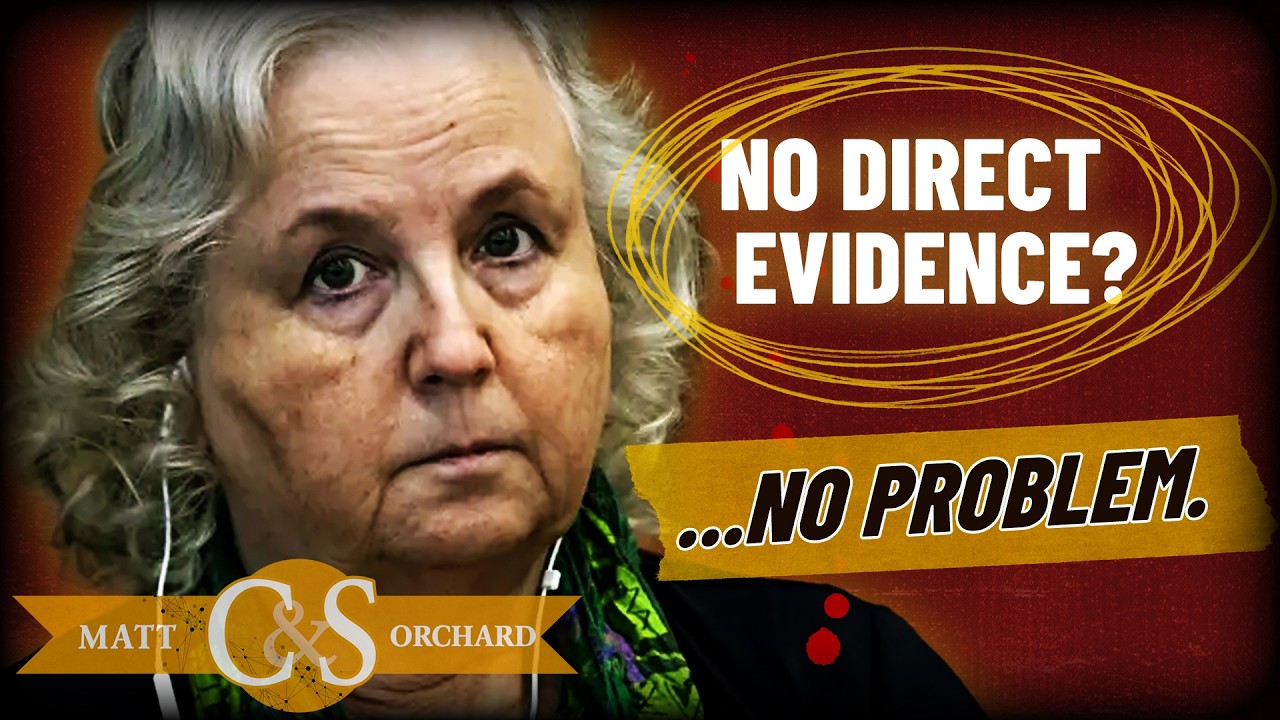
Matt Orchard's Nancy Brophy Video: How a Case With No Eyewitness Still Reached a Verdict
On the morning of June 2, 2018, Daniel Brophy, a 63-year-old chef and instructor, was found shot dead in a kitchen at the Oregon Culinary Institute in Portland. There was no eyewitness and no recovered murder weapon. Matt Orchard's 97-minute documentary asks the question the jury had to answer: how strong can a case built only on circumstances actually be?
Matt Orchard - Crime and Society, a channel with 300,000 subscribers, works in long form for a reason. This is not a case that reduces to a single piece of evidence. The video lays out the strands one at a time — security footage, purchase history, financial records, and the defendant's own account of her morning — and shows how prosecutors argued they pointed in only one direction.
The video, published on March 25, 2026, has drawn more than 413,000 views. Its central question is stated plainly in its own description: whether “circumstantial” really means “weak.” The documentary's answer comes from the trial record itself, including Nancy Brophy's own testimony.
At a Glance
| Video | “CIRCUMSTANTIAL PROOF: The Case Against Nancy Brophy” |
|---|---|
| Channel | Matt Orchard - Crime and Society |
| Published | March 25, 2026 |
| Length | ~97 minutes |
| Views | 413K+ |
| Subject | The 2018 murder of Daniel Brophy in Portland; the circumstantial case and 2022 conviction of Nancy Crampton-Brophy |
What the Video Covers
The video opens on June 2, 2018, in Portland, Oregon. Daniel Brophy arrived early at the Oregon Culinary Institute, where he taught, and was found shot by students arriving for class. He had been hit by two bullets from a Glock pistol. With no eyewitness, no DNA tying anyone to the scene, and no murder weapon recovered in the ordinary sense, the investigation turned to the people closest to him — and to his wife, romance novelist Nancy Crampton-Brophy.
The middle of the documentary follows the circumstantial chain. Prosecutors said surveillance footage showed a minivan matching Brophy's driving near the institute around the time of the shooting, contradicting her account that she had been at home that morning walking the dogs and showering. They pointed to her purchase history for gun-related items, and to financial records they said showed a motive: life insurance policies totaling around $1.4 million, and sole ownership of the couple's house. Each item, on its own, had an innocent explanation. The prosecution's argument was that, taken together, they did not.
The final section covers the trial in Multnomah County in the spring of 2022, including the unusual step of Brophy testifying in her own defense. The video works through her testimony and the timeline she offered, and how it held up against the footage and records already presented. On May 25, 2022, the jury convicted her of second-degree murder. She was sentenced in June 2022 to life in prison with the possibility of parole after 25 years.
Strengths
It teaches how circumstantial cases actually work. The documentary's real subject is evidence itself. By separating each strand — footage, purchases, finances, statements — and then showing how a jury is asked to weigh them together, it gives viewers a clearer picture of this kind of prosecution than most single-case videos attempt.
The defendant's own voice is included. Brophy's testimony is presented at length rather than summarized away. Hearing her account in her own words, set against the records the video has already laid out, lets viewers test the competing versions for themselves instead of being told which one to believe.
Daniel Brophy stays a person, not just a case file. The video keeps returning to who he was — a chef and instructor remembered by students and colleagues — in a case whose unusual circumstances could easily reduce the victim to a plot point in his wife's story.
Weaknesses
The runtime asks a lot. At about 97 minutes, this is one of the longer single-case documentaries in Orchard's catalog. The detail is the point, but viewers who already know the outline of the Brophy case may find stretches of the timeline material slow going.
The famous essay hangs over a case it was not part of. Brophy's 2011 essay, “How to Murder Your Husband,” is the detail most people know about this case, yet the trial judge ruled it inadmissible and it was not evidence before the jury. Any telling has to handle that gap between public fascination and the actual trial record carefully, and viewers should keep the distinction in mind.
A circumstantial verdict invites a second viewing problem. Because there is no single decisive exhibit, the documentary cannot offer the clean moment of proof some viewers expect from the genre. That is honest to the record, but it means the ending lands as an assessment of weight, not a revelation.
Who Should Watch
- Viewers interested in how trials are built — a clear, step-by-step example of a prosecution made entirely from circumstantial evidence.
- Matt Orchard regulars — his patient, document-led style applied to a case where the documents are effectively the whole case.
- True crime viewers who prefer resolved cases — the investigation, trial, conviction, and life sentence are all covered in a single account.
- Anyone following the Brophy case — including Brophy's own testimony, presented alongside the footage and financial records used against her.
8/10
A patient, evidence-led documentary that uses the Brophy case to show how circumstantial proof is assembled and weighed. Long, and without a single decisive exhibit, but unusually instructive about how a jury can reach a verdict without one.
Source: Matt Orchard - Crime and Society on YouTube (“CIRCUMSTANTIAL PROOF: The Case Against Nancy Brophy,” published March 25, 2026); case background via reporting on the 2022 Multnomah County trial, conviction, and sentencing of Nancy Crampton-Brophy.