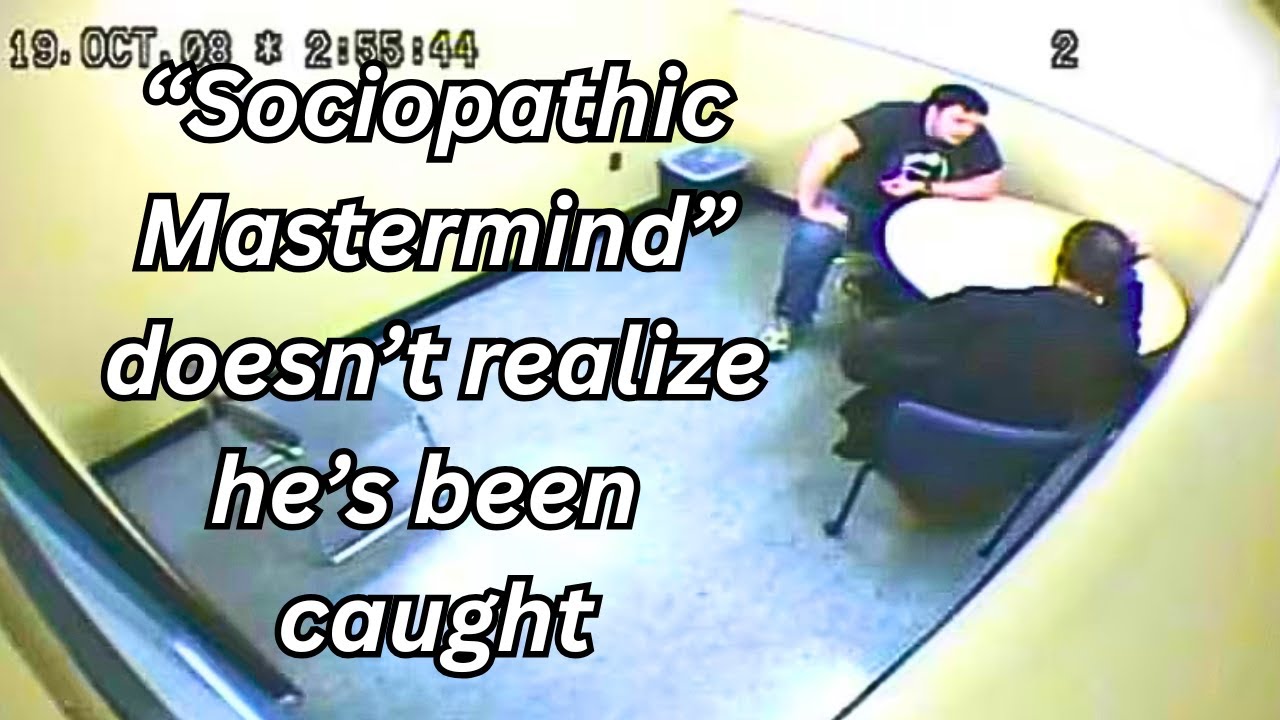
Inside Dreading’s Mark Twitchell Interrogation: A Self-Styled Mastermind Meets the Interview Room
In October 2008, Johnny Altinger answered a dating-site message and drove to a rented garage in Edmonton — and never came home. Mark Twitchell, the aspiring filmmaker who lured him there, walked into his police interview days later believing he was the smartest person in the room. Dreading’s 2.5-hour analysis shows how that belief fell apart.
Twitchell is known in tabloids as the “Dexter killer” — his obsession with the television character Dexter Morgan shaped everything from his methods to his own self-image. The video doesn’t treat him as a genius who slipped up; it treats the interrogation as a document of overconfidence, walking through how a suspect who had written down his own crimes in a file called “SK Confessions” still thought he could talk his way out.
The interrogation footage — originally released by the Edmonton Sun in five parts — is the spine of the video. The narrator pauses the tape to explain what the detectives are doing: letting Twitchell ramble, locking him into specifics, then confronting him with the contradictions. Published in April 2025, the analysis has drawn more than 600,000 views — a sign of how magnetic the footage remains.
At a Glance
| Video | “Self Diagnosed ‘Sociopath Serial Killer’ Doesn’t Realize He’s Been Caught” |
|---|---|
| Channel | dreading (crime and psychology) |
| Published | April 17, 2025 |
| Length | ~2 hours 37 minutes |
| Views | 614K+ |
| Subject | The police interrogation of Mark Twitchell; the 2008 Edmonton murder of Johnny Altinger |
What the Video Covers
The video opens with Twitchell’s background: an aspiring Edmonton filmmaker with a history of pathological lying, failed marriages, and a fixation on Dexter that hardened into a plan. Renting a detached garage as a fake film set, he created a woman’s dating profile on Plenty of Fish to lure men there. A first attempt on Gilles Tetreault failed when the victim fought off the masked attacker; weeks later, Johnny Altinger answered the same ruse and was murdered, his body dismembered. The narrator notes that Twitchell then wrote “SK Confessions” — a document prosecutors would later present as a diary of the crimes and he would call fiction.
The interrogation begins with Detective Tabler, and Twitchell’s demeanor is striking — relaxed, chatty, almost pleased to be there. The video catalogs how he talks himself into corners: he says only two keys exist to the garage, then expands that to three; he claims a mysterious new padlock appeared on the door; he admits he used Plenty of Fish but calls it “research” for a freelance article. The detective stays even, asks him to repeat details, and lets silence accumulate. The centerpiece is a second interviewer who tells Twitchell outright that there is no doubt he was involved in Altinger’s disappearance — and Twitchell’s reaction is flat evasion rather than outrage.
The final stretch shows the collapse. Twitchell starts to break down, admits to lies, and cycles through changing stories — including a sudden claim that he bought Altinger’s car for $40. The interrogator tries a personal appeal, contrasting Twitchell with hardened killers. It ends as the real case did: Twitchell asking whether he is being charged, walking out — and being arrested 11 days later. In April 2011, a jury convicted him of first-degree murder, rejecting his self-defense claim, and he was sentenced to life with no parole for 25 years.
Strengths
The footage gets room to breathe. At two and a half hours, the video lets long stretches of the interrogation play uninterrupted — the pauses, the deflections, the slow realization on Twitchell’s face. You watch the tactics land instead of being told about them.
It respects the viewer’s intelligence. The narrator explains interrogation technique — why detectives let suspects ramble, why they offer face-saving exits — without diagnosing Twitchell from a desk chair. It’s analysis, not armchair psychiatry.
Johnny Altinger isn’t a footnote. True crime built around a charismatic killer can forget the person who died. This video keeps returning to Altinger and to the earlier Tetreault attack, and treats the “SK Confessions” document for what it was: evidence, not entertainment.
Weaknesses
Two and a half hours is a commitment. The thoroughness is the selling point, but viewers who want the case in one sitting will find the pacing slow through the garage-logistics chapters. The video rewards patience rather than assuming it.
The diagnosis stays in the title. “Sociopath” is a loaded label that the video itself treats more as a hook than a conclusion — the narrator is careful, but the packaging is bolder than the analysis. Take the psychology as commentary, not a clinical assessment.
Case background is compressed. The channel’s earlier episodes covered Twitchell’s crimes and the “SK Confessions” document in more depth; newcomers get a solid recap here, but the full picture lives in those companion videos.
Who Should Watch
- Interrogation-footage fans — this is the genre at feature length, with a suspect who documented his own downfall.
- JCS and criminal-psychology viewers — the chapter-by-chapter breakdown format, at its most thorough.
- Dexter-era true crime followers — the case that defined the “copycat killer” label, examined without the tabloid glaze.
- Detective-technique nerds — a masterclass in how patience and detail beat confrontation.
8/10
An exhaustive, disciplined interrogation breakdown — the footage is extraordinary, the analysis stays honest about what it can and can’t prove, and the victim stays in frame. Long, yes, but the rare true crime video that earns every minute.
Source: dreading (crime and psychology) on YouTube (“Self Diagnosed ‘Sociopath Serial Killer’ Doesn’t Realize He’s Been Caught,” published April 17, 2025); case background via contemporary Canadian reporting on the 2011 Edmonton trial.