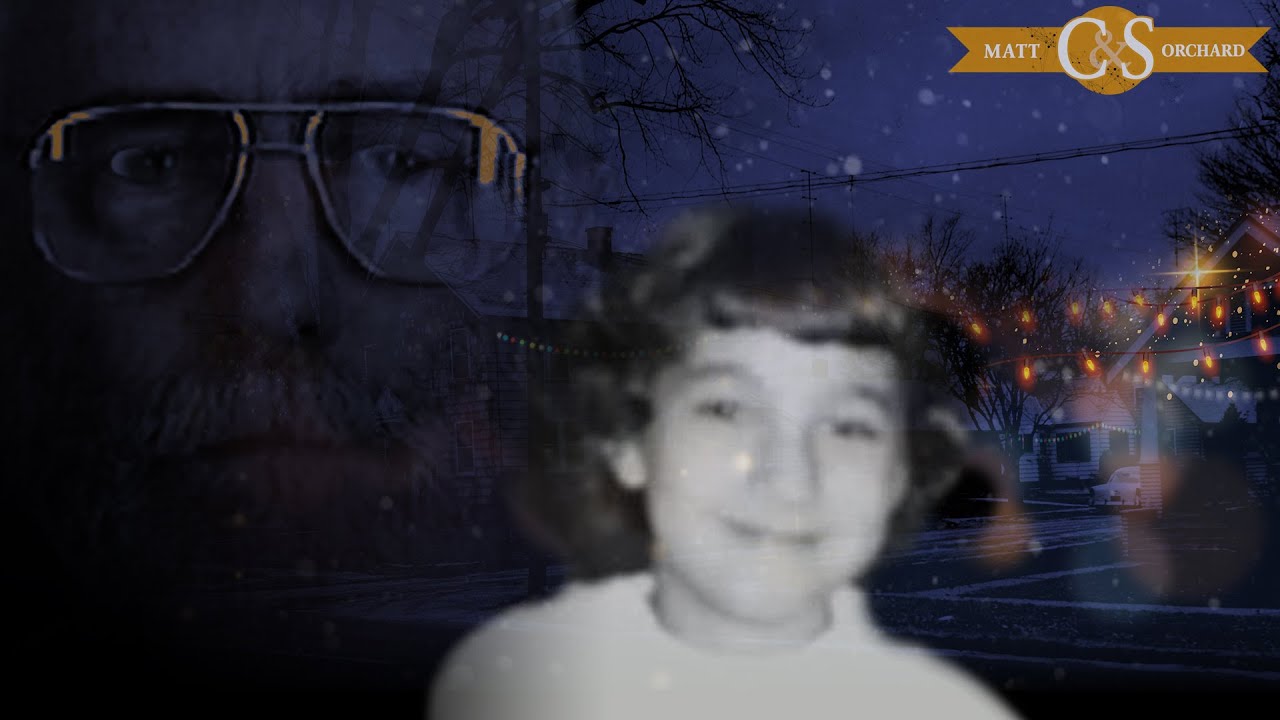
Matt Orchard’s Coldest Case: The Maria Ridulph Murder, the Conviction, and the Reversal
On December 3, 1957, 7-year-old Maria Ridulph vanished from a Sycamore, Illinois street corner while playing in the snow with her friend. Fifty-five years later, a man was convicted of her murder — and then the conviction collapsed. Matt Orchard’s 58-minute documentary traces the whole arc, from a frantic FBI manhunt to one of the most dramatic post-conviction reversals in American legal history.
Cold case documentaries usually end with an arrest. This one keeps going. The video spends its first half on the 1957 investigation — the biggest of its era — and its second half on the uncomfortable question of what happens when a celebrated “solved” case turns out not to be solved at all. It is less a whodunit than a study of how certainty gets built, and then dismantled, piece by piece.
Published in April 2021, the video has drawn more than 3 million views, making it Matt Orchard’s most-watched case and a fixture in the wrongful-conviction documentary conversation. It is methodical, document-heavy, and — unusually for the genre — willing to leave the viewer with no clean ending.
At a Glance
| Video | “The Coldest Case Ever Solved” |
|---|---|
| Channel | Matt Orchard - Crime and Society |
| Published | April 1, 2021 |
| Length | ~58 minutes |
| Views | 3M+ |
| Subject | The 1957 Maria Ridulph abduction; Jack McCullough’s 2012 conviction and 2016 exoneration |
What the Video Covers
The video opens on December 3, 1957, in Sycamore, Illinois. Maria Ridulph and her friend Kathy Sigman are playing outside when a young man calling himself “Johnny” approaches and offers Maria a piggyback ride. Kathy runs inside for a moment; when she comes back, Maria is gone. What followed was one of the largest investigations of the era — dozens of FBI agents, daily updates funneled to J. Edgar Hoover and President Eisenhower — and it went nowhere. Maria’s remains were found nearly five months later in a wooded area near Woodbine, Illinois, some 90 miles from home.
The middle act covers the long dormancy and the reopening. In 2008, a tip from the half-sister of John Tessier — the 18-year-old neighbor questioned and cleared by the FBI in 1957, who had since changed his name to Jack McCullough — revived the case. His dying mother had reportedly whispered that “John did it.” Arrested in 2011, McCullough was convicted in September 2012 and sentenced to life, in what was billed as the coldest case ever solved.
Then the video turns to the reversal. A new DeKalb County State’s Attorney, Richard Schmack, reviewed the case from scratch and found what the trial had kept out: Illinois Bell phone records showing McCullough made a collect call from a payphone in downtown Rockford — 40 miles away — at 6:57 p.m. on December 3, 1957, squarely inside the abduction window. A judge vacated the conviction in April 2016; McCullough was declared innocent in April 2017. The video closes on the stark reality: the coldest case ever “solved” is, in fact, still unsolved.
Strengths
A genuine smoking gun, on paper. The collect-call records are the rare true crime “gotcha” that actually holds up — a single timestamped document that makes two locations mutually exclusive. Watching the video lay out the timeline against the phone records is genuinely electric, and it is all sourced, not speculated.
The conviction gets as much scrutiny as the crime. Orchard walks through how the 2012 case was built — a deathbed confession, a 50-year-old eyewitness identification from a photo array where the suspect was the only one not in a yearbook photo, and testimony from jailhouse informants — so the reversal lands as an argument, not just a plot twist.
Maria stays at the center. Documentaries about decades-old child murders can drift into legal trivia. This one keeps returning to the human cost: a 7-year-old who never came home, a friend who carried the memory for 60 years, and families on both sides who are still arguing about what justice looks like.
Weaknesses
The middle act is dense. The stretch covering the 2008 reopening, the tip, and the pre-trial maneuvering is heavy on procedural detail and light on visuals. Viewers who came for the 1957 investigation may find the legal plumbing a slower watch.
No clean ending — by design, but still. The video’s honesty is its virtue: McCullough’s real killer may never be known, and the video doesn’t pretend otherwise. But anyone expecting the exoneration to lead to a new suspect will find the case file simply closes back up.
One perspective dominates. The video presents Schmack’s review as the decisive reading of the evidence, and it is a strong one — but people who followed the case, including members of both families, remain divided. The video could have spent more time steelmanning the other side of that argument.
Who Should Watch
- Cold-case devotees — this is the genre’s most consequential example of a “solved” case coming undone.
- Wrongful-conviction viewers — a rare case where the prosecutor himself argued for the convicted man’s release.
- Legal-procedure nerds — the timeline-vs.-phone-record showdown is a masterclass in alibi evidence.
- Matt Orchard completists — his most-watched video and the one that put the channel on the map.
9/10
A model of what long-form true crime can be — patient, document-driven, and brave enough to end without answers. The collect-call reveal is one of the genre’s great set pieces, and the video never loses sight of the little girl at its heart.
Source: Matt Orchard - Crime and Society on YouTube (“The Coldest Case Ever Solved,” published April 1, 2021); case background via Wikipedia’s “Murder of Maria Ridulph,” the Chicago Tribune, and the ABA Journal’s coverage of the 2016 vacatur.