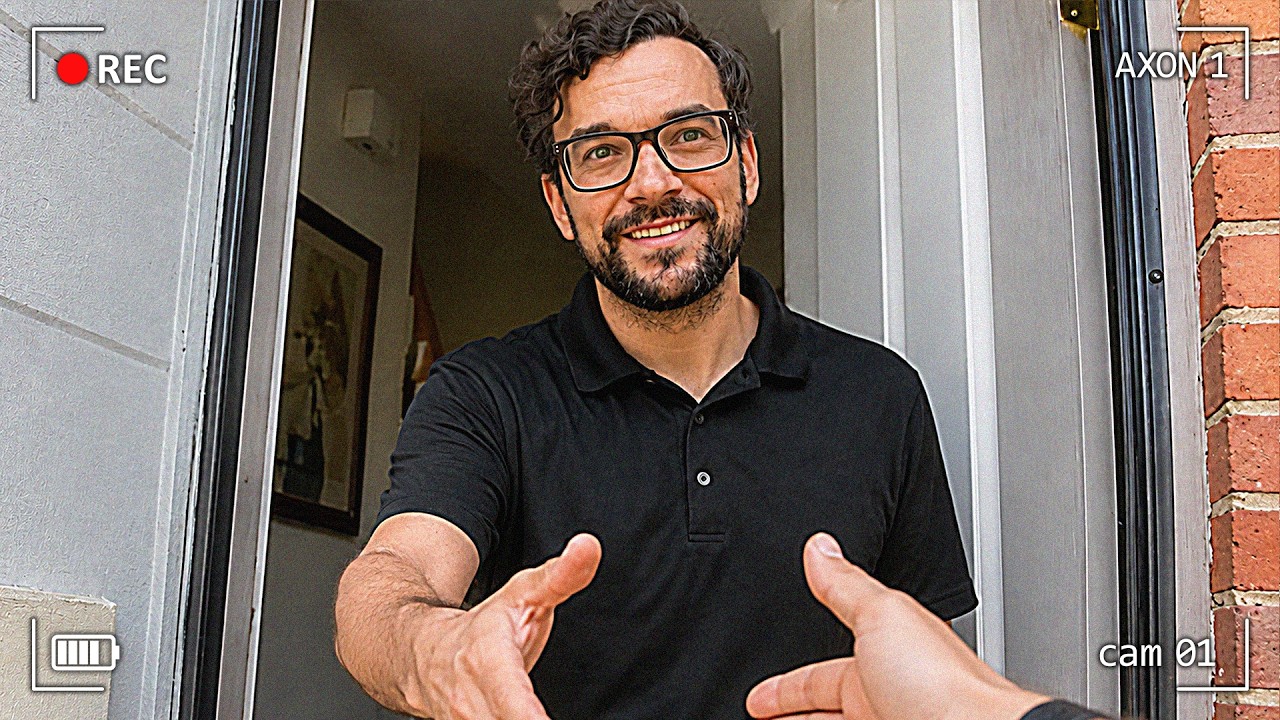
Watch the video on YouTube: “Killer Realizes DNA Finally Caught Him After 23 Years” by Red File
Red File's Eugene Gligor Video: The Cold Case a Water Bottle Solved
On May 2, 2001, 49-year-old Leslie Preer did not arrive at work in Chevy Chase, Maryland. She was found dead in her own home. For 23 years, no one was charged — until forensic genealogy gave investigators a name, and a discarded water bottle gave them a match.
Cold cases make for difficult documentaries: the trail is old, the footage is scarce, and the ending is often missing. This one is different because the ending arrived — in an interrogation room in 2024, when detectives told Eugene Gligor that his DNA matched evidence recovered from beneath Leslie Preer's fingernails. His response, quoted in the video, was: “I don't know what to say.”
The video, published in July 2026, has pulled in more than 2.4 million views. It is built around a simple, sobering structure: a murder, a wrong suspect cleared by the same science that later found the right one, and a man who had built a normal life — work, marriage — in the decades in between.
At a Glance
| Video | “Killer Realizes DNA Finally Caught Him After 23 Years” |
|---|---|
| Channel | Red File |
| Published | July 8, 2026 |
| Length | ~52 minutes |
| Views | 2.4M+ |
| Subject | The 2001 murder of Leslie Preer; forensic genealogy and the interrogation of Eugene Gligor |
What the Video Covers
The video opens on May 2, 2001, in Chevy Chase, Maryland. Leslie Preer, 49, failed to arrive at work. Her boss and her husband went to the house, where officers found her body in the master bathroom shower; she had been beaten and strangled, and hot water had been left running in what investigators took to be an attempt to destroy evidence.
Attention first settled where it so often does: on her husband, Carl “Sandy” Preer, the last known person to see her alive, in a marriage the video describes as strained, who failed a polygraph. Then the DNA recovered from beneath Leslie's fingernails — evidence she had fought her attacker — was tested, and it did not belong to him. He was eliminated as a suspect, the unknown profile matched nobody in the criminal databases, and the case went cold. Sandy Preer died in 2017 without knowing who had killed his wife.
The final act is the science and the room. Forensic genealogy eventually pointed investigators to Eugene Gligor, who had dated the Preers' daughter in high school and had been inside the family home many times. A genealogy lead is not proof, so when Gligor returned from a trip to Europe, investigators collected a water bottle he had thrown away — and the DNA was a perfect match. He was arrested on June 18, 2024, and in the interrogation that follows he first talks calmly, then tries to explain the DNA away as a trace of his visits years earlier, before the location of that DNA — under the fingernails of a woman who fought back — closes that door. In May 2025 he pleaded guilty to second-degree murder and was sentenced to 22 years in prison followed by five years of supervised probation.
Strengths
It tells both halves of the DNA story. The same evidence type that ended the case also cleared the first suspect, and the video gives that symmetry its weight — including the fact that Sandy Preer died still publicly shadowed by a murder he did not commit. That is the part of cold-case coverage most often skipped, and it is handled here with care.
The genealogy-to-arrest chain is explained step by step. Viewers come away understanding why a family-tree match was not enough on its own, and why investigators still needed Gligor's own discarded DNA before they could act. It is a clear, unglamorous account of how modern cold cases are actually closed.
The interrogation is allowed to speak. The title promises a realization, and the video earns it by letting the exchange play out: a calm suspect, a single piece of information, and an attempted explanation that collapses against the physical evidence.
Weaknesses
The packaging is louder than the film. The title and thumbnail framing promise a dramatic “realization” moment; the documentary itself is more measured than that, and viewers expecting a confrontation may find the interrogation quieter — and sadder — than advertised.
The middle decades are necessarily thin. A case that sat cold for 23 years leaves little to show for those years, and the video's account of Gligor's life in the interim is, by the nature of the record, mostly outline.
Forensic genealogy's open questions go mostly unasked. The technique solved this case, but it also raises privacy questions that reach far beyond one suspect. The video treats it as a straightforward triumph; viewers who want that wider debate will need to look elsewhere.
Who Should Watch
- Cold-case followers — a complete arc from 2001 crime scene to 2025 sentencing, with the science that connected them.
- Forensic-genealogy watchers — a clean worked example of genealogy lead, confirmatory DNA collection, and arrest.
- Interrogation viewers — a short, consequential interview in which one fact does all the work.
- Anyone interested in wrongful suspicion — the husband's story is a reminder of what an unresolved case costs the innocent people inside it.
8/10
A measured, complete cold-case documentary — the DNA that cleared a husband and, 23 years later, identified the man who had dated his daughter. The packaging oversells the drama, but the case itself, and the care taken with both of its innocent parties, carries it.
Source: Red File on YouTube (“Killer Realizes DNA Finally Caught Him After 23 Years,” published July 8, 2026); case details as presented in the video, including the May 2025 guilty plea and sentence in the murder of Leslie Preer.