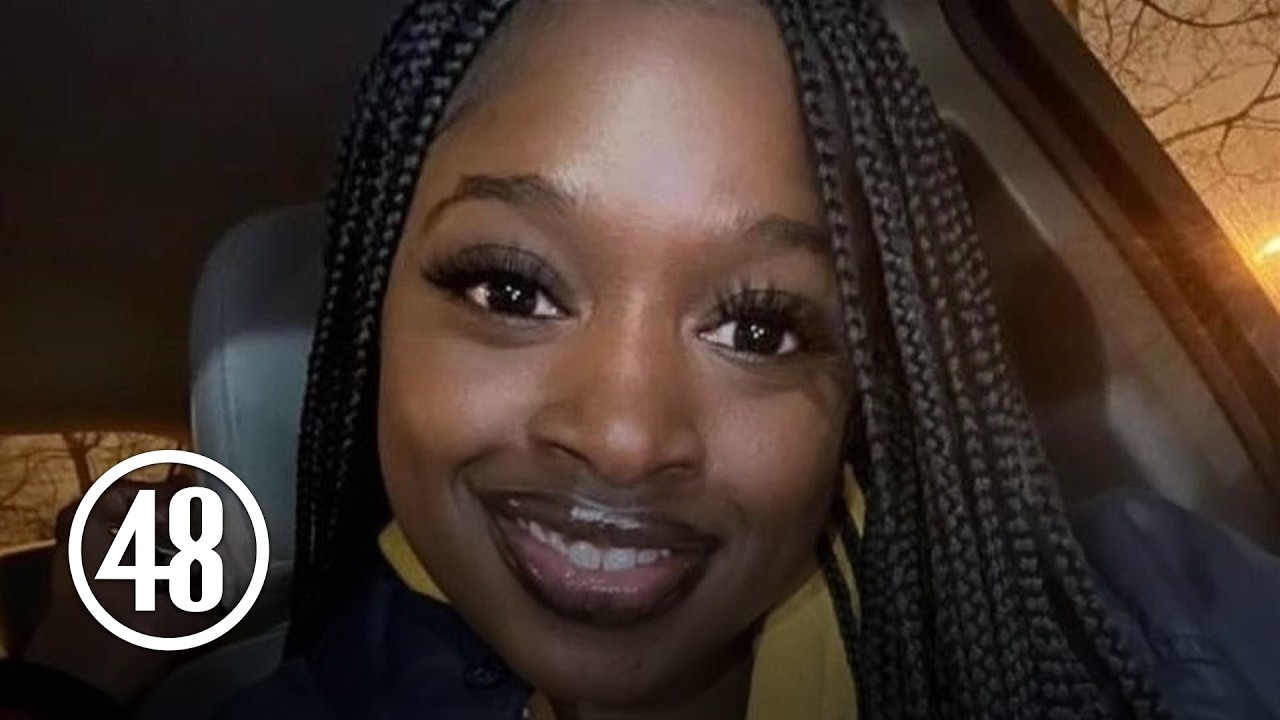
Watch the video: https://www.youtube.com/watch?v=_xxpvYNJPrQ
48 Hours' Sade Robinson Video: The App Trail That Led to Maxwell Anderson
On April 1, 2024, Sade Robinson, 19, went on a first date in Milwaukee and never came home. The next day, remains found on a secluded beach at Warnimont Park gave investigators a homicide with no weapon and no named suspect. What they did have was Robinson's phone — and the trail it had left.
48 Hours, a channel with 2.59 million subscribers, tells this case the way it was actually investigated: digitally first. Correspondent Anne-Marie Green builds the episode around Detective Jo Donner of the Milwaukee County Sheriff's Office, the Life360 location data from Robinson's phone, and the security footage that placed her, hour by hour, on the last night of her life.
The episode aired on CBS on February 21, 2026, was uploaded to YouTube on February 27, 2026, and has drawn more than 3.6 million views — a large audience for a case in which, unusually, the central question was answered quickly, and the work lay in proving it.
At a Glance
| Video | “Sade Robinson and The Secret Beach | Full Episode” |
|---|---|
| Channel | 48 Hours |
| Published | February 27, 2026 |
| Length | ~41 minutes |
| Views | 3.6M+ |
| Subject | The April 2024 murder of Sade Robinson in Milwaukee; the investigation and conviction of Maxwell Anderson |
What the Video Covers
The video opens on April 2, 2024, at Warnimont Park in Cudahy, Wisconsin. A young man walking along the Lake Michigan shoreline finds human remains. Detective Donner is clear about the starting point: a homicide, and almost nothing else. In parallel, Robinson — a Milwaukee Area Technical College student weeks from graduating with an associate's degree in criminal justice — has been reported missing after failing to appear for work, and her car has been found burned behind an abandoned building in Milwaukee.
The middle of the episode follows the digital reconstruction. Robinson's friend shares her Life360 location: her phone arrived at Warnimont Park in the early hours and died there at 4:35 a.m. Security footage then rebuilds the date itself — Robinson meeting Maxwell Anderson, 33, at a Milwaukee seafood restaurant, visiting a downtown bar, and going to his apartment. Anderson becomes the focus, and a former girlfriend, Chloe Wright, gives investigators the detail the title rests on: Anderson had taken her to a place he called his “secret beach” and would only give step-by-step directions to it. Repeating those directions, she leads them to Warnimont Park. Footage of a man leaving the burned car and boarding a city bus, and a jacket carrying Robinson's DNA, complete the chain the episode lays out.
The final section covers the trial. Anderson was arrested on April 4, 2024, and charged with first-degree intentional homicide, mutilating a corpse, and arson. At his trial in Milwaukee County in May 2025, prosecutors presented the phone records, location data, and surveillance footage; the jury returned guilty verdicts on those counts. On August 1, 2025, he was sentenced to life in prison without the possibility of parole. The episode closes, as it should, with Robinson's family — her mother, Sheena Scarbrough, and her sister, Adrianna Reams — and the foundation her family established in her name.
Strengths
The investigation is shown as it happened. Many true crime programmes retrofit a narrative onto a solved case. Here the sequence is the evidence: a Life360 trail, timestamped security video, and one witness who could reproduce directions to a beach she was never told the name of. The episode explains each step's value instead of treating the technology as magic.
Robinson is a person first. The programme gives real time to who she was — a student close to graduating in criminal justice, working, independent, close to her mother and sister — before it gives time to how she died. That ordering matters in a case whose details could easily overwhelm the victim.
The correspondent stays out of the way. Green's reporting lets Donner, the family, and the trial record carry the hour. The “secret beach” detail is striking on its own; the episode is disciplined enough not to oversell it.
Weaknesses
The defence case is thin — because it was. Anderson did not testify and his defence presented no witnesses, arguing there was no evidence of intent to kill. The episode reports that fairly, but viewers looking for a genuinely contested account of the night itself will not find one here, or in the trial record it draws on.
Some questions are left open. Portions of Robinson's remains were never recovered, a fact her family speaks about directly. The episode acknowledges that incompleteness rather than resolving it, which is honest, but it means the programme ends without the closure its structure seems to promise.
The first-date framing can mislead if watched casually. The episode itself is careful, but its packaging invites a simple lesson about dating safety. The evidence it presents points the other way: this was a failure to identify a man with a prior record, not a failure by Robinson, and the distinction is worth holding onto.
Who Should Watch
- Viewers interested in modern investigations — a clear, step-by-step example of how app location data and security footage build a case.
- 48 Hours regulars — a strong recent episode, reported by Anne-Marie Green, with a complete arc from discovery to sentencing.
- True crime viewers who prefer resolved cases — the investigation, trial, and life sentence are all covered in a single 41-minute account.
- Anyone following the Sade Robinson case — the family's own voices, and the work of Sade's Voice Foundation, are central to the closing section.
8/10
A careful, evidence-led episode — the Life360 trail and the “secret beach” witness give it a structure few cases can match, and Robinson and her family stay at its center. Its limits are the case's own: a thin defence record, and a recovery that remains incomplete.
Source: 48 Hours on YouTube (“Sade Robinson and The Secret Beach | Full Episode,” published February 27, 2026; episode aired February 21, 2026); case background via contemporary Milwaukee reporting on the April 2024 investigation, the May 2025 trial, and Maxwell Anderson's August 1, 2025 life sentence.