48 Hours' Sins of the Father Video: The Confession, the Cover-Up Question, and a 57-Year Wait
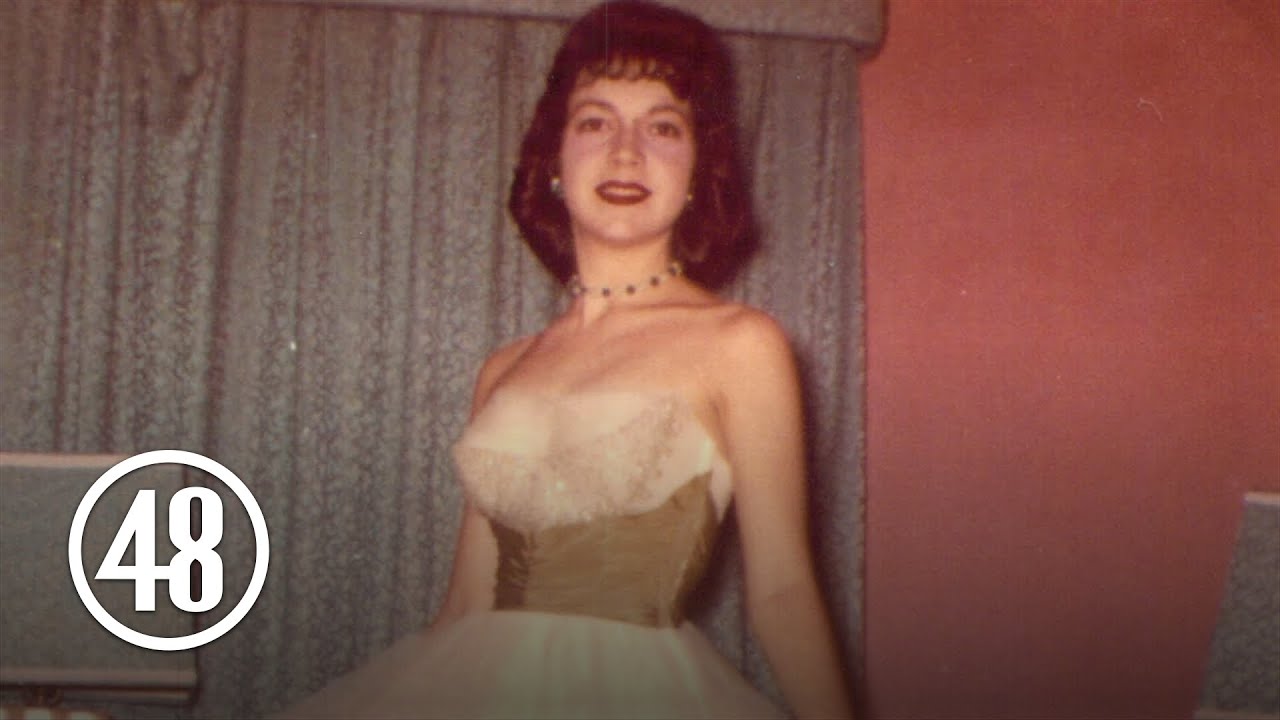
On April 16, 1960, Irene Garza, a 25-year-old second-grade teacher in McAllen, Texas, went to Sacred Heart Church for confession. She was never seen alive again. Her body was found in a canal five days later, and the priest who had heard her confession was a suspect from the start — yet no murder trial followed for 57 years.
Most cold cases featured on 48 Hours turn on a new forensic test or a late-breaking witness. This one turns on time itself: how a case can be widely suspected, repeatedly examined, and still take more than half a century to reach a jury. Correspondent Richard Schlesinger reports the episode, and its central question is stated plainly in the description — after nearly 60 years, a former priest is on trial, and did the church conspire to cover it up?
The episode, uploaded to YouTube in July 2023, has drawn more than 2.3 million views. That reach is understandable: it combines a single, contained crime scene question with an institutional one that reaches far beyond McAllen.
At a Glance
| Video | “Sins of the Father | Full Episode” |
|---|---|
| Channel | 48 Hours |
| Published | July 25, 2023 |
| Length | ~44 minutes |
| Views | 2.3M+ |
| Subject | The 1960 murder of Irene Garza in McAllen, Texas; John Feit's 2017 trial |
What the Video Covers
The video opens in McAllen, Texas, at Easter in 1960. Garza, a former Miss South Texas who taught second grade, was last known to be at the Sacred Heart Church rectory after going to confession, according to the Texas Department of Public Safety's cold-case listing. When she did not come home, a search followed, and her body was found on April 21.
Attention settled early on John Bernard Feit, the priest who had heard Garza's confession that night. The episode follows why suspicion alone did not produce a murder trial at the time: Feit left McAllen, later left the priesthood in the years that followed, and the case grew cold even as Garza's family and local reporters kept it in public view. Trial testimony later heard claims that church officials had suspected Feit and were concerned to protect the church's reputation — the cover-up question the episode keeps returning to, presented as allegation and testimony rather than as a settled finding.
The final act is the revival. After a new district attorney took office in Hidalgo County, the investigation was renewed; Feit, then 83 and living in Arizona, was arrested in February 2016 and extradited to Texas. His trial began in late November 2017, and on December 7, 2017, a jury found him guilty of murder with malice. He was sentenced the next day to life imprisonment, and he died in prison in February 2020.
Strengths
The long timeline is made legible. Fifty-seven years is a difficult span for a 44-minute episode, but the programme separates it into clear phases — the 1960 disappearance, the early suspicion, the cold decades, and the 2016–2017 prosecution — so viewers can see where the delay actually sat at each stage.
It distinguishes suspicion from proof. The episode is careful with its central tension: Feit was identified as a suspect early, which is not the same as a case a prosecutor could take to a jury. Showing both halves explains the family's long frustration without pretending the legal question was simple.
Garza stays a person, not a premise. The reporting returns to who she was — a young teacher from a McAllen family who kept pressing for answers — rather than treating her only as the starting point for a story about an institution.
Weaknesses
Compression is unavoidable. Decades of local reporting, earlier proceedings involving Feit, and the work that rebuilt the case for the 2017 trial cannot all fit into 44 minutes. Viewers who want the full procedural history will need the contemporary Texas reporting and court coverage alongside it.
The cover-up question remains a question. The episode raises claims about what church officials knew and did, drawn from testimony and reporting, but it cannot settle institutional intent from the 1960s on its own. It is strongest when viewers treat that thread as an examined allegation, not a verdict.
Period material limits the visuals. A 1960 case offers little contemporary footage, so the episode necessarily leans on photographs, later interviews, and trial material. That is appropriate, but it makes the middle sections less immediate than 48 Hours episodes built around recorded evidence.
Who Should Watch
- Cold-case viewers — a case where the obstacle was not identifying a suspect, but getting to trial at all.
- Courtroom followers — the 2017 trial of an 85-year-old defendant for a 1960 crime is the episode's destination, and it earns the build-up.
- Viewers interested in institutional accountability — the claims about how the church handled its own priest are examined directly.
- 48 Hours regulars — a Richard Schlesinger report with a longer historical reach than most episodes in the catalogue.
8/10
A measured, well-structured account of a case that waited 57 years for a jury — clear about the difference between early suspicion and eventual proof, and respectful of the young teacher at its centre. Compressed, as it must be, but a strong entry in the 48 Hours catalogue.
Source: 48 Hours on YouTube (“Sins of the Father | Full Episode,” published July 25, 2023); case background via the Texas Department of Public Safety cold-case listing for Irene Garza and contemporary reporting on the 2017 Hidalgo County trial.