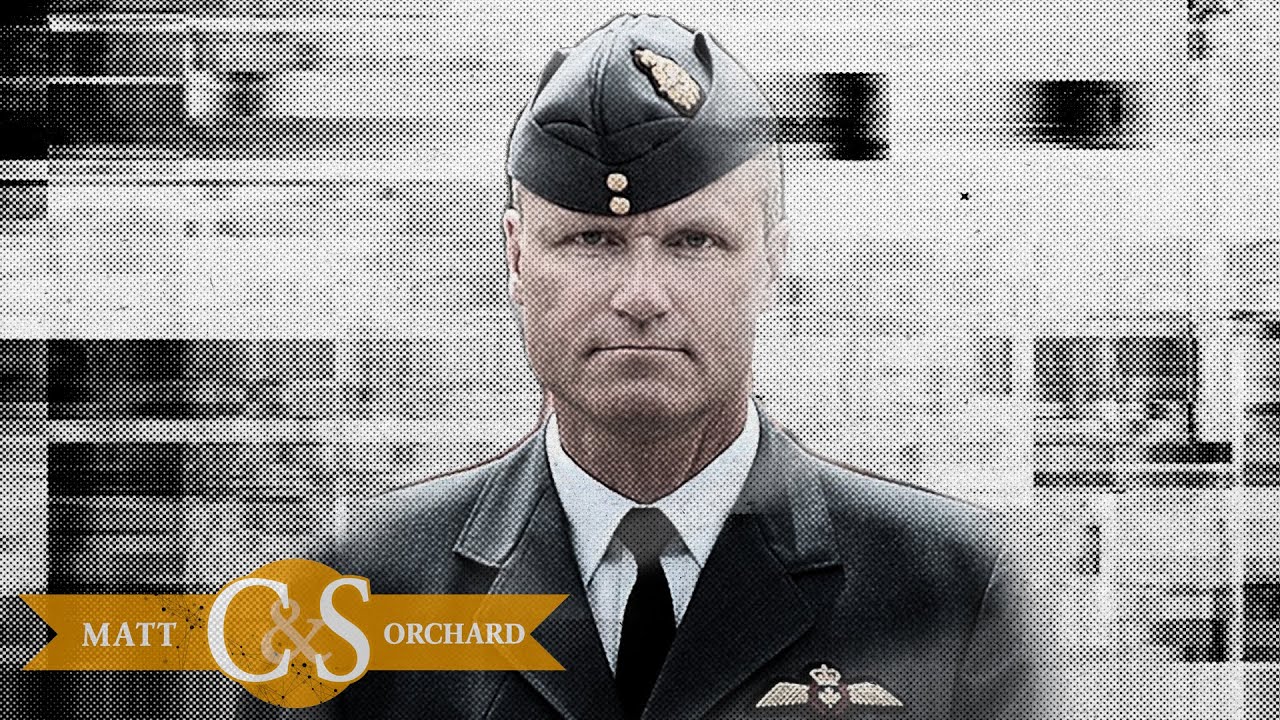
Matt Orchard’s Russell Williams Video: The Interrogation, and the Psychology Behind It
Russell Williams commanded Canada’s largest air force base. He had also, over several years, broken into neighbours’ homes, committed sexual assaults, and murdered two women. Matt Orchard’s 79-minute documentary asks how those two lives coexisted — and what the interrogation room revealed about the man who lived both.
The Russell Williams interrogation is among the most watched in true crime, and for good reason: a senior military officer, still in a position of public trust, sits across from a detective and, over several hours, moves from denial to a full confession. Orchard does not treat that footage as a clip to be replayed. He builds the whole case around it, so that when the interview arrives, the viewer understands the evidence, the escalation, and the stakes.
The video, published in September 2022, has drawn more than 1.4 million views. It is a patient, single-case documentary in Orchard’s familiar style — narration-led, evidence-aware, and more interested in testing a psychological claim than in repeating the case’s most shocking details.
At a Glance
| Video | “The Strange Psychology of Russell Williams” |
|---|---|
| Channel | Matt Orchard - Crime and Society |
| Published | September 22, 2022 |
| Length | ~79 minutes |
| Views | 1.4M+ |
| Subject | Colonel Russell Williams; the murders of Marie-France Comeau and Jessica Lloyd, the 2010 interrogation and confession, and the psychological assessment that followed |
What the Video Covers
The video opens with Williams’s background: born in England in 1963, raised in Canada, joining the Canadian Armed Forces in 1987 and rising to colonel and commander of CFB Trenton. Against that public career, Orchard traces the private escalation — break-ins and underwear thefts in Tweed and Orléans beginning in 2007, a pattern that grew in frequency and intrusion while Williams’s professional standing remained intact.
The middle section covers the turn to violence. In September 2009, two women were sexually assaulted in their homes. On November 23, 2009, Corporal Marie-France Comeau, who served under Williams’s command, was murdered. On January 28, 2010, Jessica Lloyd disappeared after failing to arrive at work; tire tracks near her home and a roadblock on February 4, 2010 brought Williams to investigators’ attention.
The final section is the interrogation itself: February 7, 2010, with Detective Sergeant Jim Smyth. Orchard analyses Smyth’s calm, motivational approach, the tire-track and footwear evidence presented step by step, and Williams’s confession after about four hours and forty-two minutes. The video closes with Williams’s guilty pleas to two counts of first-degree murder and two concurrent life sentences, and with the professional assessment Orchard’s title promises — that Williams was evaluated as a sexual sadist who, unusually for this kind of offender, was not assessed as a psychopath and appeared to show genuine shame.
Strengths
The interrogation is explained, not just shown. Many uploads simply replay the Smyth interview. Orchard breaks down why the approach worked — the pacing, the order in which evidence was revealed, and the room Williams was left to make his own decision — which makes a widely seen piece of footage genuinely more informative.
The escalation is laid out clearly. By following the break-ins through the assaults to the murders in sequence, the video shows a pattern investigators and neighbours alike missed for years, rather than treating the murders as an isolated shock. That chronology is the case’s most important lesson, and the documentary gives it the time it needs.
The psychology is handled with care. The closing analysis distinguishes between labels instead of stacking them: sexual sadism, psychopathy and remorse are treated as separate questions, attributed to the professionals who evaluated Williams, rather than presented as the narrator’s diagnosis.
Weaknesses
The runtime asks a lot. At 79 minutes, this is a full documentary, not a quick case summary. Viewers who already know the interrogation well may find the early biographical and military-career material slow before the investigation takes over.
The victims get less time than the offender. Marie-France Comeau and Jessica Lloyd are named and their cases are covered, but a video framed around Williams’s psychology inevitably centres him. Viewers looking for a victim-led account will need to look elsewhere as well.
Read the psychology as assessment, not certainty. Orchard is careful to attribute the conclusions, but any single documentary’s account of an offender’s inner life remains an interpretation of evaluations and behaviour — not a settled explanation for what he did.
Who Should Watch
- Interrogation-analysis viewers — the Smyth interview, broken down tactic by tactic rather than replayed raw.
- Long-form documentary fans — a single case told at full length, with the investigation and the aftermath in one place.
- Viewers interested in criminal psychology — a careful, attributed discussion of sadism, psychopathy and remorse, kept separate rather than blurred together.
- Canadian true crime viewers — one of the country’s most significant recent cases, covered with its military context intact.
8/10
A patient, well-structured account of a disturbing case — the escalation is clear, the famous interrogation is genuinely explained, and the psychology is attributed rather than asserted. Long, and centred on the offender, but one of the stronger treatments of this case on YouTube.
Source: Matt Orchard - Crime and Society on YouTube (“The Strange Psychology of Russell Williams,” published September 22, 2022); case background via contemporary Canadian reporting on the 2009–2010 investigation, the February 2010 interrogation and Williams’s guilty pleas.