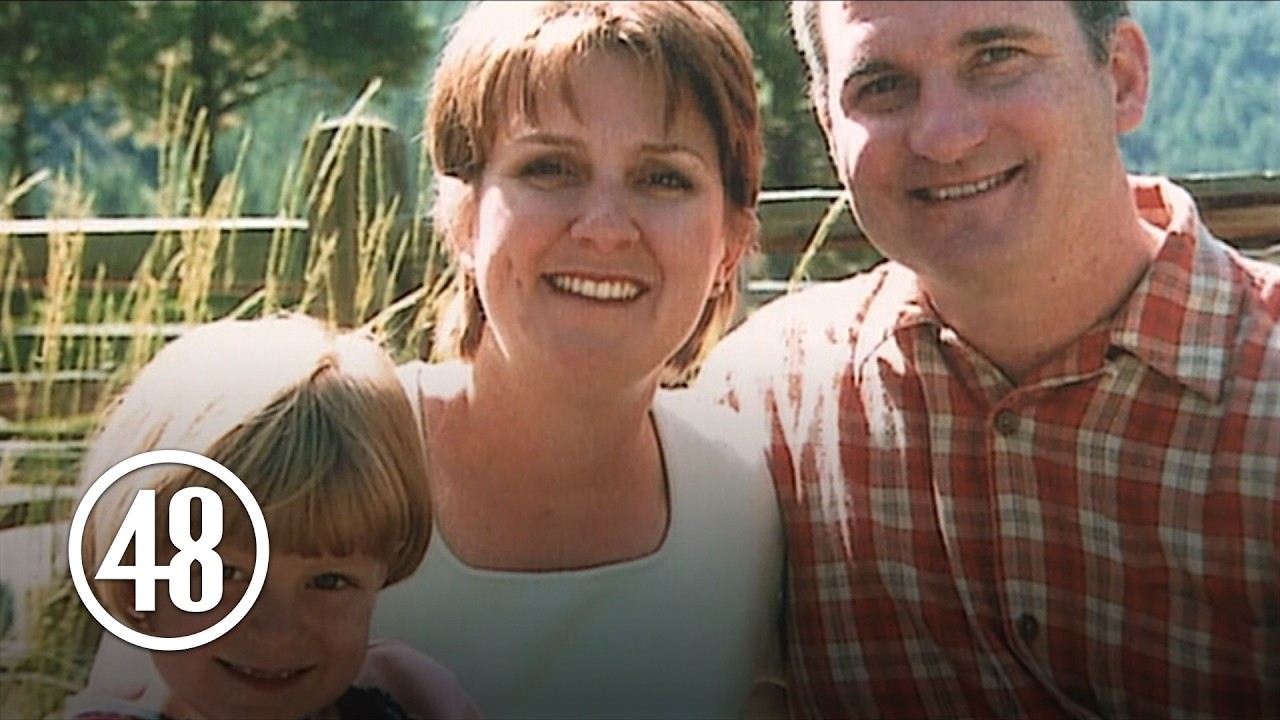
Watch the video on YouTube: Dark Side of the Mesa | Full Episode — 48 Hours
48 Hours' Mesa Video: A Conviction Overturned, Then Won Again
In November 2001, Jennifer Blagg and her 6-year-old daughter Abby vanished from their home in Grand Junction, Colorado. A large pool of blood was found in the master bedroom. Jennifer's husband Michael said he had come home to find them gone. Seven months later Jennifer's body was found in the Mesa County landfill. Abby has never been found.
48 Hours, the CBS investigative series, tells the story through correspondent Susan Spencer. The episode was posted to the channel's YouTube page on August 24, 2026, where it has drawn more than 2.5 million views. The channel, with 2.56 million subscribers, frames it in its own description in one line: convicted of killing his wife in 2004, a bombshell twist gives a Colorado man a second shot at freedom — will a jury set him free?
That twist is what separates this case from a straightforward spousal-homicide account. The first conviction did not fail on the evidence. It failed because a juror had not told the truth — and undoing it meant prosecutors had to rebuild a case that was, by the retrial, seventeen years old.
At a Glance
| Video | “Dark Side of the Mesa | Full Episode” |
|---|---|
| Channel | 48 Hours |
| Published | August 24, 2026 |
| Length | ~42 minutes |
| Views | 2,522,207 |
| Subject | The 2001 murder of Jennifer Blagg and disappearance of Abby Blagg in Grand Junction, Colorado; Michael Blagg's two trials |
What the Video Covers
The episode opens with the disappearance in November 2001. Jennifer Blagg, who worked as a teacher's aide at her daughter's school, and 6-year-old Abby were last seen at their Grand Junction home. Michael Blagg cooperated with investigators in the early days and spoke publicly about wanting to know what had happened to them. Investigators, meanwhile, were working with the blood found in the couple's bedroom and a case that had no bodies and no clear intruder.
The turning point came on June 4, 2002, when Jennifer's body was found in the Mesa County landfill, wrapped in a tent and mixed with trash from Michael Blagg's employer. He was arrested two days later and charged with first-degree murder. Abby was not found, and he was never charged in connection with her disappearance. In 2004 a jury convicted him of Jennifer's murder and he was sentenced to life in prison.
The final section follows the collapse of that conviction and the retrial. In 2014 the conviction was thrown out after it emerged that juror Marilyn Charlesworth had not disclosed, during jury selection, that she had been a victim of domestic violence — the opposite of what she had answered at the time. She was later prosecuted for contempt. Prosecutors retried the case in 2018, with the trial moved to Jefferson County because of the publicity, and Michael Blagg testified in his own defense. The second jury convicted him again of first-degree murder, and he was sentenced to life without the possibility of parole — a conviction the Colorado Court of Appeals later upheld, according to Mesa County's district attorney.
Strengths
It keeps two losses in view at once. Jennifer's murder was tried and retried; Abby's disappearance was never resolved. The episode does not let the courtroom story swallow the second one — Abby remains missing, no one has been charged over her disappearance, and the hour treats that absence as part of the case, not background.
The juror story is explained, not sensationalized. A conviction overturned over a juror's questionnaire answer can sound like a technicality. The episode shows why it was not treated as one: a juror who is not truthful in selection undermines the verdict itself, whatever the evidence, and prosecutors had to accept a retrial seventeen years after the killing rather than risk the conviction on appeal.
The retrial difficulty is made concrete. Investigators and prosecutors describe returning to a case with some 30,000 pages of material, witnesses revisited after more than a decade, and a venue change that had the trial team working away from home for two months. That practical detail gives the second verdict its context.
Weaknesses
The episode cannot answer its hardest question. What happened to Abby Blagg is unknown, and no amount of trial coverage changes that. Viewers should go in understanding that this central part of the story has no ending in the episode — or, as of 2026, anywhere else.
Compression flattens the legal timeline. A first trial, a multi-day hearing that vacated the conviction, a contempt case against a juror, a venue fight, and a second full trial are a great deal to fit into 42 minutes alongside the original investigation. The main turns are clear, but readers who want the appellate reasoning will need the court and county reporting the episode draws on.
It carries broadcast conventions. Like other 48 Hours hours resurfaced on YouTube, it is built with act-break teases and recaps shaped for commercial television. Watched in one sitting, the repetition is noticeable.
Who Should Watch
- 48 Hours regulars — a Susan Spencer episode with the series' interview- and courtroom-driven structure intact.
- Viewers interested in retrials — a clear example of how a juror's dishonesty, not new evidence, can force a murder case to be tried again.
- Cold-case and missing-person followers — Abby Blagg's disappearance remains open, and the episode keeps it in view.
- Colorado case followers — a Grand Junction case that ran through Mesa County and Jefferson County courts for more than seventeen years.
8/10
A clear, measured account of a murder case tried twice — the landfill discovery, the juror revelation, and the 2018 retrial are laid out in order, and Abby's unresolved disappearance is never treated as an afterthought. Its 42 minutes compress a long legal history, but the central story holds.
Source: 48 Hours on YouTube (“Dark Side of the Mesa | Full Episode,” posted August 24, 2026); case background via Mesa County District Attorney reporting on the upheld second conviction, and contemporary reporting on the 2001 disappearance, the June 2002 landfill discovery, the 2014 vacatur, and the 2018 retrial.