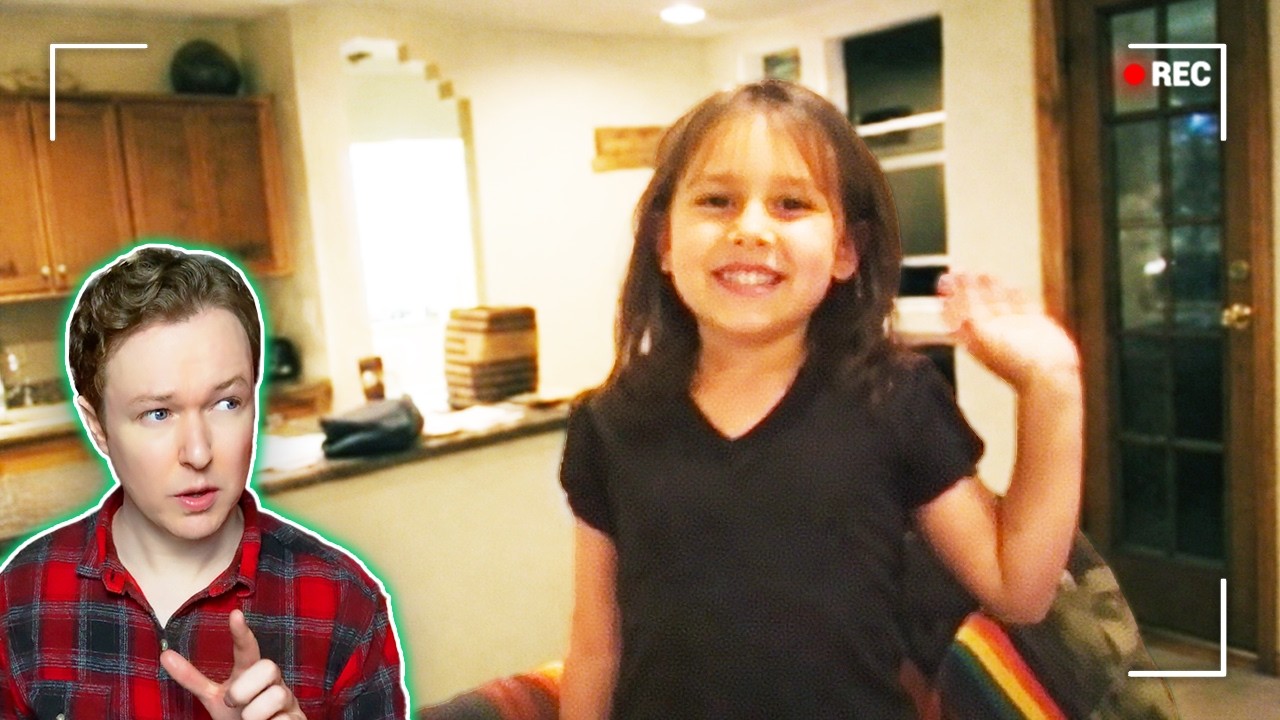
That Chapter’s Isabel Celis Video: The Man Who Knew Where She Was
In April 2012, 6-year-old Isabel Celis vanished from her bedroom in Tucson, Arizona, while her family slept. For five years no one could say where she was — until a man facing unrelated charges offered to show investigators. That Chapter’s 46-minute documentary tells the story of the search, the bargain, and what that knowledge exposed.
That Chapter, Mike Oh’s channel, has built its audience on exactly this kind of case: a single disappearance, told in full, with the timeline kept straight. This video, researched by Benj Button and published on November 17, 2026, has drawn more than 417,000 views in its first day — a fast start that reflects how firmly this case still holds public attention more than a decade on.
What sets the Celis case apart from most missing-child cases is its middle act. The break did not come from a witness or a forensic hit. It came from the suspect himself, trading the location of a child’s remains for leniency in an unrelated case — and that single fact reshapes everything the video has to explain afterward.
At a Glance
| Video | “The Horrifying Isabel Celis Case” |
|---|---|
| Channel | That Chapter |
| Published | November 17, 2026 |
| Length | ~46 minutes |
| Views | 417K+ |
| Subject | The 2012 disappearance of Isabel Celis in Tucson; Christopher Clements and the link to Maribel Gonzalez |
What the Video Covers
The video opens on April 2012, in Tucson, Arizona. In the early morning hours of April 21, Isabel Celis was taken from her home. Her father discovered her missing when he went to wake her: toys from beneath her bedroom window were scattered on the floor, items of her clothing were gone, drops of her blood were found between her bed and the window, and the window screen had been removed and left bent against the outside of the house. A 911 call followed, and then years of searching that produced no sign of her.
The turn comes in 2017. In February of that year, Christopher Clements’ then-fiancée contacted the FBI to say he might have information about the disappearance. On March 2, 2017, in exchange for the dismissal of unrelated charges and the release of his impounded car, Clements agreed to say where Isabel’s remains were. The next day he led FBI agents to a remote desert area in Pima County, near Trico and Avra Valley roads, where her remains were found in a thicket of brush. Clements maintained he had nothing to do with her death — he said he simply knew where she was.
The final act follows what that knowledge exposed. The remains were found in the same general desert area where 13-year-old Maribel Gonzalez had been discovered in June 2014, days after she disappeared walking to a friend’s house. In September 2018 a grand jury indicted Clements in both girls’ deaths. He was convicted in 2022 of kidnapping and killing Gonzalez and sentenced to natural life in prison. In the Celis case, a first jury could not agree on the murder charge and a mistrial was declared; at a fourteen-day retrial in February 2024, a second jury convicted him of first-degree murder, kidnapping, and burglary, and he was again sentenced to natural life. An Arizona Court of Appeals decision in January 2026 addressed his appeal of those convictions.
Strengths
The full arc, in one sitting. Many tellings of this case stop at the 2017 recovery or the 2018 arrest. This one runs the complete line — disappearance, bargain, second victim, two trials and a retrial — so viewers leave with the case’s actual ending rather than its most dramatic middle.
The bargain is handled plainly. The 2017 deal is the most uncomfortable fact in the case: a suspect traded a child’s location for dropped charges. The video states its terms — the dismissed charges, the released car, his insistence that he only knew the location — without dressing them up, and lets viewers sit with what investigators gained and what it cost.
Both girls stay in frame. Isabel’s case cannot be told honestly without Maribel Gonzalez, and the video gives the second case its weight rather than treating it as a twist. Two families’ losses drive the story, and the narration keeps that proportion.
Weaknesses
Two cases, two trials, 46 minutes. The compression shows in the legal sections. A hung jury, a retrial, a separate 2022 conviction, and an appeal are a great deal of procedure to carry at narration speed, and viewers who want the evidentiary detail of either trial will need the court record itself.
Thin forensic ground to stand on. This is a limitation of the case as much as the video: Isabel’s remains were recovered five years after her death, her cause of death was listed as homicide by unspecified means, and the Celis prosecution did not rest on a DNA match. The video can describe the circumstantial chain, but there is less hard forensic material here than in many That Chapter cases, and the analysis is correspondingly more inferential.
Narration carries almost everything. In line with the channel’s format, the story is told rather than shown — there is no interrogation footage or interview room tape at its center, because the pivotal 2017 exchange happened in negotiation, not on camera. Viewers who come for primary footage should know this is a researched retelling.
Who Should Watch
- That Chapter regulars — a current, full-length case told in the channel’s familiar single-sitting style.
- Missing-persons case followers — a rare case in which the recovery came from the suspect’s own bargain, explained step by step.
- Court-outcome viewers — the video follows both prosecutions through conviction, sentencing, and appeal rather than ending at arrest.
- True crime newcomers — a self-contained, if somber, case that needs no prior knowledge to follow.
8/10
A careful, complete telling of a difficult case — the timeline is clear, the 2017 bargain is stated plainly, and both victims stay in frame. The legal back half is compressed, but as a single-sitting account of the Celis case it is thorough and respectful.
Source: That Chapter on YouTube (“The Horrifying Isabel Celis Case,” published November 17, 2026); case background via the Arizona Court of Appeals decision in State v. Clements (filed January 14, 2026) and contemporary Tucson reporting on the Celis and Gonzalez cases.