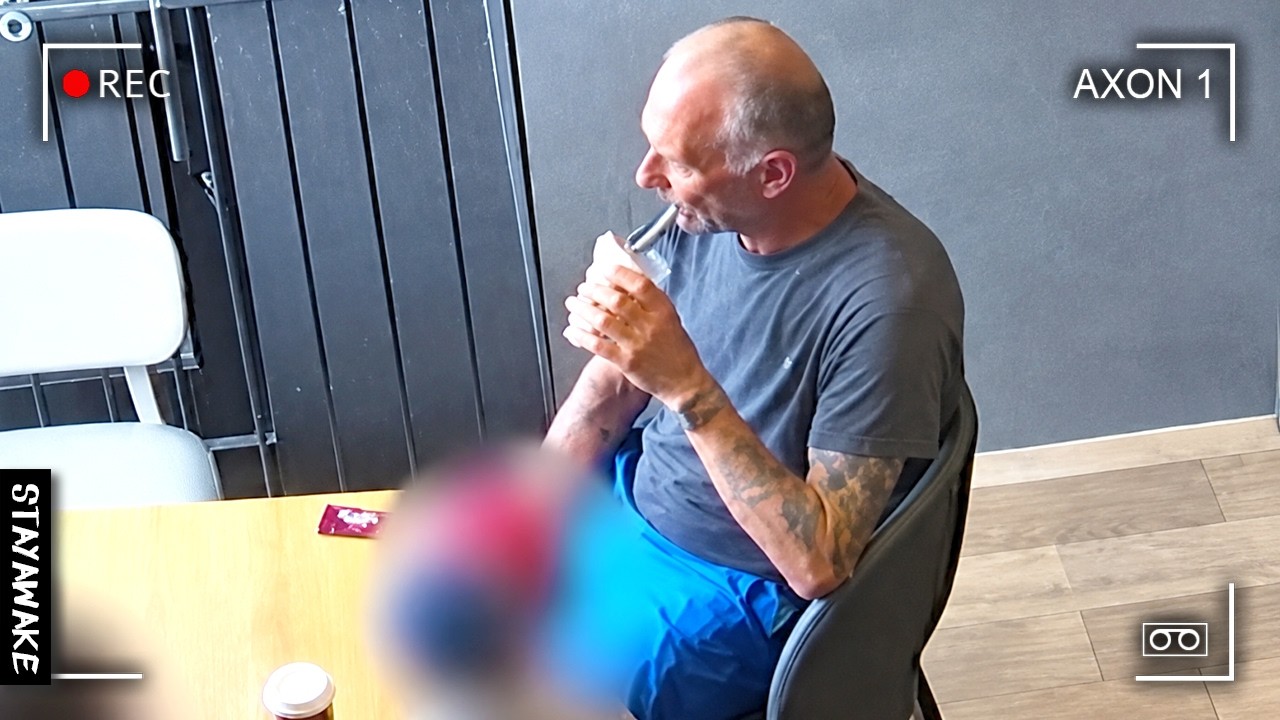
Watch the video: Killer Caught On CCTV Moments After Murdering Family — STAYAWAKE - Crime & Psychology on YouTube
STAYAWAKE's Moulton and Martin Video: When the Confession Comes First
Most interrogation videos build toward a confession. This one starts from it — twice. In Florida, a cold case stayed unsolved for about a decade before the man responsible walked in. In England, a man handed himself in on the same day as the killings.
STAYAWAKE - Crime & Psychology, a channel with 766K subscribers, builds this 20-minute entry around that shared structure. Published in October 2026, it moves between the two cases, using CCTV and interview footage to show what happened before and after each man presented himself to police.
The video has drawn 477,665 views. Its interest is not in a whodunit — both cases name the person responsible early — but in timing and motive: why one confession came after years of silence, and why the other came within hours.
At a Glance
| Video | “Killer Caught On CCTV Moments After Murdering Family” |
|---|---|
| Channel | STAYAWAKE - Crime & Psychology |
| Published | October 12, 2026 |
| Length | ~20 minutes |
| Views | 477,665 |
| Subject | Benjamin Moulton and Derek Martin; two walk-in confessions, CCTV, and police interviews |
What the Video Covers
The first case follows Benjamin Moulton in Florida. As the video presents it, Nicole Scott was killed in 2011, Moulton was questioned at the time but not charged, and the investigation went cold. About ten years later, in September 2021, he went to the Manatee County Sheriff's Office and confessed. The video uses that long gap — between the original inquiry and the voluntary return — as its central thread, then follows the interview and the legal steps that followed.
The second case is Derek Martin in Sussex, England. In June 2023, Chloe and Josh Bashford were killed at their home in Newhaven. Later that day Martin walked into Brighton Police Station and told officers he had killed two people. The video draws on CCTV clips shown in later court reporting — Martin going about ordinary errands earlier that day — to contrast routine movements with what investigators say happened at the house.
Across both halves, the focus stays on the recorded record: station and street CCTV, the first accounts each man gave, and how detectives tested those accounts against other evidence. The video closes with the legal aftermath for each case, rather than treating the confession alone as the end of the story.
Strengths
A clear pairing. Two unrelated cases could feel stitched together, but the shared walk-in confession gives the video a real structure. Comparing a confession after a decade with one on the same day raises useful questions about guilt, calculation, and what prompts someone to hand themselves in.
Recorded footage is used to show, not just to illustrate. The CCTV and interview material are the evidence the cases turn on, and the video lets viewers see the sequence for themselves instead of relying only on narration.
Contained runtime for two cases. At about 20 minutes, the video covers two investigations, two interviews, and two legal outcomes without expanding into a multi-part series.
Weaknesses
Two cases mean less depth on each. Viewers who want the full background on either the Scott investigation or the Bashford case — family context, trial evidence in detail, and sentencing — will need the underlying police and court reporting.
The title points to only part of the video. The CCTV-after-the-killings framing fits the Martin half most directly; the Moulton case is mainly a cold-case confession story, and new viewers may expect a single-case video.
Motives are presented, not settled. Each man offered his own explanation for confessing. The video reports those explanations, but viewers should treat them as the men's accounts, tested in court, rather than as a complete psychological answer.
Who Should Watch
- Interrogation and CCTV-footage viewers — both cases turn on recorded statements and camera footage.
- Cold-case followers — the Moulton half shows how a dormant investigation can restart with a voluntary confession.
- STAYAWAKE regulars — a two-case documentary in the channel's familiar, footage-led style.
- Viewers who prefer resolved cases — both stories move beyond the confession into charges and court outcomes.
7/10
A well-paired two-case documentary — the contrast between a confession after ten years and one on the same day gives it structure, and the CCTV and interview footage carry the telling. Each case gets less depth than a single-case video would allow.
Source: STAYAWAKE - Crime & Psychology on YouTube (“Killer Caught On CCTV Moments After Murdering Family,” published October 12, 2026); case background via Sussex Police court reporting on Derek Martin and contemporary Florida reporting on Benjamin Moulton's 2021 confession in the Nicole Scott case.