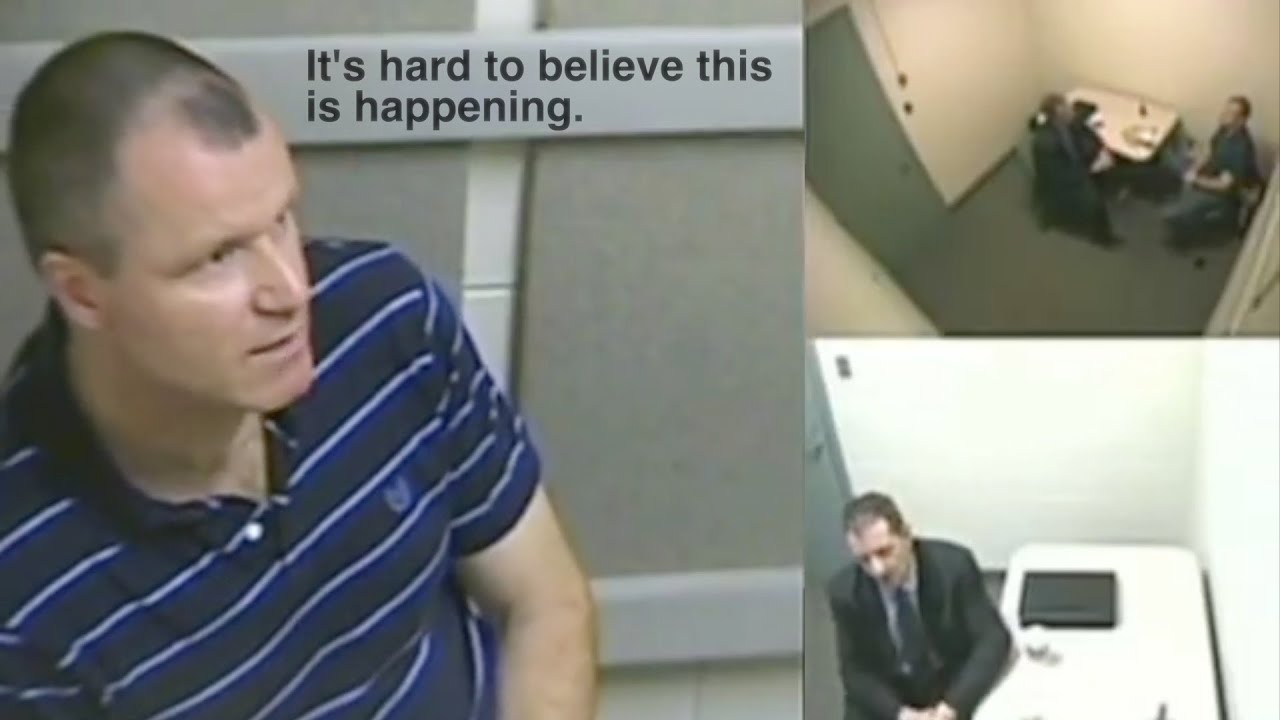
Watch the video: https://www.youtube.com/watch?v=jJZv3z7FOt0
JCS' Russell Williams Video: The Interrogation That Stripped Away the Rank
David Russell Williams commanded CFB Trenton, Canada's largest air force base. On February 7, 2010, he sat in an Ottawa interview room as a suspect in the disappearance of Jessica Lloyd, 27. Over the interrogation that followed, Detective Sergeant Jim Smyth called him "Russell," never Colonel — and presented the forensic evidence piece by piece until Williams confessed.
If you watch interrogation breakdowns on YouTube, this is one of the videos that defined the genre. JCS – Criminal Psychology, a channel with 5.64 million subscribers, pairs the real interview footage with calm, forensic narration, and the contrast at its center is stark: a senior officer accustomed to command, losing control of a conversation one fact at a time.
The video, published in August 2019, has pulled in more than 12.9 million views. It endures because the footage itself is extraordinary — a complete confession, obtained without shouting, threats, or raised voices.
At a Glance
| Video | “The Interrogation of Col. Russell Williams” |
|---|---|
| Channel | JCS - Criminal Psychology |
| Published | August 3, 2019 |
| Length | ~37 minutes |
| Views | 12,904,214 |
| Subject | The 2010 interrogation of Russell Williams; forensic evidence and confession |
What the Video Covers
The video opens on January 28, 2010, in Ontario, Canada. Jessica Lloyd, 27, disappears. Investigators find tire tracks and boot prints near her home, and the trail leads to a roadside check and then to Williams — the commander of CFB Trenton, one of the most senior officers in the region.
The interrogation itself is the video's core. Smyth builds a timeline, then lays out the evidence in sequence: the boot prints matching Williams' footwear, the tire tracks matching his vehicle, and the prospect of DNA evidence to come. He addresses Williams by his first name throughout, a deliberate leveling the narration draws attention to. Faced with the accumulation, Williams' denials give way — in the video's quoted line, "This is getting out of control really fast, Russel" — and he begins to confess.
The final section follows where the confession led. Williams directed police to Lloyd's body and described his crimes against her and against Corporal Marie-France Comeau, who had been found dead in her home in November 2009, as well as earlier break-ins and sexual assaults. The video closes on the outcome: in October 2010 Williams pleaded guilty to 88 charges, including two counts of first-degree murder, and received two concurrent life sentences with no parole eligibility for 25 years. He was stripped of his commission, rank, and awards.
Strengths
A masterclass in evidence presentation. The video's lasting value is instructional: Smyth never dumps everything at once. Each item of evidence arrives only after Williams has committed to an account it contradicts, and the narration explains why that sequencing matters. Viewers interested in how interrogations actually work will learn more here than from most documentaries on the subject.
The footage is allowed to breathe. JCS resists talking over the interview. Long stretches play with minimal commentary, so Williams' shifts — the pauses, the posture, the moment the calculation changes — are visible rather than described. The analysis lands harder because it is sparing.
The rank contrast is handled with restraint. The video could easily have sensationalized a base commander confessing to murder. Instead it stays procedural, focused on technique and evidence, and it keeps the victims — Jessica Lloyd and Marie-France Comeau — named and central to why the interview mattered.
Weaknesses
Thirty-seven minutes compress a ten-hour interview. The full interrogation ran for hours, and this edit necessarily selects its turning points. Viewers who want the complete record, including the long stretches where little appears to happen, will need the unedited footage and court reporting.
Limited background for newcomers. The video assumes some familiarity with the case. The earlier break-ins, the Tweed assaults, and the investigation before February 7 receive brief treatment, so first-time viewers may finish with questions about how Williams was identified that the video only partly answers.
Read the psychology as commentary, not diagnosis. The narration interprets Williams' behavior and Smyth's technique with confidence, and the footage largely supports it — but it remains one channel's analysis of an edited interview, not a clinical or legal assessment.
Who Should Watch
- Interrogation-footage fans — one of the most complete confessions ever released, broken down by the channel that popularized the format.
- JCS and criminal-psychology viewers — a cornerstone video in the catalog, and a clear example of the channel's method at its best.
- Detective-technique students — the evidence sequencing and the deliberate use of a first name are a study in controlled interviewing.
- True crime viewers who prefer resolved cases — the confession, guilty pleas, and life sentences are all covered in a single 37-minute account.
9/10
A landmark interrogation breakdown — the footage is remarkable, Smyth's method is laid out with unusual clarity, and the victims stay named at the center of it. Its only real limits are the compression of a ten-hour interview and the background a newcomer will need to find elsewhere.
Source: JCS - Criminal Psychology on YouTube (“The Interrogation of Col. Russell Williams,” published August 3, 2019); case background via the October 2010 Ontario guilty pleas and sentencing, under which Williams received two concurrent life sentences for the murders of Jessica Lloyd and Marie-France Comeau.