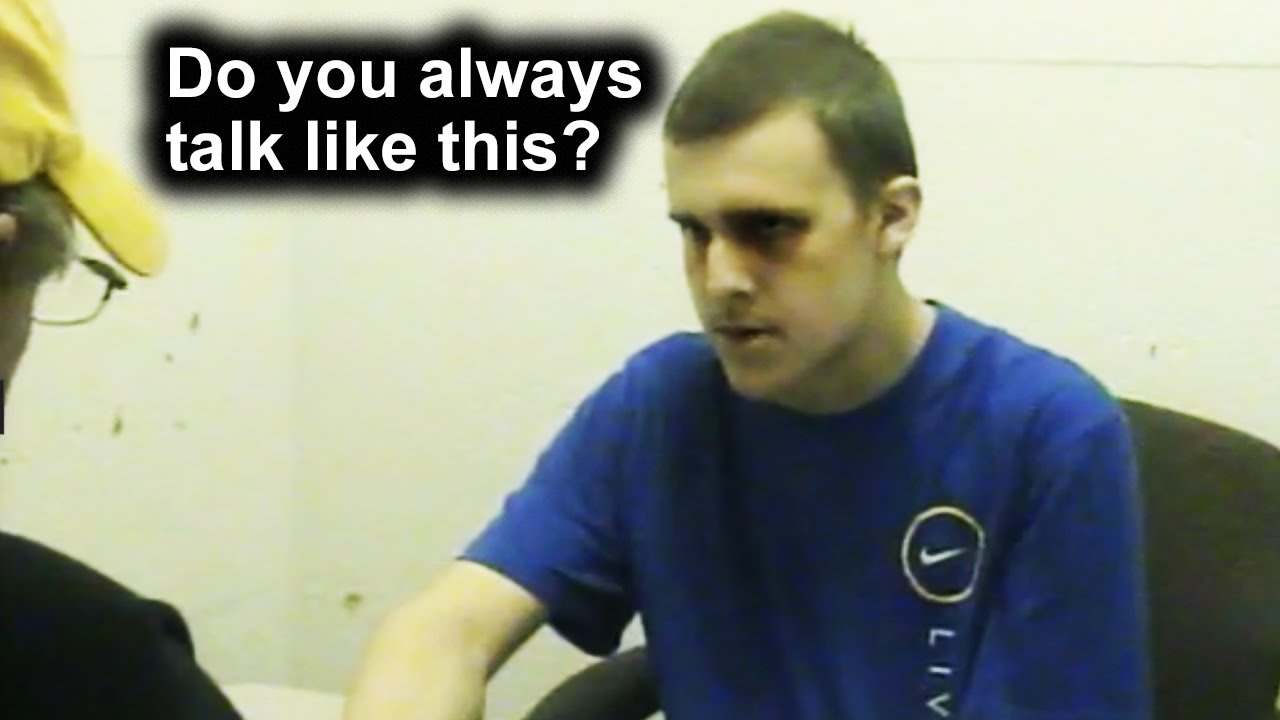
Explore With Us’ Zachary Davis Video: The Interrogation That Shocked Detectives
In August 2012, a house fire in Sumner County, Tennessee, led responders to a scene far worse than arson: 15-year-old Zachary Davis had beaten his mother, Melanie Davis, to death with a sledgehammer, then set the family home ablaze with his older brother asleep inside. Explore With Us’ 49-minute documentary centers on the interrogation that followed — and the flat, matter-of-fact way Davis talked about it that left detectives visibly unsettled.
If you watch interrogation footage on YouTube, you know the spectrum: deniers, criers, bargainers, confessors. Davis sits somewhere off that spectrum entirely. He describes the killing in a calm monotone, nods along to his own account, and laughs at moments where no one else in the room sees anything funny. The documentary is smart enough to let long stretches of the tape play unbroken, because the footage needs no narration — the gap between what he is saying and how he is saying it is the whole story.
The video, published in January 2023, has drawn more than 10 million views — a sign of how deeply this particular interrogation gets under people’s skin. It is one of Explore With Us’ strongest entries: part interrogation breakdown, part case documentary, and part genuinely educational look at adolescent mental illness colliding with the criminal justice system.
At a Glance
| Video | “Teen Killer Shocks Detectives By The Way He Speaks” |
|---|---|
| Channel | Explore With Us |
| Published | January 30, 2023 |
| Length | ~49 minutes |
| Views | 10M+ |
| Subject | The 2012 sledgehammer murder of Melanie Davis; a teen killer’s flat-affect interrogation |
What the Video Covers
The video opens in August 2012, in Hendersonville, Tennessee. A fire at the Davis home brings responders who find Melanie Davis dead — beaten with a sledgehammer — and her younger son missing. Zachary Davis is soon in custody, and the interrogation begins. What follows is the documentary’s core: Davis, calm and detached, walking detectives through the killing in a monotone, explaining that he chose a sledgehammer because it gave him the “highest chance of killing her,” and telling them that if he could do it again, he would “probably kill Josh with a sledgehammer too” — Josh being the older brother he had just tried to burn alive in the same house.
The middle section widens the lens to the mental-health history. Davis had been diagnosed with depression and psychosis, told people he was hearing the voice of his deceased father, and had stopped treatment at some point before the killing. Investigators found no obvious motive in the family’s own records — text messages between Davis, his mother, and his brother showed a normal, even warm relationship in the days before the murder. The documentary handles this section carefully, presenting the clinical facts without pretending they add up to a simple explanation.
The final stretch covers the trial and its aftermath: the four-day trial in April 2015, where Davis stunned the courtroom by changing his story and claiming his brother Josh had committed the murder; the jury’s rejection of that claim and his conviction for first-degree murder, attempted first-degree murder, and aggravated arson; and the sentence — life plus two 20-year terms running consecutively, keeping him in prison at least 71 years. It closes with the documentary’s stated purpose: psychology professionals breaking down the interrogation for red flags, with an eye toward education and prevention rather than spectacle.
Strengths
The tape is extraordinary, and the video knows it. This is the format’s greatest strength when it works — you don’t need a narrator to tell you something is wrong when a teenager calmly explains a sledgehammer murder in a monotone. The documentary resists the urge to talk over the most important moments, and the restraint pays off.
The legal follow-through is thorough. Too many interrogation videos end at the arrest. This one walks through competency, the trial strategy, the shocking mid-trial pivot to blaming his brother, and the layered sentencing — giving viewers the full arc instead of just the viral moment.
The prevention framing is genuine. The video’s stated goal — analyzing the footage for red flags and psychological warning signs — comes through in the commentary. It treats Davis’s mental-health history as a serious subject rather than set dressing, which is rarer in this genre than it should be.
Weaknesses
Analysis can drift toward diagnosis. The video leans on psychology professionals for commentary, which is a step up from armchair theorizing — but the line between “educational analysis” and diagnosing a real teenager on camera still gets blurry. Notably, the mental-health experts who testified at Davis’s actual trial disagreed on a diagnosis while agreeing he was not legally insane; the video could have sat with that ambiguity a little longer.
Melanie Davis stays in the background. The victim is named and her death is described, but she exists in the video mainly as the crime’s starting point. A little more of who she was — beyond the loving text messages — would have given the loss its full weight.
Familiar Explore With Us formula. Regular viewers will recognize the structure, the disclaimer style, and the pacing. The case is strong enough to carry it, but there are no surprises in how the documentary is assembled.
Who Should Watch
- Interrogation-footage fans — this is one of the most unsettling suspect interviews on YouTube, precisely because of how calm it is.
- Criminal-psychology viewers — the intersection of adolescent mental illness and violent crime is handled with unusual seriousness here.
- Juvenile-justice watchers — the competency fight, the trial pivot, and the stacked sentencing raise real questions about how the system handles teen offenders.
- Explore With Us regulars — a 49-minute deep cut that ranks among the channel’s most-watched documentaries for good reason.
8/10
A gripping interrogation documentary — Davis’s affectless confession is unforgettable, the legal follow-through is thorough, and the psychology framing is genuinely educational. It wobbles slightly when analysis drifts toward diagnosis, but as a case study in how disturbing the interrogation room can get, it’s top-tier.
Source: Explore With Us on YouTube (“Teen Killer Shocks Detectives By The Way He Speaks,” published January 30, 2023); case background via the Tennessee Court of Criminal Appeals (State v. Zachary Everett Davis, No. M2016-01579-CCA-R3-CD) and contemporary Tennessee reporting on the 2012 Sumner County case.