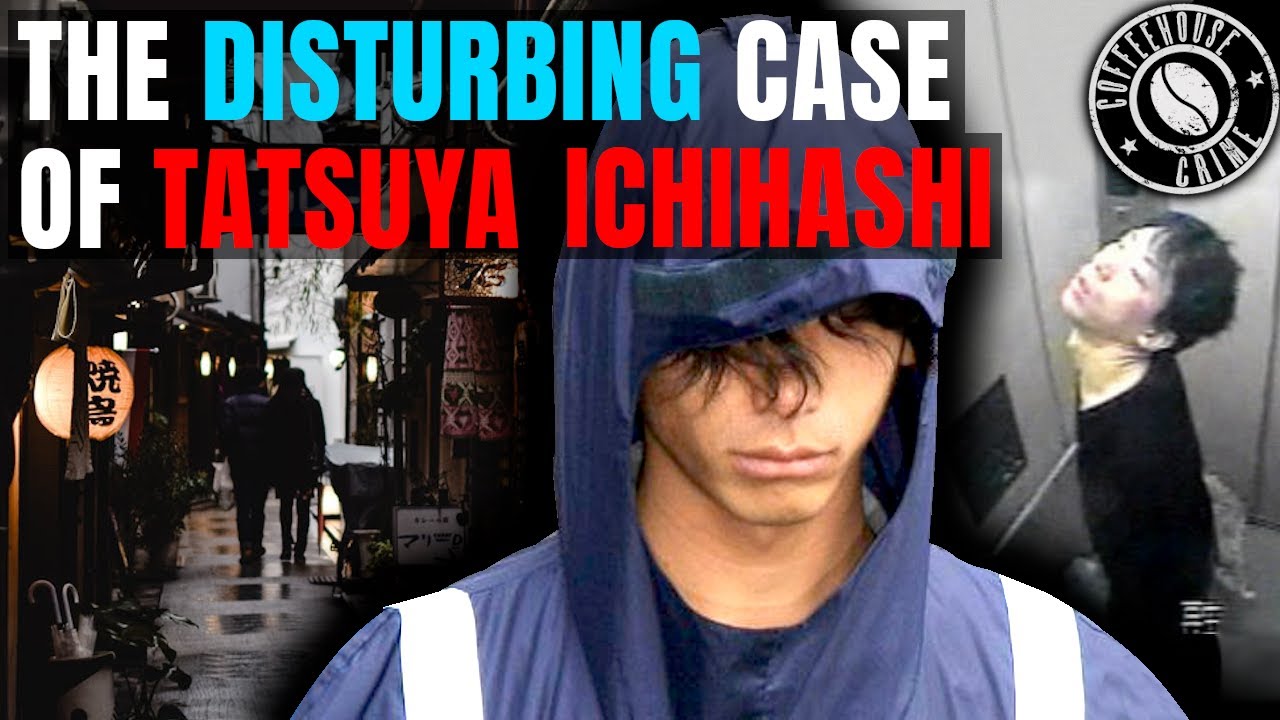
Coffeehouse Crime's Tatsuya Ichihashi Video: The Fugitive Who Tried to Outrun His Own Face
In March 2007, 22-year-old British teacher Lindsay Hawker was found dead in a sand-filled bathtub on the balcony of an apartment in Ichikawa, Japan. The man who lived there, Tatsuya Ichihashi, had already fled. Coffeehouse Crime's 24-minute documentary follows what he did next — and how far he went to change the face on the wanted posters.
Coffeehouse Crime, hosted by Adrian, tells single cases in a calm, research-led style, and this case suits that approach: the central facts are documented, and the strangeness is in the record rather than in the telling. The video, published in May 2021, has drawn more than 11.3 million views — a sign of how durable interest in this case remains.
It is a contained telling: one victim, one fugitive, and a search that lasted more than two and a half years before it ended, almost incidentally, at a ferry terminal. This is our review.
At a Glance
| Video | “The Killer That Deformed His Own Face | The Disturbing Case of Tatsuya Ichihashi” |
|---|---|
| Channel | Coffeehouse Crime |
| Published | May 31, 2021 |
| Length | ~24 minutes |
| Views | 11,368,642 |
| Subject | The 2007 murder of Lindsay Hawker in Japan; Tatsuya Ichihashi's years on the run and his life sentence |
What the Video Covers
The video opens with the discovery in March 2007 in Ichikawa, Chiba Prefecture. Lindsay Hawker, a 22-year-old English teacher from Brandon, near Coventry, had last been seen giving Ichihashi an English lesson. Police found her body at his apartment; Ichihashi himself was seen fleeing and was gone before he could be questioned.
The middle section follows the years on the run. As the video's own description puts it, Ichihashi deformed his own face and hid in abandoned bunkers. Contemporary reporting fills in the same picture: he cut his own lip, removed moles, and later paid for professional cosmetic surgery, worked under assumed circumstances, and stayed ahead of a nationwide wanted listing while Hawker's family campaigned to keep the case visible.
The final section covers the end of the search and the trial. Staff at a cosmetic surgery clinic in Nagoya became suspicious and contacted police; Ichihashi was arrested at a ferry terminal in Osaka on November 10, 2009, as he waited to board a ferry to Okinawa. At his trial in Chiba District Court he admitted killing Hawker but denied intending to murder her; the court rejected that account, and on July 21, 2011 he was sentenced to life imprisonment — a sentence upheld on appeal in April 2012.
Strengths
The case is told in order. The video resists the temptation to open with the surgery and work backwards. By following the chronology — the killing, the flight, the disguise, the arrest, the trial — it lets the length and deliberateness of the fugitive period register on its own.
The victim stays in view. Hawker is presented as a person with a life and a family who actively campaigned for answers, not simply as the starting point for a fugitive story. That balance matters in a case where the offender's conduct on the run can easily dominate the telling.
Compression without invention. A case spanning four years, a national manhunt and a lay-judge trial is covered in about 24 minutes without leaning on speculation. The video sticks close to the documented record, which is the right discipline for this material.
Weaknesses
The title promises more shock than the video delivers. The framing around a deformed face is the most sensational element here; the video itself is more measured than its title, and viewers coming for that angle may find the actual treatment comparatively restrained.
Thin on the Japanese legal process. The trial was an early test of Japan's lay-judge system, and the sentencing reasoning — life rather than death, in part because Ichihashi had no previous record — is distinctive. The video covers the outcome more fully than the process behind it.
Limited sourcing on screen. The channel lists references separately rather than walking viewers through them, so anyone who wants to check a particular claim has to leave the video to do it.
Who Should Watch
- Viewers interested in fugitive cases — a documented account of how a wanted man stayed free, and of the ordinary tip that ended it.
- Coffeehouse Crime regulars — a representative entry in the channel's calm, single-case format.
- True crime viewers who prefer solved cases — this is a completed investigation, trial and appeal, not an open mystery.
- Anyone new to the Hawker case — a contained introduction that covers the full arc in under half an hour.
8/10
A measured, well-ordered account of a difficult case — the fugitive years are covered without glorifying them, the victim and her family stay at the centre, and the full legal outcome is included. The title oversells the shock; the video itself does not.
Source: Coffeehouse Crime on YouTube (“The Killer That Deformed His Own Face | The Disturbing Case of Tatsuya Ichihashi,” published May 31, 2021); case background via BBC News and contemporary reporting on the 2009 Osaka arrest and the 2011 Chiba District Court life sentence.