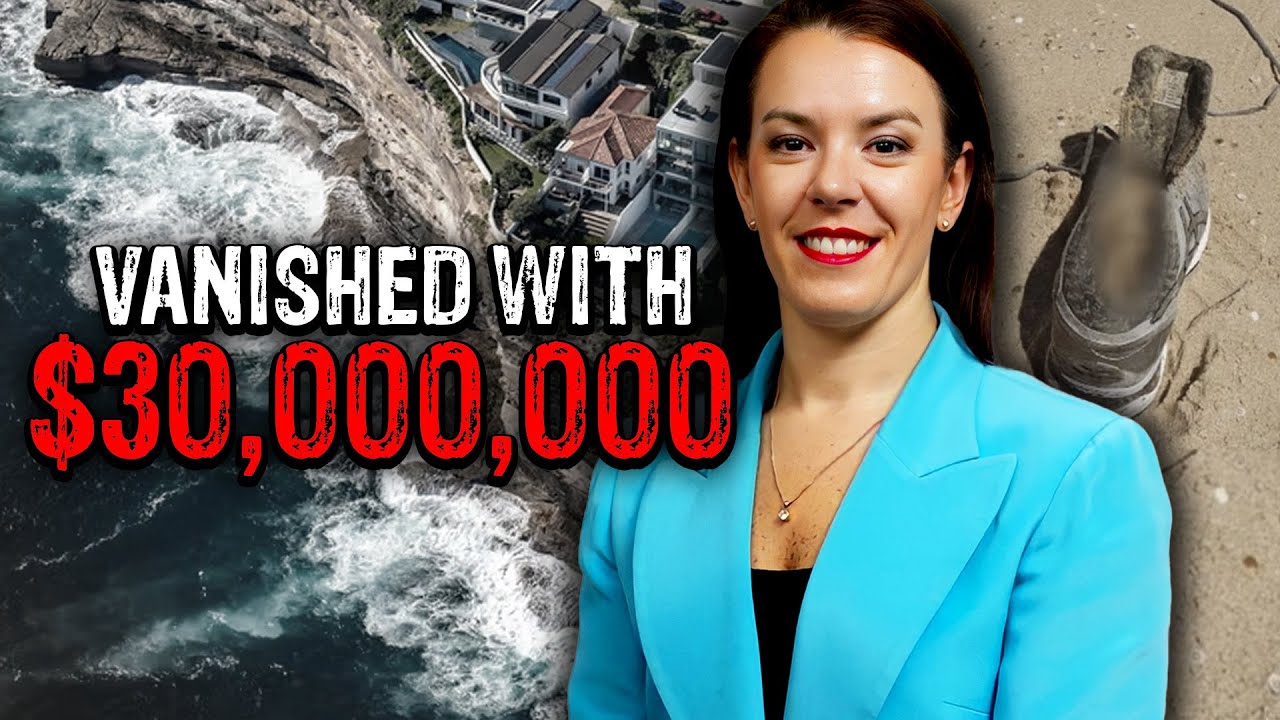
Watch the video on YouTube: Fraud to Murder? | The Case of Melissa Caddick — Coffeehouse Crime
Coffeehouse Crime on Melissa Caddick: The Fraud, the Raid and the Vanishing
On the morning of November 11, 2020, officers from Australia's corporate regulator and the federal police raided a luxury home in Dover Heights, Sydney. By the following morning, the woman who lived there — Melissa Caddick, 49, who had presented herself as a successful financial adviser — had vanished, leaving her phone and belongings behind. Coffeehouse Crime's 26-minute video, published in April 2022, asks what happened next, and whether anyone actually knows.
Coffeehouse Crime, hosted by Adrian, has about 2.21 million subscribers. This video has drawn more than 1.25 million views, and it is easy to see why the case holds an audience: it is two stories at once. The first is a documented fraud, examined by regulators and courts. The second is a disappearance with only one piece of physical evidence, found on a beach some 500 kilometres away three months later.
The channel's own framing is careful about that split. Its description calls Caddick a con artist who stole millions in a Ponzi scheme, then walks through the night she disappeared and the theories that followed — including, as the title puts it, the question of whether fraud led to murder. The video's value is in keeping those two stories distinct.
At a Glance
| Video | “Fraud to Murder? | The Case of Melissa Caddick” |
|---|---|
| Channel | Coffeehouse Crime |
| Published | April 4, 2022 |
| Length | ~26 minutes |
| Views | 1,254,845 |
| Subject | The disappearance of Melissa Caddick; the Maliver Ponzi scheme and the November 2020 ASIC raid in Sydney |
What the Video Covers
The video opens with the adviser and the money. Caddick ran a company called Maliver and presented herself as a financial adviser, although she held no Australian financial services licence. Over about eight years, as later reporting and court findings established, she took more than $23 million from dozens of investors — mainly family and friends — who believed she was buying shares for them. Instead, investigators said, she produced falsified documents and fake portfolio statements and spent the money on the life she was advertising: designer clothes, jewellery, overseas travel and property.
The middle section follows the raid and the disappearance. On November 11, 2020, the Australian Securities and Investments Commission, with the Australian Federal Police, executed a search warrant at Caddick's Dover Heights home. Her son later told investigators he heard a door close at about 5:30 the next morning and assumed his mother was going for her usual exercise. She left her phone and possessions behind, no CCTV captured where she went, and she was not reported missing for more than 30 hours — a delay the video treats, as investigators did, as one of the case's central unanswered questions.
The final section covers the shoe and the theories. On February 21, 2021, walkers found a running shoe containing a decomposed human foot at Bournda Beach, near Tathra on the New South Wales south coast. DNA testing against samples from Caddick's toothbrush and family members confirmed it was hers, and drift modelling discussed in the case raised the possibility that a body entering the water near Dover Heights could have reached that coast. The video closes by weighing the explanations that were circulating in 2022 — that she fled, that she took her own life, or that she was murdered — without pretending the evidence then available could settle which one was true. Later reporting gives that restraint some support: in May 2023 a New South Wales coroner concluded that Caddick is deceased, but said the evidence did not allow a positive finding on how, when or where she died.
Strengths
The fraud is documented, and the video treats it that way. The strongest material here is not speculation but the paper trail: an unlicensed adviser, a company the Federal Court later described as a sham or facade, falsified statements, and investors who were mostly the people closest to her. Grounding the first half in that record gives the disappearance half something solid to stand on.
The timeline is clear and contained. In 26 minutes the video keeps three dates in order — the raid on November 11, the disappearance on November 12, and the discovery at Bournda Beach the following February — and does not blur them. For a case often retold as a single mystery, that separation matters: what is known about the fraud is not evidence about how Caddick died.
The victims of the fraud stay in view. The investors were largely family and friends who lost savings entrusted to someone they trusted personally. The video returns to that loss rather than treating the luxury spending as colour, and the later recovery effort — receivers selling assets including the Dover Heights home so investors could recover part of what they lost — shows how long that harm continued after she vanished.
Weaknesses
It predates the inquest, by necessity. Published in April 2022, the video could not include the coronial inquest or its May 2023 finding that Caddick is deceased while the manner of her death remains undetermined. Viewers should treat its closing theories as the state of the case in 2022, and read the inquest reporting alongside it.
The murder question in the title outruns the evidence. As the video itself acknowledges in its description, there is no established evidence that Caddick was murdered, just as there is no confirmed account of flight or suicide. The title is a fair description of a theory in circulation, but viewers should not mistake it for a finding — the coroner, with far more evidence, made no such finding.
Some figures vary between reports. Totals for the fraud are reported across a range — more than $23 million in AAP reporting, with inquest coverage putting investor losses between $20 million and $30 million, and investor numbers reported in the dozens. The video gives a clear single account, but anyone citing a precise total should check which source and which count they are using.
Who Should Watch
- Fraud and Ponzi-scheme followers — a documented, regulator-examined scheme built on fake statements and personal trust, told in under half an hour.
- Disappearance-case viewers — a vanishing the morning after a raid, with one confirmed piece of physical evidence and no settled ending.
- Coffeehouse Crime regulars — a concise, single-case entry in the channel's familiar style, focused on Australia.
- True crime newcomers — a self-contained case that separates a proven fraud from an unresolved disappearance, making it easy to follow what is known and what is not.
7/10
A clear, well-ordered account of a case that is really two cases — a proven $23 million fraud and an unresolved disappearance. It grounds the first half in the documented record and is honest that the second half has no settled answer, though its title leans harder on the murder theory than the evidence does, and it necessarily predates the 2023 inquest.
Source: Coffeehouse Crime on YouTube (“Fraud to Murder? | The Case of Melissa Caddick,” published April 4, 2022); case background via AAP reporting on the fraud, the asset recovery and the May 2023 coronial finding, and contemporary Australian reporting on the November 2020 ASIC raid and the February 2021 discovery at Bournda Beach.