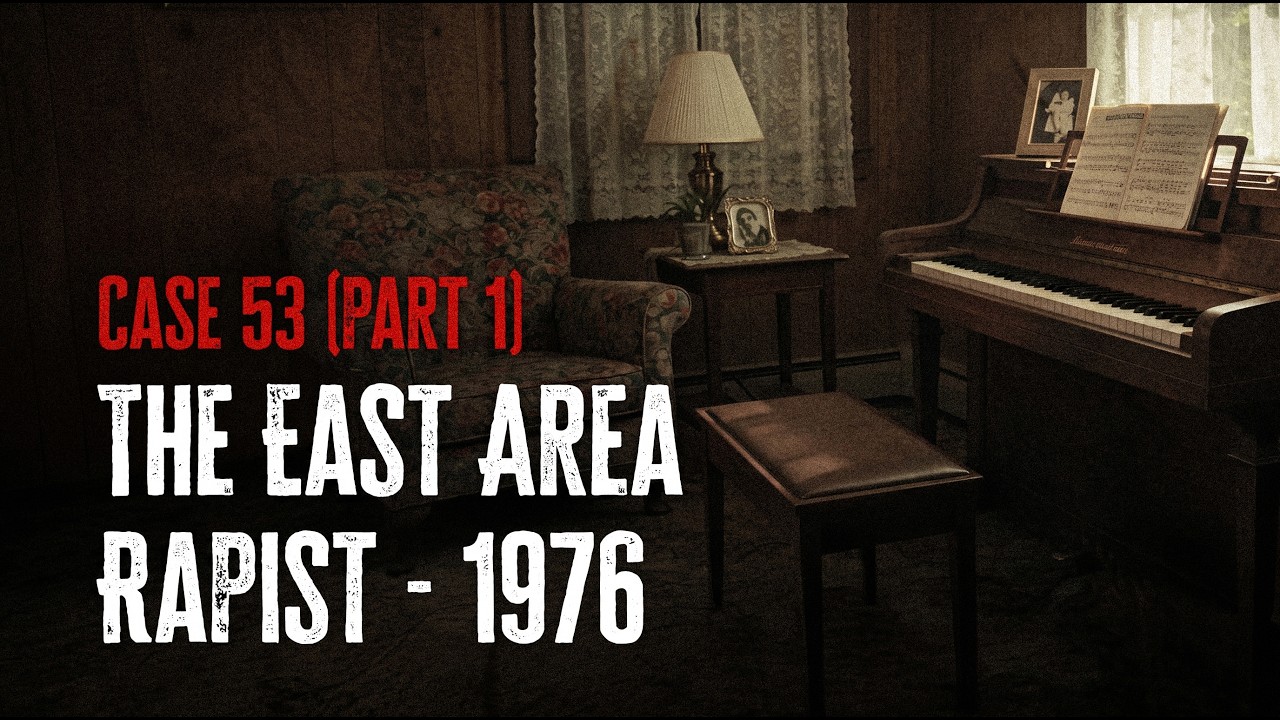
Casefile's East Area Rapist, Part 1: Where the Golden State Killer's Reign Began
In 1976, Rancho Cordova was a new postwar suburb in East Sacramento — middle-class, single-story, unremarkable. Then the attacks started. Casefile's Case 53 reconstructs, street by street, how an unknown offender turned an ordinary neighborhood into the starting point of one of America's most notorious crime sprees.
Casefile is the anonymous-host Australian podcast that set the standard for researched, respectful true crime storytelling, and Case 53 is the series many listeners name as its defining work. Part 1 covers the beginning: 1976, when the offender the media would call the East Area Rapist began prowling the suburbs east of Sacramento, breaking into homes and attacking women in their beds.
What makes this episode remarkable is its restraint. There is no host personality to perform around, no cliffhanger theatrics — just a meticulous, chronological reconstruction built on research and writing by Anna Priestland, with Casefile's signature scored production underneath. It treats the victims and the community as the story, not the monster.
At a Glance
| Video | "The beginning of a terror spree in Sacramento County (Part 1/6)" |
|---|---|
| Channel | Casefile |
| Published | November 19, 2018 |
| Length | 1:52:55 |
| Views | 124,642 |
| Subject | Case 53, Part 1: the 1976 East Area Rapist attacks in Rancho Cordova, California |
What the Video Covers
The episode opens on Rancho Cordova in 1976 — a fairly new postwar suburb in East Sacramento, built out from a 1950s housing development into a middle-class grid of single-story homes. Casefile establishes the ordinariness of the place deliberately: this is what made the terror so disorienting. The danger arrived in the most familiar setting imaginable — people's bedrooms, in the early hours of the morning.
From there, the episode works chronologically through the first wave of attacks, laying out the offender's emerging pattern: the prowling, the break-ins, the binding of victims, the theft of small personal items. The narration stays close to the documented record — what was reported, what investigators found, how the community reacted as the attacks multiplied through 1976. You feel the investigation taking shape in real time, with all the confusion and jurisdictional friction that would define the case for decades.
As Part 1 of 6, the episode ends where the spree was still accelerating. The full arc — the escalation into the Original Night Stalker murders of the late 1970s and early 1980s, the decades of dead ends, and the 2018 arrest of former police officer Joseph James DeAngelo through forensic genetic genealogy — unfolds across the rest of the series. This installment is the foundation: how it started, and why nobody saw it coming.
Strengths
Research density without bloat. Casefile's reputation rests on episodes like this one: every claim is anchored, every timeline beat is placed, and the writing never reaches for drama the facts don't support. The episode respects the listener's intelligence and the victims' dignity in equal measure.
The setting becomes a character. By spending real time on what Rancho Cordova was in 1976 — its streets, its newness, its ordinariness — the episode makes the violation land harder than any graphic detail could. The suburbia itself is the point: this happened in places that looked like everywhere.
Production that serves the story. Mike Migas's scoring and the anonymous host's flat, unhurried delivery create a tension that sensationalist channels can only fake. The restraint is the style, and it has aged better than almost anything else in the genre.
Weaknesses
Part 1 means no resolution. This is the opening chapter of a six-part series, so viewers looking for the full arc — the murders, the cold decades, the 2018 DNA breakthrough — will need to commit to the whole run. As a standalone, it is all setup.
Static visuals. On YouTube, the episode is essentially the podcast audio over a still image. If you need visual storytelling to stay engaged, this format asks a lot — though the narration is strong enough to carry it for most listeners.
Not for the casual viewer. The measured pace and detail density that devotees love can feel slow if you came for a quick overview. This is a slow-burn documentary in the truest sense.
Who Should Watch
- Golden State Killer case followers — the definitive deep-dive starting point for the most infamous California crime spree of the 1970s and 80s.
- Casefile devotees and podcast-first viewers — Case 53 is widely considered the show's landmark series, and this is where it begins.
- Cold-case and investigation nerds — a masterclass in how a pattern emerges from scattered early reports.
- Viewers who prefer restraint — no theatrics, no host ego, just a meticulously built true crime narrative.
9/10
The opening chapter of true crime podcasting's most respected series — meticulously researched, quietly terrifying, and completely free of sensationalism. Essential viewing for anyone serious about the genre.
Source: Casefile on YouTube ("The beginning of a terror spree in Sacramento County (Part 1/6)," Case 53: The East Area Rapist 1976, Part 1); case background via the Sacramento County Sheriff's Department records and reporting on the 2018 arrest and 2020 guilty plea of Joseph James DeAngelo.