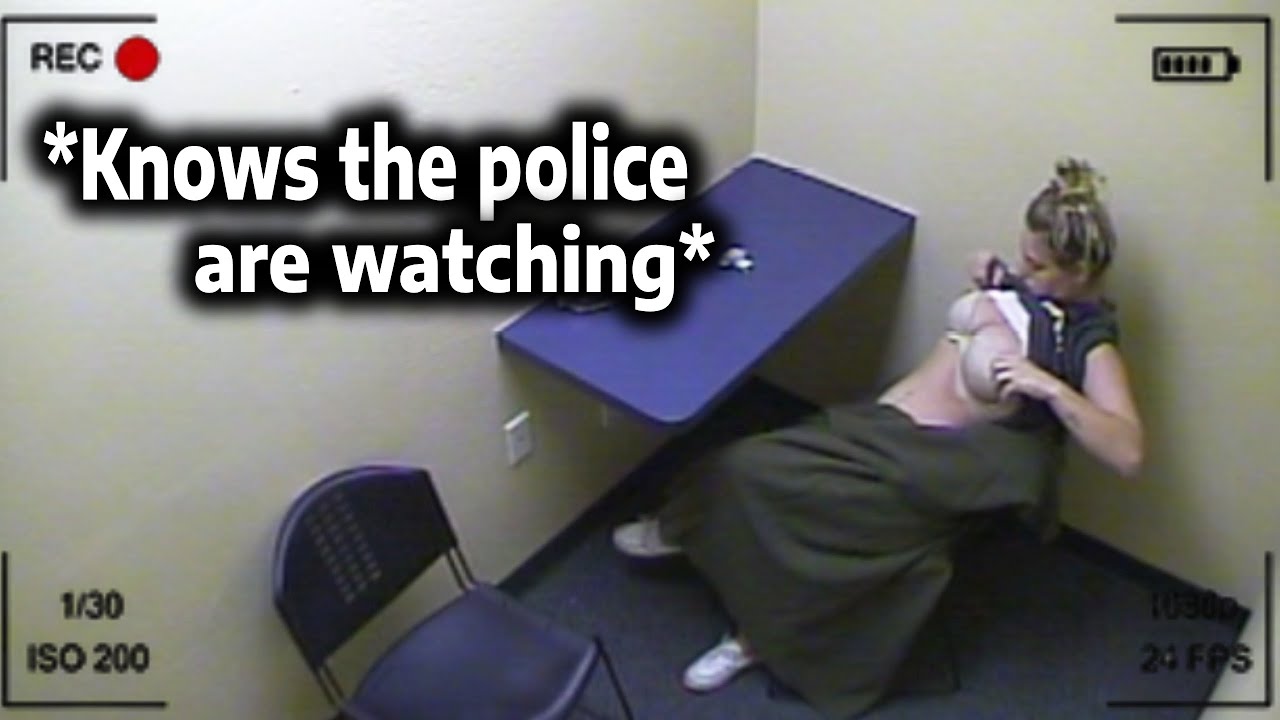
Red Tree Stories’ Alexandra Schreffler Video: The Interrogation That Saw Through Every Trick
In July 2016, an 18-year-old was lured to a house in Clay County, Florida, and never came home. When Alexandra Schreffler sat down with detectives, she came armed with a story — and a plan. Red Tree Stories’ 35-minute breakdown shows what happened when the plan met the interrogation room.
If you watch interrogation breakdowns on YouTube, you know the formula: the suspect walks in confident, the detectives let them talk, and the story collapses under its own weight. What makes this one stand out is how openly Schreffler tries to steer the room — adjusting her appearance for the camera, playing the frightened witness, testing which version of herself the detectives will believe.
The video, published in January 2025, has pulled in more than 8.6 million views — a sign of how compelling the footage is. It is a JCS-inspired documentary in the truest sense: less about the crime itself than about the psychology of the conversation happening across the table.
At a Glance
| Video | “Alexandra Thinks She Can Manipulate The Police” |
|---|---|
| Channel | Red Tree Stories |
| Published | January 19, 2025 |
| Length | ~35 minutes |
| Views | 8.6M+ |
| Subject | The 2016 interrogation of Alexandra Schreffler; manipulation vs. detection |
What the Video Covers
The video opens on July 2016, in Clay County, Florida. An 18-year-old receives messages inviting him to Schreffler’s home in the early hours of the morning. When he arrives, he walks into an ambush: a planned robbery, carried out with several other people, that turns deadly when shots are fired.
Schreffler walks into the interview room presenting herself as a terrified witness — someone who just happened to be there. The detectives let her talk. And then, piece by piece, they take the story apart: the timeline doesn’t hold, the messages tell a different story, and the details she “can’t remember” are exactly the ones that matter. The video tracks each contradiction as it lands, showing how investigators lock a suspect into specifics before revealing what they already know.
The second half focuses on the part the title promises: the manipulation. Schreffler adjusts her appearance on camera, shifts her tone, and tries charm where the facts won’t help her. The video doesn’t just show it — it explains what the detectives are doing in response: staying flat, refusing the frame she offers, and letting silence do the work. It ends where the real case did: with Schreffler charged in connection with the killing and ultimately sentenced to prison time for her role.
Strengths
The footage does the heavy lifting. This is the great advantage of the interrogation-breakdown format — you watch the tactics in real time instead of hearing them described. Schreffler’s shifts in demeanor are visible, and the video is smart enough to let long stretches of the interview play without talking over them.
The detective work gets its due. Too many true crime videos treat investigators as background extras. Here the breakdown gives real attention to technique: locking in a baseline, dripping evidence instead of dumping it, and using the suspect’s own words as the trap. It’s genuinely educational about how interrogations work.
The victim isn’t forgotten. Videos built around a charismatic suspect can lose sight of why any of this matters. This one keeps returning to the point: an 18-year-old was lured to his death, and everything in that interview room exists because of it.
Weaknesses
The formula is familiar. If you’ve watched JCS or any of its many successors, the structure here will feel well-worn: confident suspect, patient detectives, collapsing story. The footage is strong enough to carry it, but there are no surprises in how it’s assembled.
Thin on case background. The video lives almost entirely inside the interrogation room. Viewers who want the fuller picture — the investigation outside those walls, the other people charged, the legal aftermath — will need to look elsewhere.
Read the psychology as commentary, not diagnosis. The video frames Schreffler’s behavior as calculated manipulation, and the footage supports that reading — but it’s still one channel’s interpretation, not a clinical assessment. Take the analysis as sharp commentary rather than settled fact.
Who Should Watch
- Interrogation-footage fans — this is the genre at its most watchable, with a suspect who actively works the room.
- JCS and criminal-psychology viewers — if the breakdown format is your thing, this is a strong entry in the catalog.
- True crime newcomers — a contained, single-interview case that’s easy to follow without hours of backstory.
- Detective-technique nerds — the video is as much about the investigators’ method as the suspect’s behavior.
8/10
A sharp, focused interrogation breakdown — the footage is riveting, the detective work gets its due, and the victim stays at the center. Familiar in structure, but the suspect’s on-camera maneuvering makes it one of the genre’s most rewatchable entries.
Source: Red Tree Stories on YouTube (“Alexandra Thinks She Can Manipulate The Police,” published January 19, 2025); case background via contemporary Florida reporting on the 2016 Clay County case.