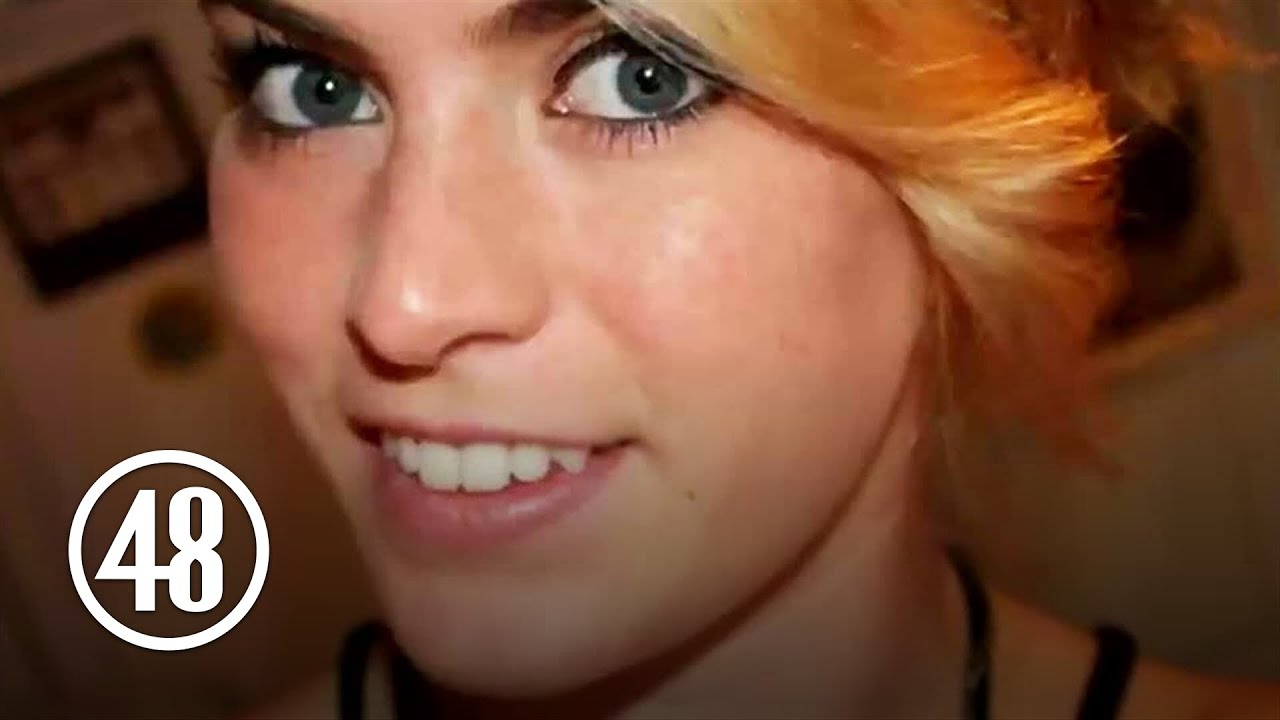
Watch the video: https://www.youtube.com/watch?v=hYaOUltto9M
48 Hours' Haley Anderson Video: The App That Found Her, and the Manhunt That Followed
In March 2018, Haley Anderson, a 22-year-old nursing student at Binghamton University in New York, did not come home. When her roommates could not reach her, they used the Find My Friends app to track her phone — and it led them to the apartment of a fellow nursing student, Orlando Tercero. 48 Hours, reported by CBS News contributor Maria Elena Salinas, follows what they found and what happened next.
Many true crime episodes are built around identifying a suspect. This one identifies him early. The harder question, and the one the episode spends most of its running time on, is accountability: Tercero had left the United States before Anderson's body was found, and the case would have to be tried where he had gone, under a different legal system.
The episode was first broadcast on CBS on April 25, 2020, in what CBS listings described as Salinas's first report for 48 Hours, and was uploaded to YouTube on December 16, 2022, where it has drawn 9,374,628 views. That scale reflects how unusual the combination is: a campus case solved in part by a phone-location app, and a trial conducted across borders by video link.
At a Glance
| Video | “The Murder of Haley Anderson | Full Episode” |
|---|---|
| Channel | 48 Hours |
| Published | December 16, 2022 |
| Length | ~42 minutes |
| Views | 9,374,628 |
| Subject | The 2018 murder of Haley Anderson in Binghamton, New York; Orlando Tercero's flight to Nicaragua and his trial there |
What the Video Covers
The video opens in March 2018, in Binghamton, New York. Anderson, a senior nursing student from Westbury, New York, was last seen in the early hours of March 8. When she did not return to her off-campus apartment and did not answer messages, her roommates tracked her phone using Find My Friends to Tercero's apartment. No one answered the door, so they climbed in through an open window and found Anderson's body in his bed. She had been strangled.
Investigators then reconstructed the flight. Surveillance footage showed Anderson and Tercero entering his apartment together, and later Tercero leaving alone with a suitcase. He flew to Nicaragua, where he held dual citizenship and had grown up. Salinas retraces that route, travels to Nicaragua, and speaks with people who knew Tercero there, while Binghamton investigators and Broome County prosecutors explain why extradition was not the path the case took.
The final section covers the trial in Nicaragua, which began in October 2019. Witnesses testified by teleconference from the Broome County district attorney's office in New York to a courtroom in Nicaragua, with Anderson's mother, Karen Anderson, among the first to testify. Tercero was convicted and sentenced to 30 years in prison, the maximum described in coverage of the case, and his appeal was denied. A second-degree murder charge in Broome County remained open in reporting on the case.
Strengths
The roommates' role is handled with care. The Find My Friends detail could easily be treated as a novelty. Here it is presented as what it was: friends using the tool they had, and finding something no one should have to find. Their account anchors the opening and gives the investigation a clear, human starting point.
The cross-border problem is explained, not glossed over. Dual citizenship, the decision to try the case in Nicaragua, and the teleconference testimony are each laid out in plain terms. Viewers who assume a suspect who flees is simply brought back will come away understanding why this case did not work that way.
Salinas goes to Nicaragua. Rather than treating the flight as an ending, the reporting follows it — retracing Tercero's steps and speaking with people there. That on-the-ground section distinguishes the episode from a studio retelling of a U.S. campus case.
Weaknesses
The legal process is compressed. A trial conducted internationally, with remote testimony and a different court system, is a complex subject for the final portion of a 42-minute episode. Viewers who want the full legal reasoning behind the conviction and the denied appeal will need court and news coverage from Nicaragua and Broome County.
Earlier warning signs get limited time. Reporting on the case noted that Anderson had previously told police she believed Tercero had slashed her car tires months before her death. The episode's focus on the disappearance, flight, and trial leaves less room for that earlier history and what, if anything, followed from it.
It is a single telling of a two-country case. The episode draws on U.S. investigators, Anderson's family, and reporting in Nicaragua, but it is still one program's edit. Details that turn on Nicaraguan proceedings are necessarily summarized in translation and should be read as the episode's account of them.
Who Should Watch
- 48 Hours regulars — a complete episode with a discovery, an international manhunt, and a trial, in one 42-minute account.
- Viewers interested in cross-border cases — dual citizenship, a foreign trial, and remote testimony are the distinctive elements here.
- True crime viewers who prefer resolved cases — the conviction, the 30-year sentence, and the denied appeal are all covered.
- Students of criminal justice — a clear example of phone-location data starting an investigation, and of how jurisdiction shapes what happens next.
8/10
A clear, well-reported account of a case that could have stalled at a border — the roommates' discovery is handled with care, the Nicaragua reporting adds real depth, and the trial outcome is covered in full. Its main limit is how much cross-border law it must compress into 42 minutes.
Source: 48 Hours on YouTube (“The Murder of Haley Anderson | Full Episode,” published December 16, 2022); case background via the CBS listing for the episode's April 25, 2020 broadcast and contemporary reporting on the Nicaragua trial and appeal.