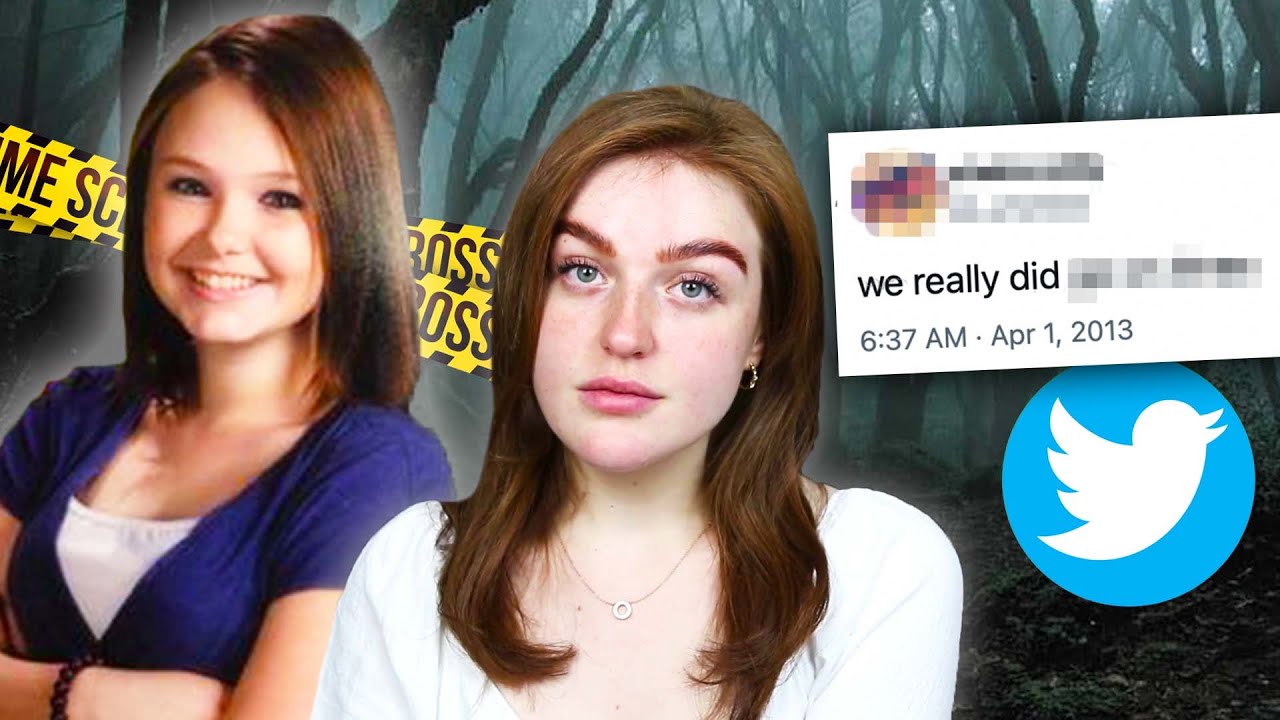
The Best-Friend Murder Undone by a Killer’s Own Tweets
In 2012, sixteen-year-old Skylar Neese vanished from her home in West Virginia. For months, police thought she had run away — until the social media posts of one of her closest friends started to tell a different story. Eleanor Neale’s hour-long deep dive into the case is one of the clearest retellings of how it was solved.
If you follow true crime YouTube, you already know Eleanor Neale. Her channel, OUTLORE with Eleanor Neale, has nearly three million subscribers, and she has been making true crime videos since 2017 — building a reputation for a respectful, victim-centered approach that avoids jokes at the victim’s expense or glorification of killers.
“Murder Solved by Killer’s OWN TWEETS” is one of her signature videos: an hour and five minutes on the murder of Skylar Neese, with around 3.8 million views. It is the case that showed the true crime world just how much evidence killers now leave behind on their own phones.
At a Glance
| Video | “Murder Solved by Killer’s OWN TWEETS” |
|---|---|
| Channel | OUTLORE with Eleanor Neale (~3M subscribers) |
| Published | 2022 (4 years ago, per YouTube/vidIQ) |
| Length | ~65 minutes |
| Views | 3.78M+ (per vidIQ) |
| Subject | The 2012 murder of Skylar Neese; a case unraveled by social media evidence |
What the Video Covers
The video opens with the night it happened: July 6, 2012. Sixteen-year-old Skylar Neese slipped out of her bedroom window in Star City, West Virginia — apartment security footage shows her getting into a car with her two best friends, Shelia Eddy and Rachel Shoaf. She never came home. Because she left her phone charger behind and her window open, her father was convinced she planned to return. Police, at first, treated it as a runaway case.
Neale walks through what came next in careful order: the friends’ insistence they had dropped Skylar off and driven on, the surveillance footage and cell phone records that contradicted them, and the centerpiece of the video — Shelia Eddy’s own tweets. While the search for her friend was underway, Eddy posted about missing Skylar, even writing mournful messages to a girl she already knew was dead. The video explains how those posts, along with the pair’s rehearsed, word-for-word matching stories, drew investigators’ suspicion.
The break came in early January 2013, when Rachel Shoaf confessed that she and Eddy had planned the murder, driven Skylar to a remote wooded area across the Pennsylvania state line, and stabbed her with kitchen knives. Shoaf led police to the body, found on January 16, 2013. The legal outcome: Shoaf pleaded guilty to second-degree murder and was sentenced to 30 years (eligible for parole after 10); Eddy pleaded guilty to first-degree murder and received life imprisonment with parole eligibility after 15 years. Neale also covers the legacy — Skylar’s disappearance prompted changes to West Virginia’s missing-child alert system, known as Skylar’s Law.
Strengths
The evidence is the star. Neale builds the case the way investigators did: the tweets, the surveillance stills, the phone records, the confession timeline. Instead of telling you the friends were lying, she shows you the posts that proved it — and the effect is quietly devastating.
The tone. This is a murder of a child by her closest friends, and Neale handles it with the restraint she is known for: no reenactments, no punchlines, no tabloid framing. Skylar is treated as a person throughout, not a plot twist.
It teaches you something about the social-media era. The video’s real subject is not just one case — it is the idea that modern killers document their own guilt in real time. It is a sharp illustration of how public posts became a forensic trail.
Clean, accessible structure. For an hour-long video, it moves: case overview, the night itself, the search, the tweets, the confession, the sentencing, the legacy. You never lose the thread.
Weaknesses
It is a commitment. At 65 minutes, this is a full sit-down watch, and Neale’s calm, methodical style will not be for viewers who want a quick-hit recap.
Familiar ground for genre regulars. The Skylar Neese case has been covered extensively — by Dateline, 20/20, and a 2025 Hulu documentary — so dedicated true crime followers will already know the broad strokes. The value here is the depth, not the discovery.
The “why” stays unanswered. As Neale acknowledges, the motive was never truly resolved — when asked why they killed Skylar, the killers’ only answer was that they “just didn’t like her.” If you want closure on motive, no video can give it to you, because the justice system never got it either.
Who Should Watch
- True crime documentary fans — this is one of the genre’s best-told cases, handled with care.
- Social-media-era crime followers — a textbook example of posts becoming evidence.
- Solved-case watchers — no cliffhanger here; the case was closed with guilty pleas.
- Eleanor Neale newcomers — a strong entry point for her respectful, research-heavy style.
9/10
One of the best-told versions of one of true crime’s most disturbing betrayals — rigorous, respectful, and genuinely illuminating about how social media changed investigations. If you watch one Eleanor Neale video, make it this one.
Source: OUTLORE with Eleanor Neale on YouTube; case details via Wikipedia, ABC News, 20/20, and TV Insider; channel stats via vidIQ and The Tab.