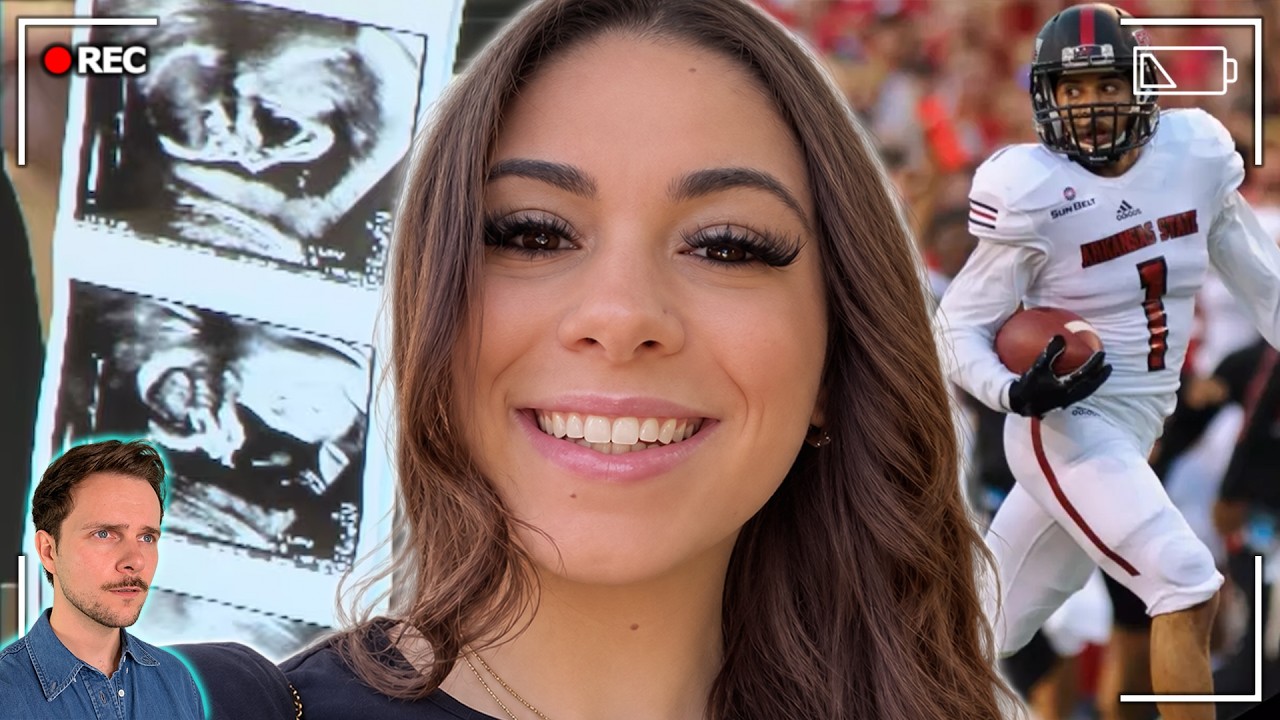
Watch the video: https://www.youtube.com/watch?v=Fff7qH5SIE0
Coffeehouse Crime's Blaise Taylor Video: The Allergic-Reaction Story That Unravelled
On the evening of February 25, 2023, a 26-year-old football scout called for help from his girlfriend's Nashville apartment, saying she was having an allergic reaction. She never recovered. Coffeehouse Crime's 37-minute video follows how that explanation gave way to a poisoning investigation — and, three years later, a murder conviction.
Jade Benning was 24, a professional chef from Little Rock who was nearly six months pregnant and planning a future around the daughter she had already named Ivy. Blaise Taylor, a former Arkansas State defensive back then working as a scout for the Tennessee Titans, was the baby's father. The video spends real time on who Benning was and on the tensions in the relationship before it reaches the night she died — context that matters for everything the jury later heard.
The video premiered on November 6, 2026, after the case had fully concluded in court, and has drawn more than 550,000 views. Because it was made after the trial, it can do something earlier coverage could not: follow the case in one arc from the 911 call, through a year-long investigation, to the verdict and the sentence.
At a Glance
| Video | “The Despicable Case of Blaise Taylor - Entitled Brat to Killer” |
|---|---|
| Channel | Coffeehouse Crime |
| Published | November 6, 2026 |
| Length | ~37 minutes |
| Views | 553,801 |
| Subject | The 2023 poisoning deaths of Jade Benning and her unborn daughter Ivy in Nashville; the investigation and trial of Blaise Taylor |
What the Video Covers
The video opens on February 25, 2023, in Nashville, Tennessee. Benning had planned a date night at her apartment — dinner, and painting pictures for Ivy's nursery. During the evening she collapsed. Taylor called 911 and described what he said looked like an allergic reaction, and Benning was rushed to Vanderbilt University Medical Center in critical condition. Her unborn daughter died two days later, on February 27. Benning herself died on March 6, 2023 — her 25th birthday — after life support was withdrawn.
The middle section follows how a medical emergency became a murder investigation. The medical examiner found acute cocaine toxicity at an extraordinarily high level, and cocaine-related compounds in Benning's vomit supported the prosecution theory that cocaine had been put in her drink. The video is candid about the gaps investigators faced: no recovered glass proved the poisoning, one glass seen in photographs was missing, and the apartment was not secured before it was cleaned. It also covers the evidence that filled some of those gaps — testimony that Benning called her best friend that night and was heard asking Taylor what he had put in her drink, Taylor's searches about abortion medication amid tension over the pregnancy, and testimony from a former girlfriend about a similar incident in 2017.
The final section covers the trial and its outcome. Taylor was arrested in Utah in March 2024, more than a year after Benning's death, and his trial in Nashville ran in June 2026. On July 1, 2026, a jury convicted him on all four counts, including second-degree murder for Benning's death and first-degree premeditated murder for Ivy's. In September 2026 he was sentenced to two consecutive life sentences. Taylor has maintained his innocence, and his attorneys said they would appeal.
Strengths
Jade Benning is presented as a person first. The chapters on her life and relationship — her work as a chef, the canvases she painted for Ivy's nursery that night, the future she was planning — come before the forensic detail. In a case that could easily be told only through its defendant, that ordering keeps the victims at the centre.
The circumstantial nature of the evidence is handled honestly. This conviction rested on inference: a missing glass, an unsecured apartment, a manner of death the medical examiner initially left undetermined. The video names those limitations instead of presenting the prosecution case as direct proof, which lets viewers understand both why the jury convicted and why the defence contested it.
The post-trial timing gives it a complete arc. Made after sentencing, the video does not end on an arrest or a cliffhanger. The distress call, the investigation, the trial, and the sentence are all here, which makes it a useful single-video account of a case that unfolded over more than three years.
Weaknesses
The title is more editorial than the video itself. “Entitled Brat to Killer” announces a character judgment — and the verdict — before the evidence is presented. Viewers who prefer to reach their own conclusions, or who do not want the outcome up front, should know the framing is set by the title even though the narration itself is more measured.
A long, contested case is compressed. A year-long investigation and a trial with days of testimony are fitted into 37 minutes. The defence argument — that Benning's death was an accidental overdose rather than a poisoning — and the toxicology dispute behind it get less room than the prosecution account, so viewers who want the full contest should treat this as an overview and look to trial reporting for the detail.
The background-history section needs care. The testimony about an earlier relationship and a similar alleged incident is powerful, and it was part of the trial record — but it is also the kind of pattern evidence viewers can overweight. The video presents it as testimony; it should be weighed as such, alongside the forensic and phone evidence in the Benning case itself.
Who Should Watch
- Viewers following the Jade Benning case — a complete, post-sentencing account from the 2023 date night to the 2026 verdict in a single video.
- Coffeehouse Crime regulars — a recent case told in the channel's single-case format, with the investigation and trial given equal weight.
- True crime viewers interested in circumstantial cases — a conviction built without direct proof of the poisoning, and an unusually clear look at how such a case is assembled.
- Viewers who prefer closed cases — the investigation, conviction on all four counts, and two consecutive life sentences are all resolved on screen.
8/10
A complete and unusually honest account of a difficult circumstantial case — Benning stays at the centre, the gaps in the evidence are named rather than hidden, and the story runs all the way to sentencing. The editorial title and the compression of a contested trial are the main costs.
Source: Coffeehouse Crime on YouTube (“The Despicable Case of Blaise Taylor - Entitled Brat to Killer,” premiered November 6, 2026); case background via CBS News / 48 Hours and Nashville reporting on the 2023 deaths and the 2026 trial and sentencing.