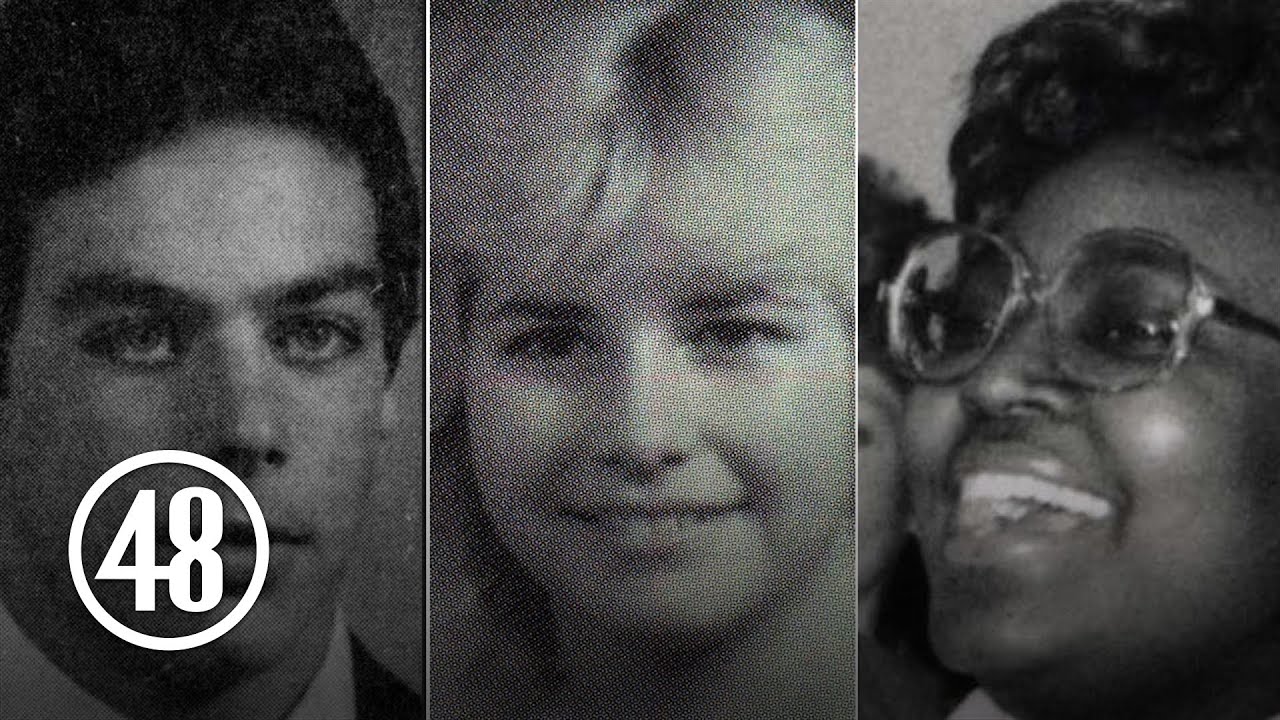
Watch the video: https://www.youtube.com/watch?v=e31TLn0AE1s
48 Hours' Broken Hearts Video: A Murder, and the Heart That Kept Beating
In the early hours of December 27, 1986, 19-year-old Karen Ermert was found shot dead in her Fairfax County apartment. Her killer, her estranged boyfriend Mark Willey, then shot himself — but he was pronounced brain dead with his heart still beating. Within about a day, that heart was beating in another young woman's chest.
Most 48 Hours episodes are built around a single question: who did it, and will they be caught? This one is different. The killer was identified almost immediately, and the case was closed quickly. What kept it alive for decades was the aftermath — a pioneering transplant, a detective who kept the victim's file for 30 years, and a Washington Post columnist who found the story by pulling a random date from a hat.
The episode, reported by CBS News' Jim Axelrod and uploaded to YouTube in December 2025, has drawn more than 829,000 views. It is described by the channel as a story of tragedy and triumph, and that framing is accurate: it is as much a medical and human story as it is a crime story.
At a Glance
| Video | “Broken Hearts | Full Episode” |
|---|---|
| Channel | 48 Hours |
| Published | December 23, 2025 |
| Length | ~41 minutes |
| Views | 829K+ |
| Subject | The 1986 murder of Karen Ermert in Fairfax County; Mark Willey's heart transplanted to Eva Baisey |
What the Video Covers
The video opens in Christmas 1986, in Fairfax County, Virginia. Police receive a call at around 2 a.m. that shots have been fired at an apartment complex. Detective Tommy Lee is among the first on the scene and finds Karen Ermert, 19, dead. The investigation quickly points to her estranged boyfriend, Mark Willey, who had come to her apartment with a .22 calibre rifle after their breakup and shot her, then shot himself as police arrived.
Willey did not die immediately in the way investigators expected. He was rushed to hospital and pronounced brain dead, but his heart continued to beat. With his family's permission, his organs were harvested. At the same hospital, 20-year-old Eva Baisey — a nursing student and mother of two with a failing heart — was waiting for a transplant she was unlikely to survive without. In the early hours of December 28, 1986, surgeon Dr. Ed Lefrak performed the first heart transplant in the greater Washington, D.C. area, using Willey's heart to save Baisey's life.
The second thread is how this story was found at all. Washington Post columnist Gene Weingarten, testing the idea that there is no such thing as an ordinary day, picked December 28, 1986 at random — and uncovered both the historic transplant and the murder behind it. The episode tells the story through interviews with Weingarten, Detective Lee, Dr. Lefrak and the transplant team, and Baisey herself, who went on to become one of the longest-living heart-transplant patients in medical history.
Strengths
It keeps the victim at the centre of an unusual story. A transplant story this striking could easily eclipse the crime that made it possible. The episode resists that: Ermert's murder, her family, and the detective who could not let her file go are given sustained attention, not treated as a prelude.
The interviews carry real weight. Hearing from the surgeon, the detective, the columnist who reconstructed the day, and the recipient herself gives the episode a breadth that a narrated reconstruction could not match. Each voice adds a different part of the same 24 hours.
It is a genuinely different kind of true crime episode. There is no manhunt and no trial twist. The tension comes from a medical race against time and from a difficult question the participants themselves raise: what it means that one woman lived because another was murdered.
Weaknesses
Viewers looking for an investigation will not find one here. The crime was solved almost immediately in 1986, so there is no unfolding inquiry to follow. The episode's appeal is reflective rather than procedural, which may not suit every true crime viewer.
The chronology takes some following. The story moves between 1986, Weingarten's much later reconstruction of that single day, and the present-day interviews. It rewards attention, but it is not a strictly linear account.
Some background is compressed. At 41 minutes, the episode covers a murder, a medical first, and decades of aftermath. Viewers who want fuller detail on the transplant era or on Baisey's later life will need to look to Weingarten's writing and other reporting beyond the episode.
Who Should Watch
- 48 Hours regulars — a distinctive episode in the catalogue, reported by Jim Axelrod, that departs from the usual whodunit format.
- Viewers interested in medical history — the first heart transplant in the greater Washington, D.C. area, told by the surgeon and recipient involved.
- True crime viewers who prefer aftermath over investigation — this is a story about consequences, memory, and an unlikely form of survival.
- Journalism and storytelling fans — Weingarten's random-date project is a compelling frame for how the case was rediscovered.
8/10
An unusual, reflective 48 Hours episode — a closed 1986 murder case reopened through the transplant it made possible, told by the people who lived each part of it, with Karen Ermert kept at its centre.
Source: 48 Hours on YouTube (“Broken Hearts | Full Episode,” published December 23, 2025); case background via CBS's original “Broken Hearts” broadcast listing and Washington Post columnist Gene Weingarten's account of December 28, 1986.